3G and 4G antennas are essential RF components used to transmit and receive cellular signals between mobile devices, routers, gateways, modems, base stations, IoT equipment, and other wireless communication systems. The antenna has a major influence on cellular coverage, signal strength, data performance, network stability, and communication reliability.
Although 3G networks are being phased out in many markets, 4G LTE continues to provide the foundation for a wide range of mobile broadband, industrial IoT, private network, telemetry, vehicle tracking, security, and machine-to-machine applications. As a result, 3G-4G compatible antennas remain relevant for many existing and legacy wireless systems.
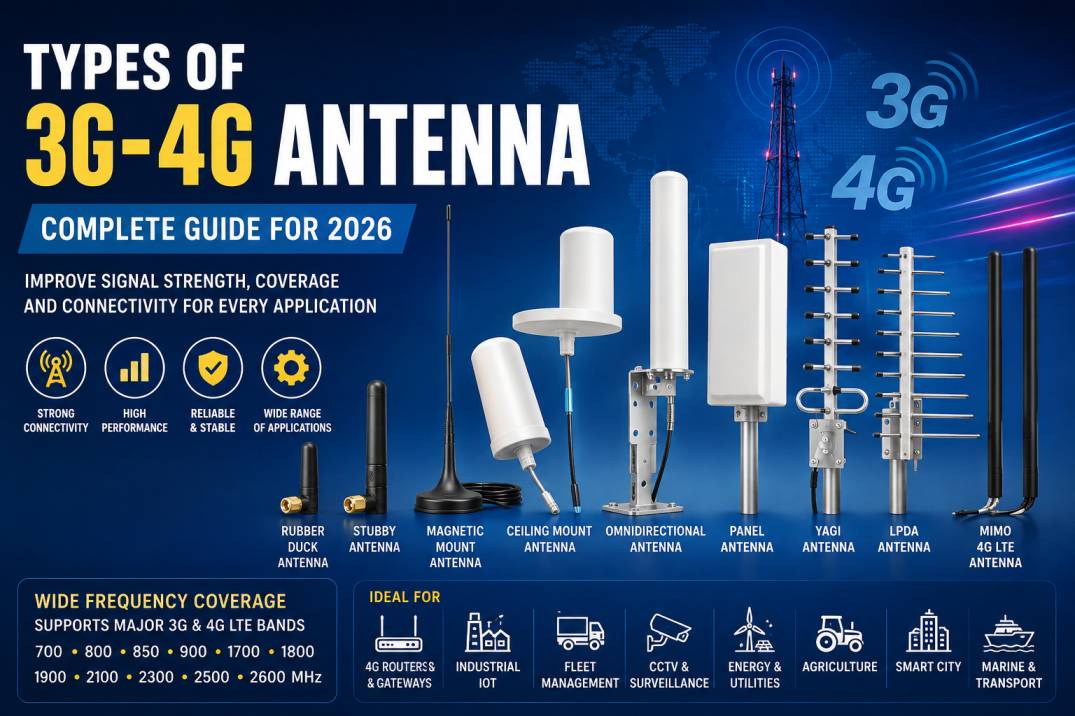
A 3G-4G antenna can be designed as an omnidirectional, directional, panel, Yagi, LPDA, MIMO, magnetic-mount, rubber-duck, PCB, or other specialized antenna depending on the required frequency range, gain, radiation pattern, installation environment, and application.
This guide explains the major types of 3G-4G antennas, their operating principles, characteristics, applications, advantages, limitations, and important specifications to consider when selecting a cellular antenna.
What Is a 3G-4G Antenna?
A 3G-4G antenna is an RF antenna designed to transmit and receive cellular signals used by third-generation and fourth-generation mobile communication networks.
Depending on the antenna design and target market, a 3G-4G antenna may cover one or multiple cellular frequency bands.
Typical frequency ranges can include cellular bands around:
- 700 MHz
- 800 MHz
- 850 MHz
- 900 MHz
- 1700 MHz
- 1800 MHz
- 1900 MHz
- 2100 MHz
- 2300 MHz
- 2500 MHz
- 2600 MHz
The exact frequency range depends on the antenna model and the cellular bands supported by the network.
How Does a 3G-4G Antenna Work?
A cellular antenna converts electrical RF energy into electromagnetic waves during transmission and converts received electromagnetic waves back into electrical signals during reception.
In a cellular router or modem, the antenna is connected to the RF port through a coaxial cable or directly through an RF connector.
The overall cellular link depends on several components, including:
- Cellular modem
- RF transceiver
- Antenna
- Coaxial cable
- RF connector
- Network infrastructure
- Surrounding environment
A properly selected antenna can improve the usable signal level and communication reliability, but an antenna cannot compensate for every network problem. Distance from the base station, terrain, building materials, network congestion, interference, and modem performance also influence cellular connectivity.
Why Is Antenna Selection Important for 3G and 4G Networks?
Selecting the correct antenna is important because different cellular installations require different radiation patterns and frequency coverage.
For example, an omnidirectional antenna is generally suitable when cellular signals may arrive from different directions. A directional antenna can be useful when the base station is known and a stronger signal needs to be concentrated toward that direction.
Important antenna parameters include:
- Frequency range
- Antenna gain
- Radiation pattern
- Polarization
- Impedance
- VSWR
- Efficiency
- Connector type
- Cable length
- Cable loss
- Physical dimensions
- Environmental protection
- Mounting configuration
Main Types of 3G-4G Antennas
The major types of 3G-4G antennas include:
- Omnidirectional 3G-4G Antenna
- Directional 3G-4G Antenna
- Panel Antenna
- Yagi Antenna
- LPDA Antenna
- MIMO 4G LTE Antenna
- Magnetic Mount Antenna
- Rubber Duck Antenna
- Stubby Antenna
- Dipole Antenna
- Ceiling-Mount Antenna
- Outdoor Antenna
- PCB Antenna
- Embedded Cellular Antenna
- High-Gain Cellular Antenna
- Multi-Band Cellular Antenna
1. Omnidirectional 3G-4G Antenna
An omnidirectional 3G-4G antenna radiates RF energy over a broad horizontal area, typically providing approximately 360-degree horizontal coverage.
This type of antenna is commonly used when the direction of the cellular base station is unknown or when a device may need to communicate with different base stations.
Features
- Broad horizontal coverage
- Multi-band options
- Easy installation
- Compact designs available
- Suitable for fixed and mobile applications
- Available in indoor and outdoor configurations
Applications
Omnidirectional cellular antennas are commonly used in:
- 3G-4G routers
- LTE gateways
- Industrial routers
- IoT gateways
- Fleet tracking systems
- Security systems
- Remote monitoring equipment
- Smart meters
- Vending machines
- Portable communication equipment
Advantages
The primary advantage of an omnidirectional antenna is its broad coverage pattern. It does not require precise directional alignment with a cellular tower.
2. Directional 3G-4G Antenna
A directional 3G-4G antenna focuses RF energy toward a specific direction.
Directional antennas are useful when the cellular base station is located in a known direction and the installation requires improved link performance.
Features
- Focused radiation pattern
- Higher gain than many compact omnidirectional designs
- Improved directional selectivity
- Suitable for fixed installations
- Available for multiple cellular bands
Applications
- Rural LTE
- Remote industrial sites
- Fixed wireless access
- Agricultural monitoring
- Remote surveillance
- Building installations
- Cellular signal improvement systems
Advantages
Directional antennas can provide improved signal levels when properly aimed toward the desired cellular source.
3. Panel 3G-4G Antenna
A panel antenna is a flat directional antenna designed for controlled cellular coverage.
Panel antennas are popular in fixed LTE installations because they combine relatively compact construction with directional performance.
Characteristics
- Flat or low-profile construction
- Directional radiation
- Moderate to high gain
- Wall or pole mounting
- Multi-band versions available
Applications
- LTE routers
- Industrial automation
- Rural broadband
- Private LTE systems
- Remote offices
- Warehouses
- Outdoor installations
Panel antennas can be especially useful where the cellular tower direction is known.
4. Yagi 3G-4G Antenna
A Yagi antenna uses multiple conductive elements arranged along a supporting boom to create a directional radiation pattern.
Yagi antennas have traditionally been used for television and radio reception and are also available for cellular applications.
Advantages
- Directional operation
- High gain potential
- Good front-to-back ratio
- Suitable for outdoor installations
- Useful for weak-signal environments
Applications
- Rural LTE
- Remote monitoring
- Agricultural systems
- Industrial sites
- Cellular routers
- Fixed wireless communication
Installation Consideration
Because Yagi antennas are directional, correct alignment is important. The antenna should generally be oriented toward the desired cellular base station or signal source.
5. LPDA 3G-4G Antenna
An LPDA, or Log-Periodic Dipole Array antenna, consists of multiple dipole elements arranged in a specific geometric pattern to provide broadband operation.
LPDA antennas are particularly useful when a wide frequency range must be covered with a single antenna.
Features
- Wide frequency coverage
- Directional radiation pattern
- Broadband performance
- High frequency flexibility
- Suitable for multi-band cellular systems
Applications
- 3G and 4G networks
- LTE testing
- RF monitoring
- Cellular signal measurement
- Broadband wireless systems
- Industrial communication
LPDA antennas are often preferred where several cellular bands need to be supported without using multiple narrowband antennas.
6. MIMO 4G LTE Antenna
MIMO stands for Multiple Input Multiple Output.
MIMO technology uses multiple antenna elements to support multiple spatial signal paths. It is an important technology in LTE and other modern wireless communication systems.
A 4G LTE MIMO antenna may contain two or more antenna elements within a single enclosure.
Benefits
- Improved throughput
- Better utilization of multipath propagation
- Improved wireless reliability
- Support for multiple spatial streams
- Suitable for modern LTE routers and gateways
Common Configurations
- 2×2 MIMO
- 4×4 MIMO
The appropriate configuration depends on the LTE modem and network architecture.
7. Magnetic Mount 3G-4G Antenna
A magnetic-mount antenna uses a magnetic base for quick installation on a metallic surface.
These antennas are popular in temporary, mobile, and industrial applications.
Features
- Easy installation
- Removable mounting
- Compact construction
- Flexible positioning
- Coaxial cable assembly often included
Applications
- Vehicles
- Fleet tracking
- GPS/LTE equipment
- Mobile routers
- Temporary installations
- Industrial equipment
The magnetic base provides mechanical attachment, while the RF cable connects the antenna to the cellular device.
8. Rubber Duck 3G-4G Antenna
A rubber duck antenna is a compact external antenna commonly used with cellular routers, modems, gateways, and wireless devices.
It generally uses an omnidirectional radiation pattern.
Features
- Compact size
- Flexible outer construction
- Simple installation
- Direct connector mounting
- Multiple frequency options
Applications
- Cellular routers
- LTE gateways
- IoT equipment
- Wireless modems
- Industrial communication devices
9. Stubby 3G-4G Antenna
Stubby antennas are short, compact antennas designed where space is limited.
They are particularly useful for portable and embedded cellular equipment.
Applications
- Handheld devices
- Compact routers
- Tracking devices
- IoT gateways
- Portable terminals
- Embedded wireless equipment
Advantages
- Small physical size
- Low-profile installation
- Easy integration
- Suitable for space-constrained equipment
The main compromise is that a compact antenna may have different efficiency and gain characteristics compared with a larger external antenna.
10. Dipole 3G-4G Antenna
A dipole antenna consists of conductive elements arranged around a feed point and is one of the fundamental antenna structures used in RF engineering.
Dipole-based cellular antennas can be designed for different frequency ranges and radiation patterns.
Applications
- Cellular communication
- LTE routers
- Wireless gateways
- RF testing
- Embedded systems
Dipole designs can provide a practical balance between size, performance, and manufacturing simplicity.
11. Ceiling-Mount 3G-4G Antenna
Ceiling-mount cellular antennas are designed for installation on ceilings or indoor structures.
They are useful in buildings where cellular coverage needs to be distributed across a defined indoor area.
Applications
- Offices
- Shopping centers
- Hotels
- Industrial buildings
- Warehouses
- Public facilities
Depending on the system architecture, ceiling antennas can be used as part of distributed antenna systems and other indoor cellular coverage solutions.
12. Outdoor 3G-4G Antenna
Outdoor cellular antennas are designed for installation outside buildings, vehicles, towers, poles, and industrial structures.
Outdoor antennas need to withstand environmental conditions such as:
- Rain
- Dust
- UV exposure
- Wind
- Temperature variations
- Humidity
Common Applications
- Rural LTE
- Industrial IoT
- Remote monitoring
- Agriculture
- Security systems
- Outdoor routers
- Smart infrastructure
Outdoor antennas may be supplied with weather-resistant radomes or housings.
13. PCB 3G-4G Antenna
A PCB antenna is integrated directly into the printed circuit board of an electronic device.
This type of antenna is useful when the device needs an integrated RF solution without a large external antenna.
Applications
- IoT devices
- Tracking equipment
- Smart meters
- Industrial sensors
- Embedded cellular modules
- Portable electronics
Design Considerations
PCB antenna performance depends strongly on:
- PCB dimensions
- Ground-plane configuration
- Antenna layout
- Component placement
- Enclosure material
- Operating frequency
- Nearby metallic objects
Proper RF simulation and testing are important when developing a PCB cellular antenna.
14. Embedded Cellular Antenna
An embedded antenna is integrated inside the enclosure of a cellular device.
These antennas are commonly used in compact electronic equipment where an external antenna is undesirable.
Applications
- IoT devices
- Smart meters
- Automotive electronics
- Tracking systems
- Industrial controllers
- Connected appliances
Embedded antennas require careful mechanical and RF design because the enclosure and nearby components can significantly influence performance.
15. High-Gain 3G-4G Antenna
High-gain cellular antennas are designed to concentrate RF energy more effectively in a particular radiation pattern.
They are commonly used in weak-signal environments where a directional installation can improve the received signal.
Applications
- Rural LTE
- Remote locations
- Industrial facilities
- Agricultural sites
- Fixed wireless access
- Remote surveillance
Higher gain does not automatically guarantee better performance. The antenna radiation pattern, cable loss, installation height, signal direction, and network conditions must also be considered.
16. Multi-Band 3G-4G Antenna
Multi-band antennas are designed to operate across multiple cellular frequency bands.
This allows one antenna to support different network bands rather than requiring separate antennas for each frequency.
Benefits
- Simplified installation
- Fewer antennas
- Broad frequency coverage
- Suitable for multi-band cellular devices
- Flexible network deployment
Multi-band antennas are commonly used in cellular routers, industrial gateways, telematics systems, and IoT equipment.
3G-4G Antenna Types Comparison
| Antenna Type | Radiation Pattern | Typical Application |
|---|---|---|
| Omnidirectional | Broad/360° horizontal | Routers and gateways |
| Directional | Focused | Rural LTE |
| Panel | Directional | Fixed LTE |
| Yagi | Narrow directional | Weak-signal areas |
| LPDA | Broadband directional | Multi-band cellular |
| MIMO | Multiple spatial paths | 4G LTE routers |
| Magnetic Mount | Usually omni | Vehicles |
| Rubber Duck | Omnidirectional | Routers and modems |
| Stubby | Broad | Compact devices |
| Dipole | Broad | Wireless equipment |
| Ceiling Mount | Broad/controlled | Indoor systems |
| Outdoor | Omni or directional | Outdoor LTE |
| PCB | Device-dependent | IoT |
| Embedded | Device-dependent | Compact electronics |
| High Gain | Directional or focused | Remote locations |
| Multi-Band | Depends on design | Multi-band equipment |
3G and 4G Antenna Frequency Range
The frequency range is one of the most important specifications when selecting a cellular antenna.
Different countries and network operators use different cellular bands. Therefore, an antenna intended for one market may not provide optimal performance across another market.
Typical cellular frequencies may include:
| Frequency | Common Application Area |
|---|---|
| 700 MHz | LTE and wide-area cellular |
| 800 MHz | LTE and cellular coverage |
| 850 MHz | Cellular and 3G/4G |
| 900 MHz | GSM and cellular services |
| 1700 MHz | Cellular services |
| 1800 MHz | LTE and cellular |
| 1900 MHz | Cellular services |
| 2100 MHz | 3G and LTE |
| 2300 MHz | LTE |
| 2500 MHz | LTE |
| 2600 MHz | LTE |
The actual bands supported should always be verified against the target cellular network.
Understanding 3G-4G Antenna Gain
Antenna gain is commonly expressed in dBi.
Gain describes how an antenna concentrates RF energy relative to an isotropic reference.
A low-gain omnidirectional antenna may be appropriate for broad local coverage, while a high-gain directional antenna may be more suitable for long-distance communication.
Typical antenna categories may include:
| Gain Category | General Application |
|---|---|
| 1–3 dBi | Compact embedded devices |
| 3–6 dBi | General-purpose cellular |
| 6–10 dBi | Extended coverage |
| 10–15 dBi | Directional applications |
| 15+ dBi | Specialized long-distance links |
Actual antenna gain varies by frequency and antenna design.
3G-4G Antenna Radiation Pattern
The radiation pattern describes how an antenna distributes electromagnetic energy.
The two main views are:
Horizontal Radiation Pattern
This represents the antenna’s coverage around the antenna when viewed from above.
Vertical Radiation Pattern
This shows the distribution of RF energy above and below the antenna.
Understanding both patterns is essential for proper antenna placement.
For example, a high-gain omnidirectional antenna may have a relatively narrow vertical beam. Installing it incorrectly can therefore reduce coverage in areas that are physically close but located at different elevations.
3G-4G Antenna Polarization
Polarization describes the orientation of the electromagnetic field.
Cellular antennas can use:
- Vertical polarization
- Horizontal polarization
- Dual polarization
- Cross-polarized configurations
Modern LTE MIMO antennas often use multiple elements with different polarization characteristics to improve spatial performance.
3G-4G Antenna Impedance
Most cellular RF systems use a nominal 50-ohm impedance.
Maintaining proper impedance matching between the modem, cable, connector, and antenna helps minimize reflections.
Poor impedance matching can result in:
- Higher VSWR
- Increased return loss
- Reduced RF efficiency
- Lower transmitted power
- Reduced received signal performance
VSWR and Return Loss
VSWR, or Voltage Standing Wave Ratio, is an important RF parameter used to evaluate antenna impedance matching.
A lower VSWR generally indicates a better impedance match over the antenna’s specified operating range.
Return loss provides another way of describing reflected RF power.
For professional 3G-4G antenna applications, VSWR and return-loss specifications should be evaluated across the entire required frequency range rather than at only one frequency.
3G-4G Antenna Connectors
Cellular antennas are available with a wide range of RF connectors.
Common connectors include:
- SMA
- RP-SMA
- N-Type
- TNC
- MMCX
- U.FL
- IPEX
- MHF series connectors
The correct connector depends on the cellular modem, router, RF cable assembly, and mechanical requirements.
3G-4G Antenna Cable Selection
The RF cable connecting the antenna to the cellular modem can significantly influence system performance.
Cable loss increases with cable length and generally becomes more important at higher frequencies.
Common cable types include:
- RG174
- RG316
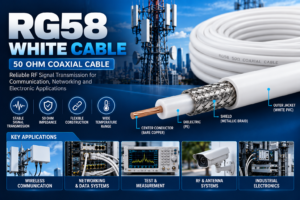
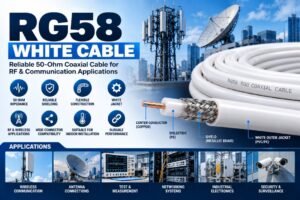
- RG58
- LMR-type low-loss coaxial cables
- Micro-coaxial cables
- Custom RF cable assemblies
For a high-gain outdoor antenna, it is often important to minimize cable length and use an appropriate low-loss cable.
3G-4G MIMO Antenna Systems
MIMO is one of the most important technologies associated with LTE.
A MIMO antenna system uses multiple antenna elements to create multiple signal paths.
A typical 4G LTE router may have multiple antenna ports to support MIMO functionality.
Advantages of LTE MIMO
- Increased data throughput
- Better spectral efficiency
- Improved reliability
- Better performance in multipath environments
- Improved utilization of available network resources
The antenna configuration must match the capabilities of the cellular modem.
3G-4G Antennas for Industrial IoT
Industrial IoT applications often operate in locations where cellular connectivity is essential for remote monitoring and control.
Applications include:
- Remote sensors
- Smart meters
- Industrial gateways
- PLC communication
- Equipment monitoring
- Energy monitoring
- Security systems
- Environmental monitoring
- Fleet management
For these applications, antenna selection should consider environmental durability, connector reliability, cable routing, frequency coverage, and installation conditions.
3G-4G Antennas for Vehicles
Vehicle-mounted cellular antennas are widely used for:
- Fleet tracking
- GPS systems
- Telematics
- Connected vehicles
- Public transportation
- Emergency vehicles
- Logistics
- Remote monitoring
Magnetic-mount, adhesive-mount, and permanent-mount antennas are common configurations.
Vehicle antenna design must also account for the vehicle’s metallic body, antenna location, cable routing, vibration, weather exposure, and grounding.
3G-4G Antennas for Rural Areas
Rural areas can present challenging cellular conditions because of distance from base stations, terrain, vegetation, and infrastructure limitations.
Directional antennas such as Yagi, panel, and LPDA designs may be suitable when the base station direction is known.
Important considerations include:
- Distance to the tower
- Frequency band
- Antenna gain
- Height
- Line of sight
- Cable loss
- Mounting stability
3G-4G Antennas for Smart Infrastructure
Cellular connectivity is used extensively in connected infrastructure.
Applications include:
- Smart parking
- Traffic monitoring
- Surveillance
- Utility monitoring
- Environmental sensors
- Smart lighting
- Remote equipment management
Compact multi-band antennas are often useful where devices need to operate across different cellular bands.
Indoor and Outdoor 3G-4G Antennas
Indoor Antennas
Indoor antennas are typically designed for:
- Compact size
- Easy installation
- Low-profile construction
- Short cable runs
- General-purpose cellular connectivity
Outdoor Antennas
Outdoor antennas generally require:
- Weather resistance
- UV resistance
- Mechanical durability
- Suitable mounting hardware
- Protected RF connections
- Wider operating temperature range
How to Choose the Right 3G-4G Antenna
Selecting a 3G-4G antenna requires consideration of the entire RF system.
1. Identify the Required Frequency Bands
First determine the cellular bands supported by the modem and network operator.
2. Determine the Installation Environment
Decide whether the antenna will be installed:
- Indoors
- Outdoors
- On a vehicle
- On a pole
- On a wall
- Inside an enclosure
- Directly on a PCB
3. Determine the Required Radiation Pattern
Choose omnidirectional coverage when signals can arrive from different directions.
Choose directional coverage when the cellular source is known and a focused beam is desirable.
4. Check Antenna Gain
Select gain according to the required communication distance and radiation pattern.
5. Consider MIMO Requirements
For LTE devices that support MIMO, use an antenna system with the appropriate number of antenna elements and ports.
6. Check VSWR
Verify that the antenna provides suitable impedance matching across the complete operating frequency range.
7. Select the Correct Connector
Check the connector on the cellular router, modem, or RF cable.
8. Evaluate Cable Loss
Keep cable length as short as practical and select an appropriate low-loss coaxial cable.
9. Check Environmental Requirements
For outdoor installations, consider waterproofing, UV resistance, temperature range, wind loading, and mechanical strength.
Common Mistakes When Selecting a 3G-4G Antenna
Selecting an Antenna Only by Gain
High gain does not automatically mean better performance. Radiation pattern and installation direction are equally important.
Ignoring Frequency Compatibility
An antenna should cover the actual cellular bands used by the modem and network.
Using Excessively Long RF Cable
Long cable runs can introduce significant insertion loss and reduce the benefit of a high-performance antenna.
Installing a Directional Antenna Incorrectly
Directional antennas must be appropriately aligned with the desired signal source.
Ignoring MIMO
A single antenna may not provide the same performance as a properly configured MIMO antenna system when the modem supports multiple spatial streams.
Choosing the Wrong Connector
Even a technically suitable antenna cannot be directly connected if the connector configuration is incompatible.
3G-4G Antenna Maintenance
Outdoor cellular antennas should be periodically inspected for:
- Loose mounting hardware
- Damaged cables
- Corroded connectors
- Cracked radomes
- Water ingress
- Cable deterioration
- Changes in antenna orientation
Proper maintenance helps preserve long-term RF performance.
Difference Between 3G and 4G Antennas
The terms “3G antenna” and “4G antenna” describe antennas intended for different generations of cellular technology, but the physical antenna is ultimately a frequency-dependent RF device.
Many modern antennas are designed as multi-band antennas capable of supporting frequency ranges used by both 3G and 4G networks.
The important consideration is therefore not only whether an antenna is labeled “3G” or “4G,” but whether its specified frequency range, gain, impedance, VSWR, polarization, and efficiency are suitable for the intended cellular bands.
Future of 3G-4G Antenna Technology
The cellular industry is transitioning toward 5G and newer wireless technologies, but 4G LTE remains important for many applications.
Future antenna development is expected to emphasize:
- Multi-band operation
- Compact form factors
- Higher-efficiency designs
- MIMO configurations
- Low-profile antennas
- Embedded cellular antennas
- Industrial-grade outdoor antennas
- Multi-technology antennas supporting 4G and newer networks
- Integrated cellular, GNSS, Wi-Fi, and Bluetooth antennas
Multi-function antennas are particularly valuable for IoT gateways and connected equipment that require several wireless technologies within one compact enclosure.
Applications of 3G-4G Antennas
3G-4G antennas are used across many industries, including:
- Telecommunications
- Industrial automation
- Internet of Things
- Fleet management
- Automotive
- Agriculture
- Smart cities
- Security and surveillance
- Energy and utilities
- Remote monitoring
- Transportation
- Logistics
- Healthcare equipment
- Vending systems
- Point-of-sale terminals
- Wireless gateways
Conclusion
3G-4G antennas are critical RF components for reliable cellular communication. Different antenna types are designed to meet different coverage, frequency, gain, installation, and environmental requirements.
Omnidirectional antennas are suitable for broad coverage, while directional antennas such as Yagi, panel, and LPDA antennas are useful when RF energy needs to be concentrated toward a particular direction. MIMO antennas are important for LTE systems requiring multiple spatial streams, while magnetic-mount, rubber-duck, PCB, and embedded antennas provide flexible solutions for mobile and compact devices.
When selecting a 3G-4G antenna, it is important to evaluate frequency range, gain, radiation pattern, polarization, impedance, VSWR, connector type, cable loss, environmental protection, and MIMO requirements.
A properly matched antenna and RF cable assembly can help a cellular device achieve more reliable communication and better overall network performance.
Frequently Asked Questions
1. What are the different types of 3G-4G antennas?
Common types include omnidirectional, directional, panel, Yagi, LPDA, MIMO, magnetic-mount, rubber-duck, stubby, dipole, ceiling-mount, outdoor, PCB, embedded, high-gain, and multi-band antennas.
2. Which 3G-4G antenna is best for weak signal areas?
A directional antenna such as a Yagi, panel, or LPDA antenna can be suitable for weak-signal locations when the direction of the cellular base station is known.
3. What is a 4G MIMO antenna?
A 4G MIMO antenna contains multiple antenna elements that support multiple spatial signal paths, helping compatible LTE systems improve throughput and reliability.
4. Is a 3G antenna compatible with 4G?
Compatibility depends on the antenna’s frequency range. Many multi-band antennas support both 3G and 4G frequencies, but the manufacturer’s specifications should always be checked.
5. What is the difference between an omnidirectional and directional 4G antenna?
An omnidirectional antenna provides broad horizontal coverage, while a directional antenna focuses RF energy toward a specific direction.
6. What is a Yagi 4G antenna used for?
A Yagi 4G antenna is commonly used for fixed outdoor LTE installations, especially in rural or remote areas where the cellular tower direction is known.
7. What is an LPDA cellular antenna?
An LPDA, or Log-Periodic Dipole Array, is a broadband directional antenna designed to cover a relatively wide frequency range using multiple dipole elements.
8. What does antenna gain mean?
Antenna gain indicates how effectively an antenna concentrates RF energy relative to an isotropic reference. It is commonly specified in dBi.
9. What impedance is normally used for 3G-4G antennas?
Most cellular RF systems use a nominal 50-ohm impedance.
10. Which connectors are commonly used for 3G-4G antennas?
Common connectors include SMA, RP-SMA, N-Type, TNC, MMCX, U.FL, IPEX, and MHF-series connectors.
11. Can a high-gain 4G antenna improve internet speed?
A suitable high-gain antenna can improve signal conditions in some installations, potentially improving connection stability and data performance. However, actual speed also depends on network congestion, signal quality, modem capability, and the cellular network.
12. What is the best antenna for a 4G router?
The best antenna depends on the installation. An omnidirectional antenna may be suitable for general coverage, while a directional or MIMO antenna may be preferable for weak-signal or fixed-location applications.
13. What is a magnetic-mount 4G antenna?
A magnetic-mount 4G antenna uses a magnetic base to attach to a metal surface. It is commonly used in vehicles, mobile equipment, and temporary installations.
14. Are outdoor 4G antennas waterproof?
Many outdoor cellular antennas are designed with weather-resistant or waterproof housings, but the actual protection level varies by model. The manufacturer’s IP rating and environmental specifications should be checked.
15. Can one antenna support multiple 4G bands?
Yes. Multi-band 4G antennas are specifically designed to operate across multiple cellular frequency bands, allowing one antenna to support different LTE bands.
16. Why is VSWR important for a 3G-4G antenna?
VSWR indicates the quality of impedance matching between the antenna and RF system. A suitable VSWR helps minimize reflected power and supports efficient RF transmission.
17. How does cable length affect a 4G antenna?
Longer coaxial cables generally introduce more insertion loss. Using an appropriate low-loss cable and keeping the cable run as short as practical can help preserve RF performance.
18. What antenna is suitable for industrial IoT?
Industrial IoT applications can use omnidirectional, panel, MIMO, magnetic-mount, or rugged outdoor antennas depending on the frequency, coverage, installation, and environmental requirements.
19. Can a 4G antenna be used outdoors?
Yes. Outdoor-rated 4G antennas are specifically designed for external installations and may include weather-resistant housings, UV protection, and rugged mounting systems.
20. What factors should be considered when buying a 3G-4G antenna?
Important factors include frequency range, gain, radiation pattern, polarization, impedance, VSWR, efficiency, connector, cable type, cable length, mounting method, environmental rating, and MIMO configuration.