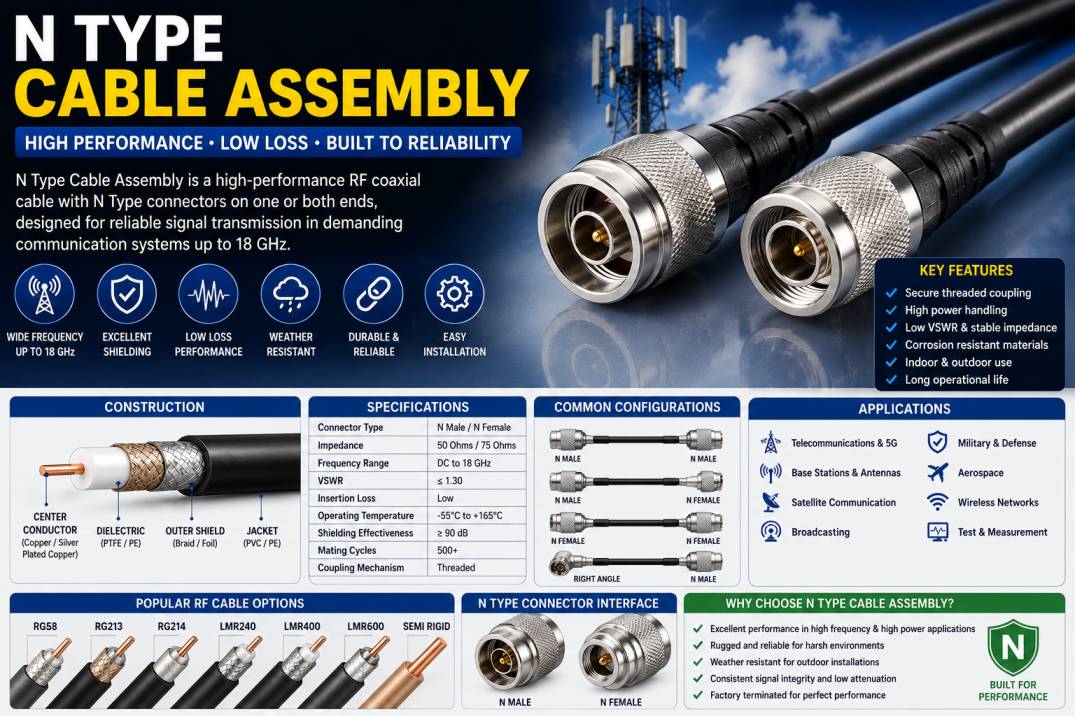
An N Type Cable Assembly is a pre-terminated radio frequency (RF) cable fitted with N Type connectors on one or both ends, designed to deliver reliable, low-loss signal transmission in high-frequency communication systems. Developed by Paul Neill in the 1940s, the N Type connector has become one of the most widely used RF connector standards due to its durability, weather resistance, and exceptional electrical performance.
N Type cable assemblies are commonly used in telecommunications, 5G infrastructure, satellite communication, military systems, aerospace, wireless networking, industrial automation, broadcasting, and RF testing. They provide secure mechanical connections, stable impedance, and excellent shielding, making them suitable for indoor and outdoor installations.
Modern N Type cable assemblies support frequencies up to 18 GHz or higher, depending on the connector design and cable type. Their threaded coupling mechanism ensures a vibration-resistant connection, making them ideal for demanding environments where reliability is critical.
This guide explains everything about N Type Cable Assemblies, including their construction, working principle, types, specifications, applications, advantages, and selection tips.
What Is an N Type Cable Assembly?
An N Type Cable Assembly is a coaxial cable with factory-installed N Type RF connectors that provides a ready-to-use solution for transmitting radio frequency signals between antennas, amplifiers, transmitters, receivers, and communication equipment.
These assemblies are manufactured using precision RF cables and high-quality connectors to ensure consistent impedance, low insertion loss, and long-term reliability.
N Type cable assemblies are available in various cable lengths, connector genders, mounting styles, and cable types to suit different RF applications.
How Does an N Type Cable Assembly Work?
An N Type Cable Assembly carries RF signals through the center conductor of the coaxial cable while the outer shield protects the signal from electromagnetic interference (EMI).
The threaded N Type connector securely mates with the corresponding connector, ensuring excellent electrical contact and preventing accidental disconnection.
The cable assembly maintains constant impedance throughout the transmission path, minimizing signal reflections and maximizing power transfer.
Construction of an N Type Cable Assembly
N Type Connector
The connector consists of:
- Center contact
- Dielectric insulator
- Outer conductor
- Threaded coupling nut
- Connector body
The threaded coupling provides a secure and weather-resistant connection.
RF Cable
Various cable types can be used, including:
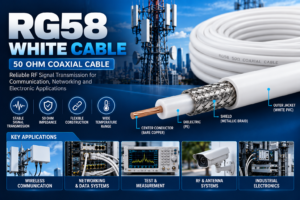
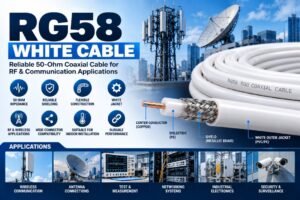
- RG58
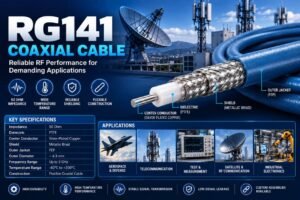
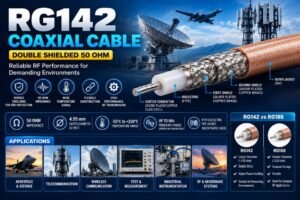
- RG142
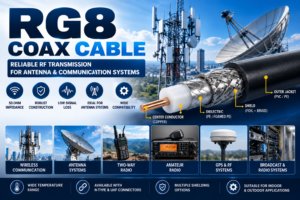
- RG213
- RG214
- LMR195
- LMR240
- LMR400
- LMR600
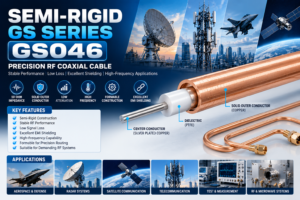
- Semi-Rigid Cable
- Flexible Low-Loss Cable
The cable choice depends on frequency, power handling, and installation requirements.
Center Conductor
The center conductor is typically manufactured from:
- Copper
- Silver-plated copper
- Copper-clad steel
Silver plating improves conductivity at high frequencies.
Dielectric
Common dielectric materials include:
- PTFE
- Foam Polyethylene
- Solid Polyethylene
These materials help maintain stable impedance and reduce signal loss.
Outer Shield
Shield options include:
- Copper braid
- Aluminum foil
- Double shield
- Triple shield
The shielding protects against electromagnetic interference and signal leakage.
Key Features of N Type Cable Assemblies
- Low insertion loss
- Excellent shielding performance
- Weather-resistant construction
- Secure threaded connection
- High power handling
- Wide frequency range
- Stable impedance
- Low VSWR
- Long service life
- Rugged mechanical design
- Corrosion-resistant materials
- Suitable for indoor and outdoor installations
Technical Specifications
| Specification | Typical Value |
|---|---|
| Connector Type | N Male / N Female |
| Characteristic Impedance | 50 Ohms or 75 Ohms |
| Frequency Range | DC to 18 GHz |
| VSWR | ≤ 1.30 |
| Insertion Loss | Low |
| Operating Temperature | -55°C to +165°C |
| Contact Material | Brass or Beryllium Copper |
| Contact Plating | Gold or Silver |
| Coupling Type | Threaded |
| Durability | 500+ Mating Cycles |
Types of N Type Cable Assemblies
N Male to N Male
Used for connecting RF devices with female N connectors.
N Male to N Female
Ideal for extension applications and equipment interconnection.
N Female to N Female
Commonly used in RF distribution systems.
Right Angle N Type Cable Assembly
Designed for installations with limited space.
Waterproof N Type Cable Assembly
Suitable for outdoor communication equipment exposed to harsh weather conditions.
Common RF Cable Options
| Cable Type | Typical Application |
|---|---|
| RG58 | General RF communication |
| RG213 | High-power transmission |
| LMR240 | Wireless networking |
| LMR400 | Cellular infrastructure |
| LMR600 | Long-distance communication |
| Semi-Rigid Cable | Microwave systems |
| RG214 | Military applications |
Applications of N Type Cable Assemblies
Telecommunications
- Cellular base stations
- Mobile communication
- Signal repeaters
5G Infrastructure
- Massive MIMO antennas
- Small cells
- Base station equipment
Satellite Communication
- VSAT systems
- Satellite antennas
- Ground stations
Broadcasting
- Radio transmitters
- Television transmission
- Broadcast antennas
Military and Defense
- Radar systems
- Tactical communication
- Electronic warfare
Aerospace
- Aircraft communication
- Navigation systems
- Ground support equipment
Wireless Networks
- Wi-Fi antennas
- Point-to-point communication
- Outdoor wireless bridges
Industrial Automation
- Wireless monitoring
- Remote communication
- Industrial IoT
Test and Measurement
- Spectrum analyzers
- Network analyzers
- RF signal generators
- Laboratory equipment
Advantages of N Type Cable Assemblies
- Excellent RF performance
- Low signal attenuation
- Secure threaded connection
- Weatherproof design
- High mechanical strength
- Excellent EMI shielding
- Wide operating frequency
- High power capability
- Easy installation
- Long service life
- Reliable outdoor performance
- Excellent impedance stability
Limitations of N Type Cable Assemblies
- Larger than SMA connectors
- Heavier than miniature RF connectors
- More expensive than basic coaxial assemblies
- Requires proper torque during installation
How to Choose the Right N Type Cable Assembly
When selecting an N Type Cable Assembly, consider:
- Operating frequency
- Cable type
- Connector gender
- Connector orientation
- Cable length
- Impedance
- Power handling
- Environmental conditions
- Indoor or outdoor installation
- Required shielding performance
N Type Cable Assembly vs SMA Cable Assembly
| Feature | N Type Cable Assembly | SMA Cable Assembly |
|---|---|---|
| Connector Size | Larger | Smaller |
| Coupling Method | Threaded | Threaded |
| Outdoor Performance | Excellent | Moderate |
| Power Handling | Higher | Lower |
| Weather Resistance | Excellent | Good |
| Frequency Range | Up to 18 GHz+ | Up to 26.5 GHz+ |
| Mechanical Strength | High | Moderate |
| Typical Applications | Base Stations, Antennas | Laboratory, RF Modules |
Industries Using N Type Cable Assemblies
N Type Cable Assemblies are widely used in:
- Telecommunications
- Aerospace
- Defense
- Broadcasting
- Medical Electronics
- Industrial Automation
- Wireless Networking
- Satellite Communication
- Scientific Research
- RF Test Laboratories
Maintenance Tips
To maximize service life:
- Keep connectors clean and dry.
- Use the recommended torque during installation.
- Avoid excessive cable bending.
- Inspect connectors for corrosion.
- Replace damaged cables immediately.
- Protect outdoor connectors with weatherproof sealing.
- Avoid unnecessary mating cycles.
Future Trends of N Type Cable Assemblies
The expansion of 5G networks, satellite internet, smart cities, and industrial IoT is increasing the demand for high-performance N Type Cable Assemblies. Manufacturers are introducing low-loss cables, improved connector plating, enhanced weatherproof designs, and lightweight materials to support next-generation RF communication systems. As wireless technologies evolve, N Type Cable Assemblies will continue to play a vital role in delivering reliable high-frequency signal transmission across commercial, industrial, and defense sectors.
Conclusion
N Type Cable Assemblies are among the most reliable RF interconnection solutions for high-frequency communication systems. Their rugged construction, threaded locking mechanism, excellent shielding, and low-loss performance make them ideal for telecommunications, satellite communication, wireless networking, aerospace, military, and industrial applications. Selecting the right cable type, connector configuration, and electrical specifications ensures dependable performance, long service life, and efficient signal transmission in demanding RF environments.
Frequently Asked Questions (FAQs)
1. What is an N Type Cable Assembly?
An N Type Cable Assembly is a coaxial RF cable with factory-installed N Type connectors designed for transmitting radio frequency signals with low loss and high reliability.
2. What is an N Type connector used for?
N Type connectors are used in antennas, wireless communication systems, satellite equipment, RF testing, broadcasting, radar systems, and cellular infrastructure.
3. What impedance does an N Type Cable Assembly support?
N Type Cable Assemblies are commonly available in 50 Ohm and 75 Ohm versions.
4. What frequency range can an N Type Cable Assembly handle?
Most standard N Type Cable Assemblies support frequencies from DC to 18 GHz, while precision versions can operate at even higher frequencies.
5. Are N Type Cable Assemblies waterproof?
Many N Type Cable Assemblies are designed with weather-resistant connectors suitable for outdoor installations.
6. Which RF cables are commonly used in N Type Cable Assemblies?
Common cable options include RG58, RG213, RG214, LMR240, LMR400, LMR600, and semi-rigid coaxial cables.
7. What are the advantages of an N Type Cable Assembly?
They offer low insertion loss, excellent shielding, secure threaded coupling, high power handling, durability, and reliable outdoor performance.
8. What industries use N Type Cable Assemblies?
These cable assemblies are widely used in telecommunications, defense, aerospace, broadcasting, satellite communication, industrial automation, wireless networking, and RF laboratories.
9. How do I choose the right N Type Cable Assembly?
Select an assembly based on operating frequency, cable type, connector configuration, impedance, power requirements, installation environment, and cable length.
10. What is the difference between an N Type and an SMA Cable Assembly?
N Type Cable Assemblies are larger, handle higher power, and are better suited for outdoor installations, while SMA Cable Assemblies are smaller and commonly used in compact RF devices and laboratory equipment.