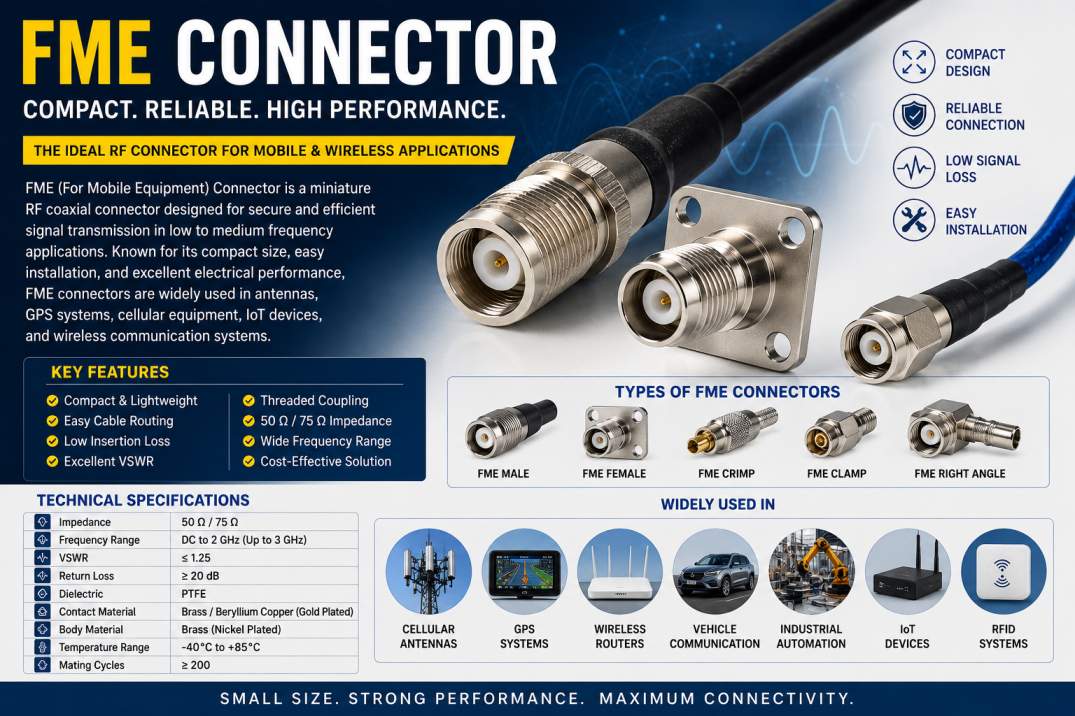
The FME Connector is one of the most widely used miniature RF connectors in wireless communication systems where compact size, reliable performance, and easy cable routing are essential. Originally developed for mobile communication equipment, the FME connector has become a popular choice for cellular antennas, GPS systems, IoT devices, telemetry equipment, Wi-Fi installations, RFID systems, vehicle communication, and industrial wireless networks.
Unlike larger RF connectors such as N-Type or 7/16 DIN, the FME connector features a slim profile that allows pre-assembled cable connectors to pass through small holes during installation. This characteristic makes it particularly valuable for vehicle antenna installations, indoor antenna systems, and compact RF equipment where cable routing space is limited.
FME connectors provide excellent electrical performance across a broad frequency range while maintaining low insertion loss, stable impedance, and reliable mechanical connections. They are available in multiple cable configurations and connector genders to support various RF applications.
As wireless communication technologies continue evolving with 4G LTE, 5G, GPS navigation, smart transportation, and industrial IoT, FME connectors remain an economical and dependable solution for medium-frequency RF interconnections.
What Is an FME Connector?
An FME (For Mobile Equipment) Connector is a compact coaxial RF connector designed primarily for low-to-medium power radio frequency applications. It provides a secure connection between coaxial cables and RF devices while maintaining the characteristic impedance required for efficient signal transmission.
The connector was specifically developed for mobile communication equipment where cable assemblies must pass through narrow openings without removing the connector.
FME connectors are available in both male and female configurations and support both 50 Ohm and 75 Ohm impedance systems depending on the application.
Due to their small size and ease of installation, they are widely used in:
- Cellular antennas
- GPS receivers
- Vehicle communication systems
- Wireless routers
- RF repeaters
- IoT devices
- Telemetry equipment
- RFID systems
How Does an FME Connector Work?
An FME connector provides a continuous RF transmission path by creating a precision electrical connection between the center conductor and the outer shielding of a coaxial cable.
The connector consists of:
- Center contact pin
- Dielectric insulator
- Outer conductor
- Threaded coupling mechanism
- Connector body
When connected, the center pin carries the RF signal while the outer body maintains grounding and shielding. The threaded coupling ensures a secure mechanical connection while maintaining consistent electrical performance.
Proper impedance matching minimizes signal reflection, insertion loss, and standing waves.
Construction of an FME Connector
Center Contact
The center conductor transmits the RF signal and is commonly gold-plated brass or beryllium copper for excellent conductivity.
Dielectric Insulator
PTFE (Teflon) is widely used because of its excellent dielectric properties and thermal stability.
Connector Body
The connector body is generally manufactured from precision-machined brass with nickel plating for corrosion resistance.
Coupling Nut
The threaded coupling provides secure attachment while allowing easy installation and removal.
Outer Shield Contact
Maintains electrical grounding and protects against electromagnetic interference.
Technical Specifications
| Specification | Typical Value |
|---|---|
| Connector Type | FME Male / Female |
| Characteristic Impedance | 50 Ω / 75 Ω |
| Frequency Range | DC to 2 GHz (typical), up to 3 GHz |
| VSWR | ≤1.25 |
| Return Loss | Better than 20 dB |
| Insertion Loss | Very Low |
| Dielectric Material | PTFE |
| Contact Material | Brass / Beryllium Copper |
| Contact Plating | Gold |
| Body Material | Brass |
| Body Finish | Nickel Plated |
| Coupling Type | Threaded |
| Temperature Range | -40°C to +85°C |
Types of FME Connectors
FME Male Connector
The FME male connector contains an external threaded body and a center pin. It is commonly used on cable assemblies.
Applications
- Mobile antennas
- GPS cables
- Cellular boosters
- RF adapters
FME Female Connector
The female connector contains internal threads and receives the male connector securely.
Applications
- RF equipment
- Signal repeaters
- Communication modules
- Vehicle electronics
FME Crimp Connector
Crimp-style connectors offer fast installation and consistent electrical performance.
Suitable for high-volume cable assembly production.
FME Clamp Connector
Clamp connectors are ideal for field installation without specialized crimping tools.
Right Angle FME Connector
Designed where installation space is limited.
Ideal for:
- Vehicle dashboards
- Compact communication equipment
- Industrial control cabinets
Common Cable Compatibility
FME connectors support numerous coaxial cables.
| Cable Type | Compatibility |
|---|---|
| RG58 | Excellent |
| RG174 | Excellent |
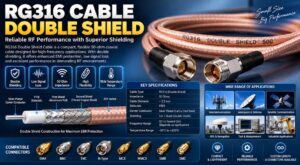
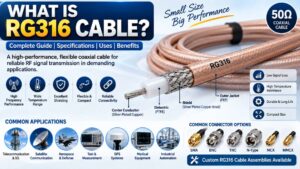
| RG316 | Excellent |
| RG142 | Good |
| LMR100 | Excellent |
| LMR195 | Excellent |
| LMR240 | Good |
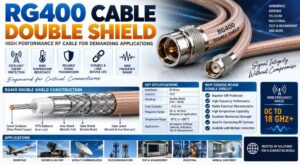
| RG400 | Good |
Key Features of FME Connectors
Compact design
Easy installation
Excellent RF performance
Low insertion loss
Stable impedance
Reliable threaded connection
Corrosion-resistant plating
Wide cable compatibility
Cost-effective
Long service life
Good vibration resistance
Ideal for mobile communication
Advantages of FME Connectors
Compact Size
The small connector diameter allows cable assemblies to pass through narrow mounting holes.
Low Signal Loss
Maintains excellent RF transmission with minimal attenuation.
Easy Installation
Threaded coupling simplifies installation while providing secure attachment.
Cost Effective
Less expensive than many precision microwave connectors.
High Reliability
Maintains stable performance over long operational periods.
Wide Compatibility
Compatible with multiple coaxial cable types.
Excellent Mechanical Strength
Suitable for vibration-prone mobile environments.
Limitations
Limited frequency range compared to SMA connectors
Not recommended for microwave frequencies above 3 GHz
Lower power handling than N-Type connectors
Not ideal for extremely harsh outdoor environments without protection
Applications of FME Connectors
Cellular Communication
Widely used in GSM, LTE, and 5G antenna systems.
GPS Systems
Vehicle navigation and GPS timing equipment.
Mobile Radio
Two-way radio communication systems.
Vehicle Antennas
Police vehicles
Emergency vehicles
Fleet management
Commercial transportation
IoT Devices
Industrial wireless communication
Smart city infrastructure
Remote monitoring
RFID Systems
Warehouse automation
Inventory management
Access control
Wireless Routers
External antenna connections for improved wireless coverage.
Signal Boosters
Cellular repeaters and indoor coverage enhancement systems.
Industrial Automation
Machine-to-machine communication systems.
FME Connector vs SMA Connector
| Feature | FME Connector | SMA Connector |
|---|---|---|
| Size | Compact | Compact |
| Frequency | Up to 3 GHz | Up to 18–26.5 GHz+ |
| Thread Type | Larger Thread | Precision Thread |
| Installation | Easier | Precision Required |
| Cost | Lower | Higher |
| Mobile Use | Excellent | Good |
| Microwave Use | Limited | Excellent |
FME Connector vs N-Type Connector
| Feature | FME | N-Type |
|---|---|---|
| Size | Small | Large |
| Frequency | Up to 3 GHz | Up to 18 GHz+ |
| Power Handling | Medium | High |
| Outdoor Use | Moderate | Excellent |
| Cost | Lower | Higher |
Selection Guide
When selecting an FME connector, consider:
Operating frequency
Cable compatibility
Connector gender
Impedance
Environmental conditions
Power handling
Cable flexibility
Installation method
Corrosion resistance
Mechanical durability
Installation Best Practices
Use the correct cable stripping dimensions.
Avoid excessive bending near the connector.
Ensure proper crimping.
Inspect the center pin alignment.
Keep connectors clean.
Avoid overtightening.
Use quality RF cable assemblies.
Maintenance Tips
Inspect connectors periodically.
Clean contacts using approved cleaners.
Protect unused connectors with dust caps.
Avoid moisture exposure.
Replace damaged connectors immediately.
Store connectors in dry environments.
Future Trends
As IoT, connected vehicles, smart transportation, and wireless communication continue expanding, FME connectors remain an important solution for compact RF connectivity. Future improvements include enhanced corrosion-resistant coatings, improved sealing technologies, lighter materials, better vibration resistance, and higher-frequency variants designed to support emerging communication standards while maintaining the connector’s compact form factor.
FME Connector Specification Comparison
| Parameter | Standard Performance | Premium Performance |
|---|---|---|
| Frequency Range | DC–2 GHz | DC–3 GHz |
| VSWR | ≤1.35 | ≤1.20 |
| Return Loss | ≥18 dB | ≥22 dB |
| Contact Plating | Gold | Thick Gold |
| Durability | 200 Mating Cycles | 500+ Mating Cycles |
| Corrosion Resistance | Good | Excellent |
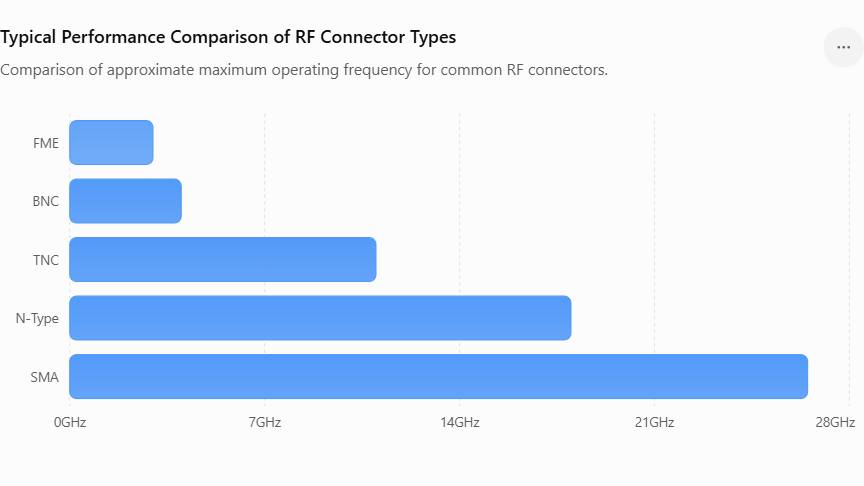
FME Connector Performance Comparison Chart
Conclusion
The FME Connector is a compact, reliable, and cost-effective RF connector specifically designed for mobile communication and medium-frequency applications. Its slim profile, threaded coupling, excellent electrical performance, and compatibility with various coaxial cables make it an ideal choice for cellular antennas, GPS systems, wireless networking, IoT devices, vehicle communication, and industrial automation. While it is not intended for ultra-high-frequency microwave systems, the FME connector continues to provide dependable performance in applications where ease of installation, low insertion loss, and compact size are essential. Selecting the correct connector type, cable compatibility, impedance, and installation method ensures long-term reliability and optimal RF system performance.
Frequently Asked Questions (FAQs)
1. What is an FME Connector?
An FME Connector is a compact RF coaxial connector designed for mobile communication equipment, GPS systems, antennas, and wireless devices.
2. What does FME stand for?
FME stands for For Mobile Equipment, reflecting its original design purpose for mobile communication applications.
3. What frequency can an FME Connector support?
Most FME connectors support frequencies from DC to 2 GHz, while premium models can operate up to approximately 3 GHz.
4. What impedance is available?
FME connectors are commonly available in 50 Ohm and 75 Ohm versions.
5. What cables are compatible with FME connectors?
Common compatible cables include RG58, RG174, RG316, RG142, LMR100, LMR195, LMR240, and RG400.
6. Where are FME Connectors used?
They are used in cellular antennas, GPS systems, vehicle communication, IoT devices, wireless routers, RFID systems, and RF signal boosters.
7. What is the difference between FME and SMA connectors?
FME connectors are easier to install and ideal for mobile applications, while SMA connectors support much higher frequencies and are commonly used in precision RF and microwave systems.
8. Can FME connectors be used outdoors?
Yes, when paired with weatherproof boots or sealed cable assemblies, they can be used outdoors, although N-Type connectors are generally preferred for harsh environments.
9. Are FME connectors reusable?
Yes. High-quality FME connectors can be disconnected and reconnected multiple times if handled correctly.
10. How do I choose the right FME connector?
Select based on cable type, impedance, operating frequency, connector gender, installation environment, and mechanical durability requirements.
Typical Performance Comparison of RF Connector Types
Comparison of approximate maximum operating frequency for common RF connectors.
| connector | frequency |
|---|---|
| FME | 3 |
| BNC | 4 |
| TNC | 11 |
| N-Type | 18 |
| SMA | 26.5 |