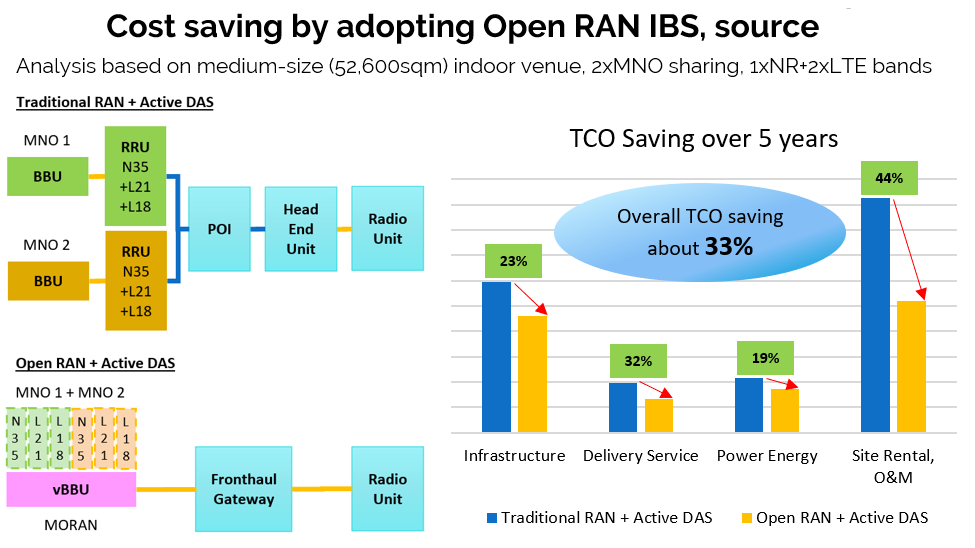
As 5G adoption continues to grow worldwide, ensuring reliable indoor connectivity has become one of the biggest challenges for mobile operators and enterprises. Studies show that nearly 80% of mobile data traffic originates indoors, making traditional outdoor cell towers insufficient for delivering high-speed, low-latency 5G services inside buildings.
This is where Distributed Antenna Systems (DAS) play a critical role. DAS is one of the most effective technologies used in 5G In-Building Solutions (IBS) to extend Radio Access Network (RAN) coverage indoors. It distributes cellular signals efficiently throughout buildings, ensuring users experience consistent connectivity regardless of their location.
From hospitals and airports to shopping malls, data centers, factories, hotels, and corporate offices, DAS has become an essential part of modern indoor wireless infrastructure.
What is DAS?
A Distributed Antenna System (DAS) is a network of strategically placed antennas connected through coaxial cables, fiber optic cables, or hybrid cable systems. Instead of relying on a single antenna, DAS distributes RF signals across multiple antennas installed throughout a building.
The objective is simple:
- Deliver uniform signal coverage
- Eliminate dead zones
- Improve network capacity
- Reduce interference
- Support multiple wireless technologies simultaneously
DAS acts as an extension of the cellular network, bringing the Radio Access Network (RAN) directly inside buildings where outdoor signals struggle to penetrate.
Understanding 5G IBS
5G In-Building Solutions (IBS) refer to technologies designed to provide seamless indoor cellular coverage.
IBS typically includes:
- Distributed Antenna Systems (DAS)
- Small Cells
- Fiber Distribution Networks
- RF Components
- Low PIM Passive Components
- Hybrid Couplers
- Power Splitters
- Directional Couplers
- RF Cable Assemblies
- Indoor Antennas
Together, these components create a reliable indoor wireless ecosystem capable of supporting high-speed 5G connectivity.
Why Outdoor 5G Networks Are Not Enough
Unlike previous generations, many 5G deployments operate at higher frequencies.
Higher frequencies provide:
- Massive bandwidth
- Faster speeds
- Ultra-low latency
However, they also experience:
- Higher path loss
- Limited penetration through concrete
- Signal attenuation by glass and steel
- Reduced indoor coverage
Modern commercial buildings often contain:
- Reinforced concrete
- Metallic structures
- Energy-efficient coated glass
- Thick walls
- Underground parking areas
These materials significantly weaken outdoor cellular signals before they reach users indoors.
DAS solves this problem by bringing the network inside the building.
How DAS Opens the RAN Indoors
The Radio Access Network (RAN) connects user devices to the mobile operator’s core network.
Without indoor infrastructure, users depend solely on outdoor macro towers.
With DAS, the RAN is effectively extended indoors by distributing RF signals through multiple indoor antennas.
The process includes:
- Cellular signal enters the building from the base station.
- Signal is amplified if required.
- Fiber or coaxial backbone distributes the signal.
- Indoor antennas radiate RF coverage throughout the building.
- Mobile devices receive strong and stable connectivity.
This creates seamless indoor coverage without requiring users to switch networks.
Components of a DAS-Based 5G IBS
A complete DAS deployment consists of several interconnected components.
Base Station
Generates the RF signal from the operator’s network.
Head-End Equipment
Processes and distributes incoming RF signals.
Fiber Distribution Network
Carries RF signals over long distances with minimal loss.
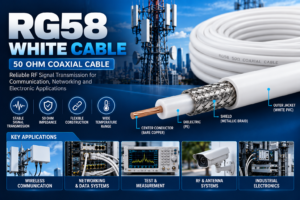
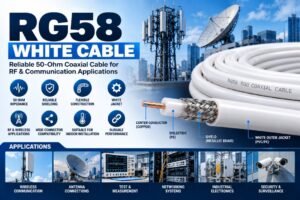
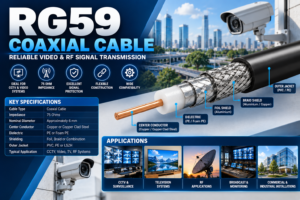
RF Cable Assemblies
Connect various DAS components while maintaining signal integrity.
Splitters and Couplers
Divide RF power evenly across multiple antennas.
Indoor Antennas
Broadcast RF signals throughout the building.
Low PIM Components
Prevent passive intermodulation that can reduce network performance.
Repeaters (When Required)
Boost weak incoming signals for improved coverage.
Types of DAS
Passive DAS
Passive DAS uses coaxial cables, splitters, couplers, and passive antennas.
Advantages include:
- Lower installation cost
- High reliability
- Simple maintenance
- Suitable for medium-sized buildings
Active DAS
Active DAS converts RF signals into optical signals using fiber optics.
Advantages include:
- Longer coverage distances
- Higher capacity
- Better scalability
- Excellent for airports and stadiums
Hybrid DAS
Hybrid DAS combines passive and active technologies.
It provides:
- Cost efficiency
- High performance
- Flexible deployment
- Excellent scalability
Hybrid DAS is increasingly preferred for large commercial buildings.
Benefits of DAS in 5G IBS
Improved Indoor Coverage
DAS eliminates weak signal areas and provides consistent coverage throughout the building.
Increased Network Capacity
Multiple antennas distribute user traffic efficiently, reducing congestion during peak usage.
Higher Data Speeds
Strong RF signals improve throughput, enabling faster downloads and uploads.
Lower Latency
Reduced signal loss enables ultra-low latency applications required for modern businesses.
Better Voice Quality
Clear voice communication is maintained even in densely populated buildings.
Enhanced User Experience
Employees, visitors, and customers enjoy uninterrupted mobile connectivity.
Improved Battery Life
Devices consume less power when connected to stronger signals.
Future-Proof Infrastructure
DAS supports future wireless technologies with minimal upgrades.
DAS vs Small Cells
| Feature | DAS | Small Cells |
|---|---|---|
| Coverage | Large buildings | Small coverage zones |
| Capacity | High | Medium |
| Scalability | Excellent | Moderate |
| Multi-Operator Support | Yes | Limited |
| Maintenance | Centralized | Distributed |
| Installation | Structured | Easier for small areas |
Many enterprise deployments combine DAS and Small Cells for optimal performance.
Applications of DAS in 5G IBS
Commercial Buildings
Provides seamless mobile connectivity for offices and business parks.
Hospitals
Supports doctors, medical devices, emergency communications, and patient connectivity.
Airports
Ensures reliable communication across terminals, baggage systems, and passenger areas.
Shopping Malls
Delivers uninterrupted connectivity for retailers and shoppers.
Hotels
Improves guest experience with strong indoor mobile coverage.
Manufacturing Facilities
Supports Industry 4.0 applications, automation, robotics, and IoT devices.
Educational Institutions
Provides reliable connectivity for students, faculty, and digital learning.
Data Centers
Supports mission-critical communication systems.
Smart Buildings
Enables integrated IoT sensors, automation, and energy management.
Transportation Hubs
Ensures uninterrupted communication for railways, metro stations, and bus terminals.
Challenges in DAS Deployment
Although highly effective, DAS deployment requires careful planning.
Common challenges include:
- RF network planning
- Building architecture
- Signal interference
- Cable routing
- Installation cost
- Multi-operator coordination
- Spectrum management
- Future scalability
Professional RF design minimizes these challenges and ensures optimal system performance.
Role of High-Quality RF Components
The performance of a DAS system depends heavily on the quality of its RF components.
Critical components include:
- RF Connectors
- Low Loss RF Cables
- RF Cable Assemblies
- Hybrid Couplers
- Directional Couplers
- Power Splitters
- Indoor Antennas
- Low PIM Connectors
- RF Adapters
- RF Terminations
- Surge Protectors
High-quality components reduce insertion loss, improve return loss, and increase overall network reliability.
Future of DAS in 5G and Beyond
The demand for indoor wireless connectivity will continue to grow as businesses adopt:
- Private 5G Networks
- Open RAN
- Smart Factories
- Artificial Intelligence
- Industrial IoT
- Autonomous Robots
- Connected Healthcare
- Edge Computing
- Smart Cities
- 6G Research
Future DAS systems will become more intelligent through AI-based optimization, cloud-managed networks, and software-defined radio technologies, enabling seamless support for next-generation applications.
Conclusion
Distributed Antenna Systems are the foundation of modern 5G In-Building Solutions (IBS). By extending the Radio Access Network indoors, DAS ensures reliable coverage, increased capacity, reduced latency, and superior user experiences in environments where outdoor cellular signals cannot perform effectively. As organizations continue embracing digital transformation, smart buildings, and private 5G networks, investing in a well-designed DAS infrastructure will remain essential for delivering robust, future-ready indoor wireless connectivity.
Frequently Asked Questions (FAQs)
What is DAS in 5G IBS?
DAS (Distributed Antenna System) is a network of indoor antennas that distributes cellular signals throughout a building, providing strong and reliable 5G coverage.
Why is DAS important for indoor 5G?
Outdoor 5G signals often struggle to penetrate building materials. DAS extends the cellular network indoors, ensuring consistent coverage and higher data speeds.
How does DAS improve network performance?
DAS reduces signal loss, minimizes dead zones, increases capacity, improves voice quality, and delivers faster data speeds across indoor environments.
What is the difference between DAS and Small Cells?
DAS provides centralized coverage over large buildings and supports multiple operators, while Small Cells are designed for localized coverage in smaller areas.
Which buildings require a DAS?
Large offices, hospitals, airports, hotels, shopping malls, stadiums, manufacturing plants, educational campuses, and transportation hubs commonly benefit from DAS installations.
Can DAS support multiple mobile operators?
Yes. Modern DAS solutions can support multiple operators and multiple frequency bands simultaneously, making them ideal for shared indoor infrastructure.
Does DAS support future technologies?
Yes. Properly designed DAS systems can support 5G, Private 5G, IoT, Open RAN, and can be upgraded for future wireless technologies.
What RF components are used in a DAS system?
A DAS system typically includes RF cable assemblies, fiber optic cables, indoor antennas, power splitters, directional couplers, low PIM connectors, RF adapters, and RF terminations.
Is DAS suitable for smart buildings?
Yes. DAS provides the reliable wireless foundation required for smart buildings, enabling IoT devices, automation systems, security networks, and connected services.
How do businesses benefit from DAS?
Businesses benefit from improved employee productivity, better customer experiences, reliable communication, enhanced operational efficiency, and support for advanced 5G applications.