Modern RF telecommunications systems demand exceptional reliability, high signal integrity, and robust protection against electrical damage. Whether deployed in 5G infrastructure, satellite communication, military radar, aerospace systems, or laboratory test environments, RF components must operate safely under high-frequency and high-voltage conditions.
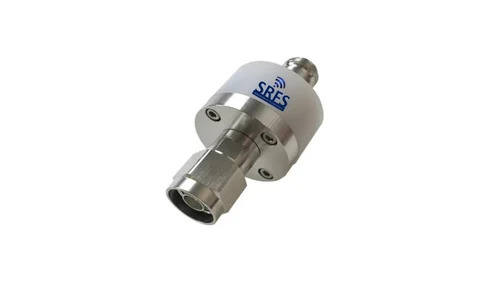
One of the most effective components used to protect RF equipment while maintaining excellent signal transmission is the High Voltage DC Block. This specialized RF component isolates DC voltage between interconnected devices while allowing RF and microwave signals to pass with minimal insertion loss.
As communication frequencies continue to increase and RF systems become more sophisticated, High Voltage DC Blocks play a vital role in preventing equipment failure, reducing maintenance costs, and ensuring uninterrupted communication.
What is a High Voltage DC Block?
A High Voltage DC Block is an RF passive component designed to block direct current (DC) while allowing alternating current (AC), radio frequency (RF), and microwave signals to pass through with minimal attenuation.
Unlike standard DC blocks, High Voltage DC Blocks are specifically engineered to withstand significantly higher DC voltages without compromising RF performance.
These devices are commonly installed between RF instruments, antennas, amplifiers, transmitters, receivers, and measurement equipment to eliminate unwanted DC paths that may damage sensitive electronic components.
How High Voltage DC Blocks Work
A High Voltage DC Block contains a precision capacitor integrated into the RF transmission path.
The capacitor acts as an electrical barrier for DC voltage while presenting very low impedance to RF signals.
As a result:
- DC voltage is completely isolated.
- RF signals travel with minimal insertion loss.
- Signal reflections remain extremely low.
- Equipment is protected from electrical faults.
- Communication quality remains stable.
This simple but highly effective operating principle makes DC Blocks essential in nearly every professional RF communication system.
Why High Voltage DC Isolation Matters
Many RF systems carry both RF signals and DC bias voltages through coaxial cables.
If unwanted DC voltage reaches sensitive equipment, it may cause:
- Permanent equipment damage
- Amplifier failure
- Receiver malfunction
- Increased noise
- Calibration errors
- Downtime
- Expensive repairs
High Voltage DC Blocks eliminate these risks by isolating the DC path while preserving RF signal performance.
Key Features of High Voltage DC Blocks
High Voltage Protection
Designed to withstand hundreds or even thousands of volts depending on the model.
Low Insertion Loss
Maintains excellent signal transmission with minimal power reduction.
Excellent VSWR
Provides superior impedance matching for maximum RF efficiency.
Wide Frequency Coverage
Available for applications from MHz frequencies up to 67 GHz and beyond.
High Return Loss
Reduces signal reflections for improved communication quality.
Precision RF Connectors
Available with:
- SMA
- N Type
- 2.92 mm
- 2.4 mm
- 1.85 mm
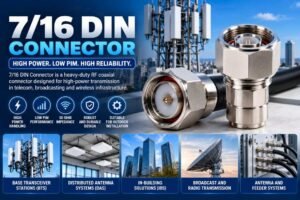
- 7/16 DIN
- TNC
- BNC
- SMP
- SMPM
Rugged Construction
Manufactured using precision machining and high-quality conductive materials for long service life.
Compact Design
Easy integration into existing RF assemblies and test setups.
Benefits of High Voltage DC Blocks in RF Telecommunications
Protects Sensitive RF Equipment
High Voltage DC Blocks prevent accidental DC voltage from reaching expensive RF instruments and communication equipment.
Improves System Reliability
Electrical isolation significantly reduces unexpected equipment failures and maintenance requirements.
Enhances Signal Integrity
By maintaining excellent impedance matching, DC Blocks minimize signal reflections and preserve RF signal quality.
Prevents Ground Loop Problems
Ground loops introduce unwanted noise and interference.
DC Blocks electrically isolate equipment while maintaining RF continuity.
Supports High-Power RF Systems
High Voltage DC Blocks are ideal for transmitters and power amplifiers operating with elevated DC bias levels.
Extends Equipment Life
Protecting components from DC stress greatly increases operational lifespan.
Applications in RF Telecommunications
5G Mobile Networks
Modern 5G base stations operate at high frequencies and utilize numerous RF amplifiers.
High Voltage DC Blocks protect:
- Remote Radio Units
- Massive MIMO antennas
- RF filters
- Power amplifiers
- Distributed antenna systems
Satellite Communications
Satellite communication systems require extremely stable RF paths.
DC Blocks protect:
- Satellite transceivers
- Ground stations
- Upconverters
- Downconverters
- High-frequency receivers
Radar Systems
Military and weather radar systems rely on high-power RF transmission.
DC Blocks improve protection for:
- Radar transmitters
- Radar receivers
- Signal processors
- Microwave amplifiers
Aerospace Communication
Aircraft communication systems require reliable RF isolation under harsh environmental conditions.
Applications include:
- Navigation systems
- Aircraft antennas
- Communication radios
- Electronic warfare systems
Defense Communication Networks
Military communication equipment often operates under high voltage and demanding environments.
DC Blocks protect mission-critical systems while ensuring secure signal transmission.
RF Test Laboratories
Testing environments frequently connect expensive equipment together.
High Voltage DC Blocks safeguard:
- Vector Network Analyzers
- Spectrum Analyzers
- Signal Generators
- Oscilloscopes
- RF Power Meters
Broadcasting Systems
Television and radio broadcasting systems benefit from DC isolation between transmitters and RF accessories.
Industrial RF Systems
Industrial automation utilizes RF communication in:
- Wireless monitoring
- IoT devices
- Factory communication
- Process control systems
Industries Using High Voltage DC Blocks
- Telecommunications
- Defense
- Aerospace
- Satellite Communication
- Military Electronics
- RF Test & Measurement
- Broadcasting
- Scientific Research
- Semiconductor Manufacturing
- Wireless Infrastructure
- Industrial Automation
- Medical Communication Equipment
Technical Specifications
| Parameter | Typical Value |
|---|---|
| Frequency Range | DC Block Operating Band up to 67 GHz (model dependent) |
| Impedance | 50 Ohm |
| Voltage Rating | High Voltage Models Available |
| Insertion Loss | Very Low |
| VSWR | Low |
| Return Loss | High |
| Connector Types | SMA, N, TNC, BNC, 2.92 mm, 2.4 mm, 1.85 mm |
| Operating Temperature | Industrial Grade |
| Body Material | Stainless Steel / Brass |
| Finish | Passivated or Gold Plated |
Choosing the Right High Voltage DC Block
When selecting a High Voltage DC Block, consider the following factors:
Frequency Range
Ensure the component supports the highest operating frequency of your RF system.
Voltage Rating
Select a DC Block capable of handling your maximum DC voltage safely.
Connector Compatibility
Choose connectors that match your existing RF infrastructure.
Power Handling
Higher power RF systems require components designed for elevated power levels.
Insertion Loss
Lower insertion loss ensures maximum signal transmission.
VSWR
A low VSWR value improves system efficiency and reduces signal reflections.
Environmental Conditions
Outdoor and military applications require rugged, weather-resistant construction.
Installation Best Practices
- Verify connector compatibility before installation.
- Avoid over-tightening RF connectors.
- Use calibrated torque wrenches.
- Keep connector interfaces clean.
- Inspect connectors regularly.
- Confirm voltage ratings before use.
- Perform VSWR testing after installation.
- Protect unused RF ports with dust caps.
Maintenance Tips
Regular maintenance extends the lifespan of High Voltage DC Blocks.
Recommended practices include:
- Clean RF connectors periodically.
- Inspect for corrosion.
- Replace worn connectors.
- Verify electrical isolation.
- Test insertion loss during scheduled maintenance.
- Store components in dry, dust-free environments.
Future of High Voltage DC Blocks
The rapid expansion of advanced wireless technologies is increasing the demand for high-performance RF components.
Emerging applications include:
- 5G Advanced
- 6G Research
- Autonomous Vehicles
- Satellite Internet
- Space Communications
- AI Data Centers
- Quantum Computing
- Smart Cities
- UAV Communication
- High-Speed Defense Networks
Future High Voltage DC Blocks will offer:
- Higher operating frequencies
- Lower insertion loss
- Greater voltage isolation
- Improved miniaturization
- Enhanced thermal performance
- Better reliability for mission-critical systems
Why Choose SRFS Teleinfra High Voltage DC Blocks?
SRFS Teleinfra provides precision-engineered High Voltage DC Blocks designed to meet the demands of modern RF and microwave systems.
Key advantages include:
- High-quality manufacturing
- Excellent RF performance
- Low insertion loss
- High return loss
- Wide frequency range
- High voltage isolation
- Precision RF connectors
- Reliable performance in telecom, aerospace, defense, satellite, and laboratory applications
- Stringent quality testing
- Custom solutions for specialized RF requirements
Conclusion
High Voltage DC Blocks are indispensable components in modern RF telecommunications. They provide reliable DC isolation while preserving high-frequency signal performance, protecting expensive equipment from electrical damage and ensuring long-term system stability.
From 5G infrastructure and satellite communications to aerospace, defense, and RF testing laboratories, these components enhance system reliability, improve signal integrity, and reduce maintenance costs. Choosing a high-quality High Voltage DC Block is a smart investment for any organization seeking dependable, high-performance RF communication systems.
Frequently Asked Questions (FAQs)
1. What is a High Voltage DC Block?
A High Voltage DC Block is an RF component that blocks DC voltage while allowing RF and microwave signals to pass with minimal loss.
2. Why are High Voltage DC Blocks important in RF telecommunications?
They protect sensitive RF equipment from unwanted DC voltage, improve signal integrity, and enhance system reliability.
3. Where are High Voltage DC Blocks commonly used?
They are widely used in 5G networks, satellite communication, radar systems, aerospace, defense, broadcasting, RF laboratories, and industrial wireless systems.
4. Do High Voltage DC Blocks affect RF signal quality?
High-quality DC Blocks are designed with low insertion loss and excellent VSWR, ensuring minimal impact on RF signal performance.
5. What connector types are available for High Voltage DC Blocks?
Common connector options include SMA, N Type, TNC, BNC, 2.92 mm, 2.4 mm, 1.85 mm, SMP, and SMPM.
6. How do I choose the right High Voltage DC Block?
Consider factors such as frequency range, voltage rating, connector type, insertion loss, VSWR, power handling, and operating environment.
7. Can High Voltage DC Blocks be used in 5G and satellite systems?
Yes. They are widely used in modern 5G infrastructure, satellite ground stations, microwave backhaul, and high-frequency communication systems.
8. How often should High Voltage DC Blocks be inspected?
Routine inspections during scheduled equipment maintenance help ensure optimal RF performance and long service life.