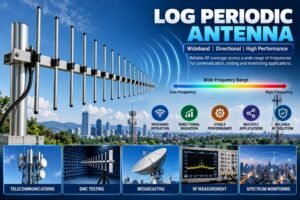
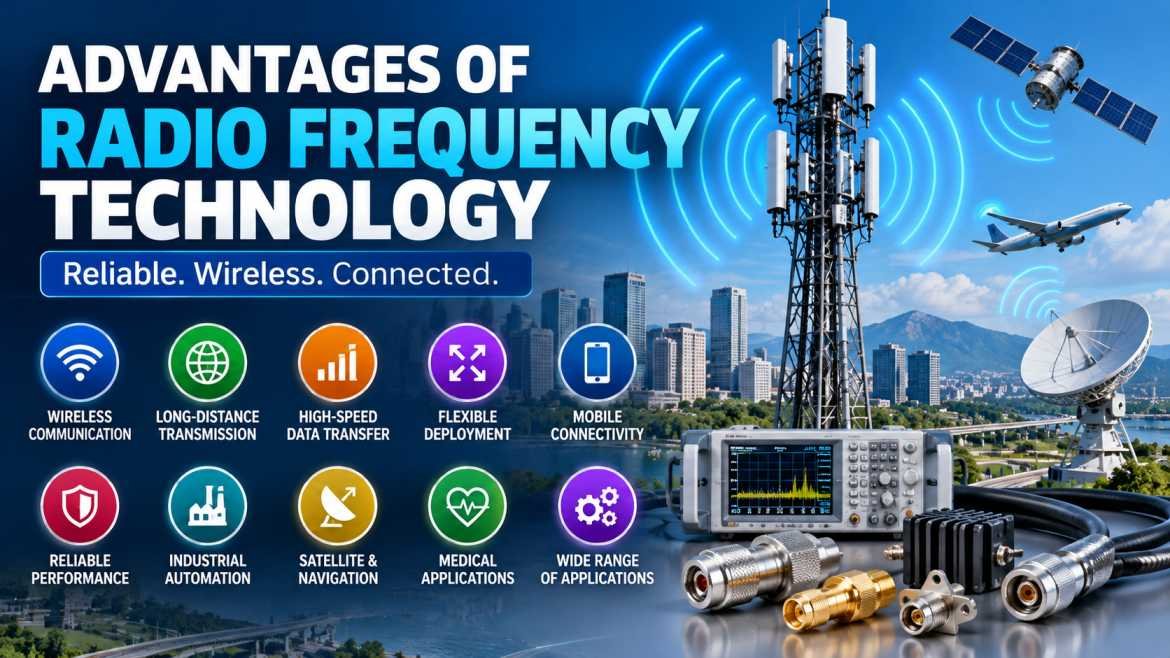
Radio frequency (RF) technology plays an essential role in modern communication, wireless networking, broadcasting, navigation, healthcare, industrial automation, and defense systems. It enables information to be transmitted and received through electromagnetic waves without requiring a direct physical connection between devices. From mobile networks and satellite communication to RF testing equipment and wireless sensors, radio frequency technology supports many of the systems used in everyday life and advanced engineering.
Understanding the advantages of radio frequency technology helps businesses, engineers, and technology professionals select suitable wireless communication solutions for their applications.
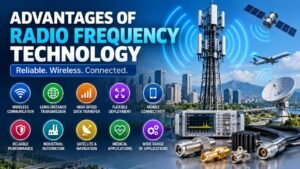
What Is Radio Frequency Technology?
Radio frequency technology uses electromagnetic waves within the radio frequency spectrum to transmit, receive, or process information. RF signals are commonly associated with frequencies ranging from approximately 3 kHz to 300 GHz, covering a broad range of communication and electronic applications.
RF technology includes transmitters, receivers, antennas, RF cables, coaxial connectors, amplifiers, filters, attenuators, power dividers, and other microwave components. These components work together to generate, guide, control, and receive RF signals.
Radio frequency systems are widely used in telecommunications, radar, satellite links, broadcasting, RFID, wireless networking, medical equipment, and industrial monitoring.
10 Major Advantages of Radio Frequency Technology
1. Wireless Communication and Mobility
One of the biggest advantages of radio frequency technology is its ability to transmit information wirelessly. Devices can communicate without requiring a continuous physical cable connection between the transmitter and receiver.
This capability supports mobile phones, Wi-Fi networks, Bluetooth devices, wireless sensors, and two-way radio systems. Users can access communication services while moving between locations, making RF technology particularly valuable for mobile and portable equipment.
Wireless communication also reduces the need for extensive cabling in buildings, factories, campuses, and remote installations.
2. Wide Range of Applications
RF technology supports a broad variety of applications because different frequency bands and system designs can be selected for specific requirements.
Common applications include:
- Cellular networks and wireless broadband
- Satellite communication and navigation
- Radar and surveillance systems
- Broadcasting and television transmission
- RFID and contactless identification
- Medical monitoring and selected therapeutic equipment
- Industrial automation and remote sensing
- Aerospace and defense communication
This versatility allows RF technology to support both everyday consumer electronics and specialized engineering systems.
3. Long-Distance Signal Transmission
Radio frequency signals can carry information over considerable distances, depending on the operating frequency, transmitter power, antenna design, receiver sensitivity, and surrounding environment.
Satellite communication enables connectivity across continents and oceans, while radio broadcasting serves large geographical areas. Specialized radio systems can also support communication in remote locations where wired infrastructure is difficult or expensive to install.
However, transmission distance is not unlimited. Obstacles, interference, terrain, atmospheric conditions, and regulatory power restrictions can affect signal coverage.
4. Efficient Use of Communication Infrastructure
RF technology can reduce the need to install physical communication cables between every connected device. This can simplify network deployment, particularly in large facilities, temporary installations, and locations where cable routing is difficult.
Wireless access points, radio links, and distributed antenna systems can extend connectivity across buildings and public spaces. In telecom infrastructure, RF components help distribute signals between equipment, antennas, and network subsystems.
Although wireless systems can reduce cabling requirements, they still depend on suitable antennas, power supplies, network equipment, and, in many cases, wired backhaul connections.
5. High-Speed Data Transmission
Modern RF communication systems can deliver high data rates by using suitable frequency bands, channel bandwidths, modulation techniques, coding methods, and antenna configurations.
Wi-Fi, 4G, 5G, and microwave communication links use advanced RF engineering to transmit large volumes of information. These technologies support video streaming, cloud applications, online collaboration, industrial connectivity, and real-time data exchange.
Actual data speeds depend on available bandwidth, signal quality, network congestion, equipment capabilities, and environmental conditions.
6. Support for Critical Communication Systems
Reliable communication is essential for emergency response, public safety, transportation, utilities, and defense operations. RF technology enables communication systems that can operate across wide areas and support mobile teams.
Professional radio networks, including TETRA-based systems, are used in certain public safety and mission-critical environments. RF infrastructure can also support communication in airports, railways, tunnels, industrial facilities, and large public buildings.
System reliability depends on network design, redundancy, interference management, power backup, and appropriate equipment selection.
7. Flexible and Scalable Network Deployment
RF technology allows communication coverage to be adjusted according to changing operational needs. Additional antennas, access points, repeaters, or radio links may be installed to extend coverage or increase capacity.
For example, in-building wireless solutions and distributed antenna systems can improve cellular coverage in offices, shopping centres, hospitals, hotels, and transport facilities.
This flexibility is useful for expanding businesses, temporary event networks, remote monitoring systems, and large industrial sites. Proper frequency planning and interference control remain important as networks grow.
8. Non-Contact Sensing and Identification
RF technology enables devices to detect objects, exchange identification information, and measure certain environmental or physical parameters without requiring direct electrical contact.
RFID systems are widely used for inventory management, asset tracking, access control, logistics, and supply-chain operations. Radar systems use radio waves to detect objects and estimate parameters such as distance, speed, or direction.
These capabilities help businesses automate tracking processes, improve visibility, and reduce manual handling in suitable applications.
9. Integration with Modern Electronic Systems
RF components can be integrated into compact electronic devices, communication modules, embedded systems, and specialized instruments. This supports the development of connected sensors, portable equipment, wireless terminals, and advanced measurement systems.
Components such as RF cables, coaxial connectors, antennas, attenuators, filters, and power dividers help maintain controlled signal paths and connect different parts of an RF system.
Correct impedance matching, shielding, connector selection, and cable assembly design are important for minimizing signal reflections, unwanted losses, and electromagnetic interference.
10. Support for Innovation and Industrial Development
Radio frequency technology contributes to innovation in telecommunications, scientific research, transportation, healthcare, aerospace, and manufacturing.
RF test and measurement systems help engineers evaluate signal quality, frequency response, power levels, and other electrical characteristics. Industrial wireless networks support monitoring and data collection, while radar and satellite technologies enable advanced navigation and observation applications.
As connected devices and wireless infrastructure continue to develop, RF engineering remains important for improving communication performance, operational efficiency, and system integration.
Role of RF Components in Radio Frequency Technology
The performance of an RF system depends on the quality and compatibility of its individual components.
| RF Component | Primary Function |
|---|---|
| RF Cable | Carries RF signals between connected devices |
| Coaxial Connector | Provides a secure electrical and mechanical interface |
| RF Antenna | Transmits or receives electromagnetic waves |
| RF Attenuator | Reduces signal power by a specified amount |
| Power Divider | Splits an input signal into multiple output paths |
| RF Filter | Passes selected frequency ranges and suppresses others |
| RF Amplifier | Increases signal power or amplitude |
| RF Termination | Absorbs RF energy and helps prevent unwanted reflections |
Selecting appropriate components helps engineers design RF systems with suitable impedance, operating frequency, power handling, shielding, and signal integrity.
Challenges and Limitations of Radio Frequency Technology
Despite its advantages, RF technology has certain limitations. Wireless signals may experience interference from other transmitters, electronic equipment, or nearby communication systems. Signal strength can decrease with distance, while buildings, terrain, and other obstacles may weaken coverage.
High-frequency systems can require more careful antenna placement, cable selection, connector installation, and signal-path design. RF systems also need to comply with applicable spectrum allocations, power limits, and regulatory requirements.
These challenges can be managed through frequency planning, shielding, filtering, suitable antenna design, careful component selection, and regular system testing.
Conclusion
Radio frequency technology offers significant advantages, including wireless mobility, flexible deployment, long-distance communication, high-speed data transfer, non-contact identification, and integration with modern electronic systems. It supports telecommunications, public safety, satellite communication, industrial automation, aerospace, healthcare, and many other sectors.
Reliable RF performance depends on appropriate system design and compatible components. By selecting suitable RF cables, connectors, antennas, attenuators, filters, and other components, engineers can build communication systems that meet their required performance and operating conditions.
FAQs About Radio Frequency Technology
1. What are the main advantages of radio frequency technology?
Its main advantages include wireless communication, mobility, flexible network deployment, long-distance transmission, high-speed data connectivity, and support for sensing and identification applications.
2. Where is radio frequency technology used?
It is used in mobile networks, Wi-Fi, satellite communication, radar, broadcasting, RFID, medical equipment, industrial automation, and public safety communication.
3. How does radio frequency technology work?
An RF transmitter converts information into an electrical signal that is radiated as electromagnetic waves through an antenna. A receiving antenna captures the signal, and a receiver processes it to recover the information.
4. What is the frequency range of RF technology?
The commonly recognized radio frequency range extends approximately from 3 kHz to 300 GHz, although practical systems use specific allocated frequency bands.
5. Is radio frequency technology better than wired communication?
Neither is universally better. RF technology provides mobility and flexible deployment, while wired connections can offer predictable performance, physical security, and reduced exposure to wireless interference.
6. What components are used in RF systems?
Common components include antennas, coaxial cables, connectors, filters, amplifiers, attenuators, power dividers, and RF terminations.
7. What affects RF signal quality?
Frequency, distance, interference, antenna performance, impedance matching, cable losses, connector quality, and environmental conditions can all affect signal quality.
8. Why are RF cables and connectors important?
They carry signals between system components. Suitable cables and connectors help maintain impedance matching, reduce unwanted signal loss, and support reliable RF performance.
9. What is the role of RF technology in 5G?
RF technology enables wireless transmission between 5G devices and network infrastructure. Antennas, radio units, filters, amplifiers, and other RF components support signal transmission and reception.
10. What is the future of radio frequency technology?
RF technology will continue to support advanced wireless networks, satellite connectivity, connected devices, radar, industrial automation, and emerging communication systems as new applications and frequency bands develop.