The transportation industry is undergoing a massive digital transformation, and 5G technology is at the center of this evolution. Modern airports, railway stations, and subway networks require reliable, high-speed communication to manage thousands of passengers, connected devices, surveillance systems, and operational equipment every second.
Unlike previous wireless technologies, 5G networks provide ultra-low latency, high bandwidth, and the ability to connect millions of IoT devices simultaneously. These capabilities enable transportation authorities to improve passenger experiences, enhance security, reduce operational costs, and increase overall efficiency.
As smart transportation infrastructure becomes more common worldwide, 5G technology is helping create safer, faster, and more intelligent transit environments.
What is 5G Technology?
5G is the fifth generation of mobile communication technology designed to deliver:
- Multi-gigabit data speeds
- Ultra-low latency (less than 1 millisecond)
- Massive IoT connectivity
- High reliability
- Network slicing
- Edge computing support
These capabilities make 5G ideal for transportation hubs where thousands of connected devices must communicate instantly.
Why Transportation Infrastructure Needs 5G
Modern transportation facilities operate far beyond simply moving passengers. Today’s airports and railway stations manage passenger information systems, smart ticketing, security surveillance, facial recognition, smart parking, automated baggage handling, driverless vehicles, autonomous maintenance robots, environmental monitoring, digital signage, and emergency communication. All these systems require uninterrupted, real-time connectivity that traditional wireless technologies often struggle to provide. 5G solves these limitations.
Major Challenges Before 5G
Before adopting 5G, transportation operators faced several communication challenges.
Network Congestion
Thousands of passengers using Wi-Fi and mobile networks often overload existing communication infrastructure.
Communication Delays
Legacy systems experience latency that affects CCTV monitoring, emergency alerts, real-time train tracking, and air traffic communication.
Limited IoT Support
Older wireless technologies cannot efficiently support millions of connected sensors.
Security Limitations
Conventional networks struggle to manage modern cybersecurity threats while supporting multiple connected systems.
How 5G Improves Airport Operations
Airports are among the most complex transportation facilities in the world. Every second, thousands of operations occur simultaneously. 5G enables these operations through real-time connectivity.
Faster Passenger Check-In
Self-service kiosks connected through 5G process passenger information instantly, resulting in shorter queues, faster boarding, real-time database verification, and contactless check-in.
Smart Baggage Tracking
5G-enabled IoT baggage tags continuously transmit location information, enabling real-time baggage tracking, faster luggage handling, reduced baggage loss, and automated sorting systems.
Intelligent Security Screening
Security checkpoints become faster using AI and 5G. Connected scanners instantly process passenger identity, X-ray images, biometric verification, and threat detection, allowing security officers to receive immediate alerts.
Aircraft Maintenance
Maintenance teams use 5G-connected sensors installed throughout aircraft to monitor engine temperature, fuel systems, hydraulic pressure, and electrical components. Predictive maintenance reduces aircraft downtime and improves operational reliability.
Smart Airport Navigation
Indoor navigation systems help passengers locate boarding gates, restaurants, lounges, security checkpoints, and parking areas in real time, reducing confusion and improving travel efficiency.
How 5G Improves Railway Stations
Railway stations handle massive passenger volumes every day. 5G transforms railway operations through continuous communication.
Real-Time Train Tracking
Passengers receive instant updates regarding arrival times, platform changes, delays, and route modifications through real-time train tracking systems.
Automated Ticketing
5G supports QR ticket validation, mobile ticketing, facial recognition entry, and contactless payment, significantly reducing waiting times.
Smart Crowd Management
AI cameras connected through 5G monitor passenger movement to identify congested areas, platform overcrowding, emergency situations, and suspicious behavior, allowing operators to redirect passenger flow efficiently.
Connected Maintenance
IoT sensors continuously monitor track conditions, signaling equipment, power systems, switches, and bridges. Predictive maintenance minimizes service disruptions and enhances passenger safety.
How 5G Enhances Subway Systems
Urban subway systems require highly reliable communication. 5G enables smarter underground transportation.
Continuous Passenger Connectivity
Passengers enjoy uninterrupted high-speed internet, streaming services, mobile communication, and digital applications even while traveling underground.
Driver Assistance Systems
5G supports semi-autonomous and autonomous train operations by maintaining continuous communication between trains and control centers, improving safety, scheduling accuracy, and braking efficiency.
Emergency Response
During emergencies, 5G instantly shares CCTV footage, emergency alarms, passenger locations, and sensor data with response teams, enabling faster decision-making and rescue operations.
Platform Safety
Smart AI-powered cameras monitor platforms for passengers crossing safety lines, suspicious objects, unauthorized access, and accidents, allowing immediate alerts and faster response.
5G and IoT in Transportation
The Internet of Things (IoT) becomes significantly more powerful with 5G. Transportation facilities can deploy millions of connected devices, including temperature sensors, smart lighting, parking systems, digital displays, environmental sensors, escalator monitoring systems, elevator monitoring systems, and energy management systems. 5G enables all these devices to communicate simultaneously with exceptional speed and reliability.
Enhanced Security Through 5G
Security remains the highest priority in transportation infrastructure.
AI Surveillance
Ultra-HD cameras connected through 5G transmit video in real time, allowing AI systems to detect intrusions, suspicious movement, violence, and unauthorized access.
Biometric Authentication
Passengers can use facial recognition, fingerprint verification, and digital identity systems for faster, more secure access.
Cybersecurity
5G incorporates end-to-end encryption, advanced authentication protocols, secure device management, and network slicing to protect transportation infrastructure from cyber threats.
Edge Computing with 5G
Edge computing processes information closer to where it is generated instead of relying entirely on distant cloud servers. This reduces latency, speeds up decision-making, minimizes bandwidth usage, and increases system reliability for mission-critical transportation operations.
AI and 5G Working Together
Artificial Intelligence combined with 5G creates intelligent transportation systems capable of predictive maintenance, passenger flow optimization, automated announcements, smart scheduling, incident detection, traffic management, and energy optimization.
Benefits of 5G for Transportation Infrastructure
- Improved operational efficiency through real-time communication.
- Better passenger experience with seamless connectivity and accurate travel information.
- Enhanced public safety using AI-powered surveillance and rapid emergency response.
- Lower maintenance costs through predictive maintenance.
- Increased network capacity for millions of connected devices.
- Sustainable operations with optimized energy consumption and reduced carbon emissions.
Role of RF Components in 5G Transportation Networks
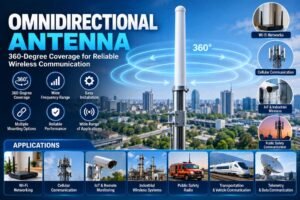
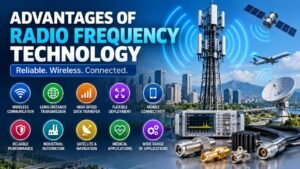
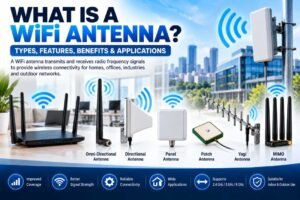
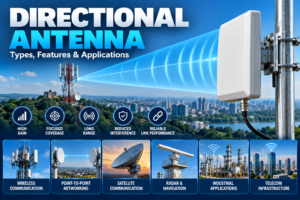
High-performance RF components are essential for reliable 5G communication in airports, train stations, and subway systems. Important components include RF Cable Assemblies, Low Loss RF Cables, RF Connectors, RF Adapters, RF Attenuators, RF Filters, Directional Couplers, Power Dividers, RF Antennas, DAS Components, Low PIM Components, Coaxial Connectors, RF Jumpers, and High-Frequency Cable Assemblies. These products ensure low signal loss, stable performance, and dependable connectivity for mission-critical transportation applications.
Future of 5G in Smart Transportation
The future of transportation will rely on intelligent communication systems powered by 5G. Emerging technologies include autonomous trains, AI-powered airports, connected public transportation, smart logistics, digital twin infrastructure, drone inspections, autonomous maintenance robots, Vehicle-to-Everything (V2X) communication, private 5G transportation networks, and future-ready 6G infrastructure.
Read also: 5G Vs 4G: What’s the Difference Between them
Conclusion
5G technology is transforming airports, train stations, and subway systems by enabling faster communication, smarter operations, and stronger security. From real-time passenger information and AI-powered surveillance to predictive maintenance and connected IoT devices, 5G helps transportation providers deliver safer, more reliable, and more efficient services. Supported by advanced RF cable assemblies, RF connectors, RF antennas, RF filters, and other high-frequency RF components, modern 5G networks provide the dependable connectivity required for today’s smart transportation infrastructure.
Frequently Asked Questions (FAQs)
1. How does 5G improve airport operations?
5G enables faster passenger check-in, smart baggage tracking, AI-powered security screening, predictive aircraft maintenance, and real-time passenger information systems.
2. Why is 5G important for train stations?
It supports real-time train tracking, contactless ticketing, smart crowd management, predictive maintenance, and reliable communication between trains and control centers.
3. How does 5G improve transportation security?
5G enables AI surveillance, biometric authentication, encrypted communications, and instant emergency response to improve safety and protect critical infrastructure.
4. What role does IoT play in 5G transportation?
IoT devices collect and transmit real-time data from sensors, cameras, displays, and monitoring systems, while 5G provides the speed and low latency needed for seamless communication.
5. Which RF components are used in 5G transportation infrastructure?
Common RF components include RF Cable Assemblies, RF Connectors, RF Antennas, RF Filters, RF Attenuators, Directional Couplers, Power Dividers, Low PIM Components, Coaxial Adapters, and High-Frequency Cable Assemblies.
6. Can 5G reduce transportation maintenance costs?
Yes. Predictive maintenance powered by connected sensors and AI helps identify issues before equipment fails, reducing downtime and repair expenses.
7. How does 5G improve passenger experience?
Passengers benefit from high-speed internet, contactless ticketing, accurate travel updates, smart navigation, and shorter waiting times.
8. What is the future of 5G in transportation?
The future includes autonomous trains, AI-driven traffic management, digital twin infrastructure, connected logistics, drone inspections, private 5G networks, and next-generation smart mobility solutions.