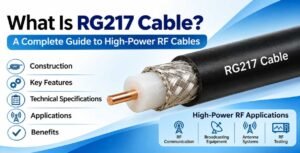
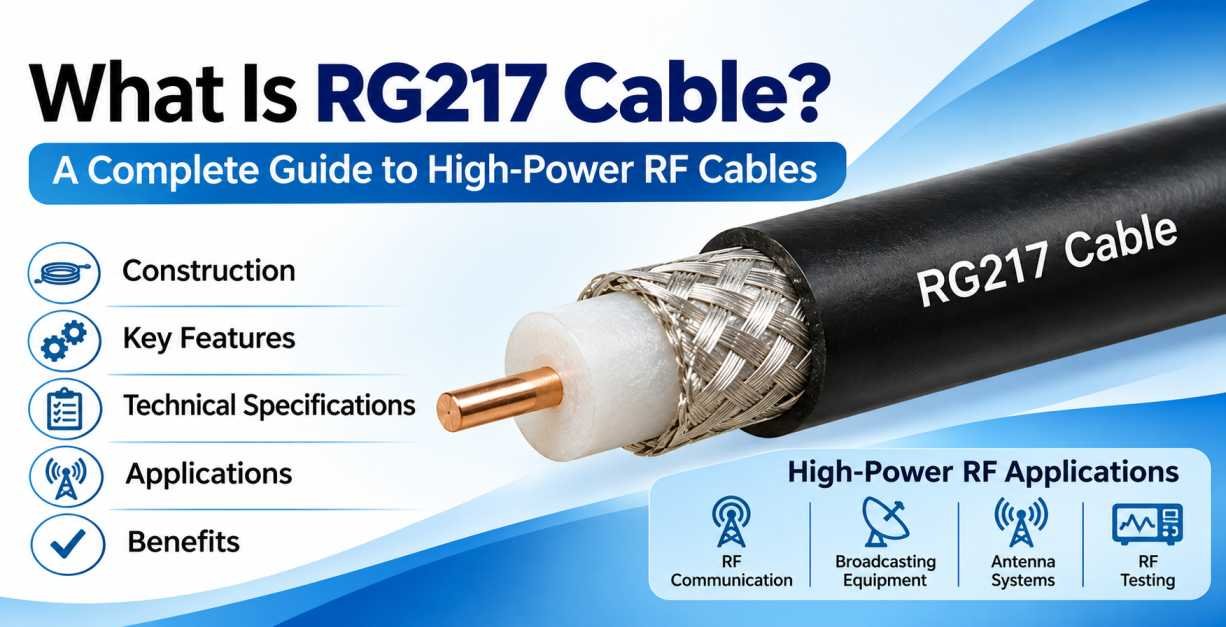
RG217 Cable is a type of coaxial RF cable designed for radio frequency signal transmission in communication, broadcasting, testing, and other electronic applications. Its coaxial construction helps maintain signal integrity by providing a controlled transmission path while reducing the impact of external electromagnetic interference.
In RF and microwave communication systems, selecting the right coaxial cable is essential for maintaining signal quality, minimizing transmission losses, and ensuring reliable system performance. RG217 Cable is used in applications where a robust coaxial cable construction and dependable RF signal transmission are required.
The cable features a central conductor, dielectric insulation, an outer conducting shield, and a protective outer jacket. These layers work together to provide electrical insulation, shielding effectiveness, mechanical protection, and stable signal transmission.
For engineers, system integrators, telecom professionals, and RF equipment manufacturers, understanding RG217 Cable specifications, construction, advantages, and applications helps in selecting a suitable cable for specific installation requirements.
Understanding the Construction of RG217 Cable
The performance of RG217 Cable depends on its internal construction and the quality of its materials. Each layer performs a specific function to support RF signal transmission and protect the cable from external interference and environmental conditions.
1. Inner Conductor
The inner conductor is responsible for carrying the RF signal through the cable. It is generally made from a conductive metal such as copper or copper-clad material, depending on the cable design.
The conductor’s material, diameter, and construction influence electrical resistance, attenuation, and signal transmission performance.
2. Dielectric Insulation
The dielectric layer surrounds the inner conductor and maintains the required separation between the central conductor and outer shield.
It plays an important role in determining the cable’s characteristic impedance, capacitance, velocity of propagation, and electrical performance.
Common dielectric materials used in coaxial cables include polyethylene and other suitable insulating materials, depending on the cable specification.
3. Outer Conductor and Shielding
The outer conductor provides the return path for the RF signal and helps protect the transmission path against external electromagnetic interference.
Depending on the specific cable construction, shielding may use braided, solid, or other conductive configurations.
Effective shielding is important in RF communication systems where unwanted interference can affect signal quality.
4. Outer Protective Jacket
The outer jacket protects the internal cable structure from physical damage, abrasion, moisture, and environmental exposure.
The jacket material depends on the intended operating environment and installation requirements. It also helps improve the cable’s mechanical durability during handling and installation.
Key Features of RG217 Cable
RG217 Cable offers several characteristics that make it relevant to RF and communication infrastructure applications. Its suitability depends on the manufacturer’s construction, electrical specifications, and intended operating conditions.
1. Reliable RF Signal Transmission
RG217 Cable is designed to provide a controlled transmission path for radio frequency signals. Its coaxial construction supports consistent electrical performance when properly matched with compatible connectors and equipment.
2. Coaxial Shielding Design
The outer conductor helps reduce the influence of external electromagnetic interference. This is particularly important in communication environments where multiple electronic devices and RF systems operate simultaneously.
3. Durable Cable Construction
The combination of an inner conductor, dielectric insulation, shielding, and outer jacket provides mechanical protection and supports dependable cable operation.
4. Impedance-Controlled Performance
Coaxial cables are manufactured with defined characteristic impedance values. Maintaining impedance compatibility between the cable, connectors, and connected equipment is essential for minimizing signal reflections.
The exact characteristic impedance of RG217 Cable should be verified against the manufacturer’s datasheet before installation.
5. Flexible Integration into RF Systems
RG217 Cable can be incorporated into suitable RF equipment connections, communication installations, and signal distribution systems when its electrical and mechanical specifications meet the application requirements.
Technical Specifications of RG217 Cable
Technical specifications are important when selecting RG217 Cable for RF communication and high-power signal transmission. They help engineers determine whether a cable is compatible with the operating frequency, power level, connectors, and installation environment.
The following table highlights the key parameters that should be checked when evaluating RG217 Cable. Exact values must be confirmed from the manufacturer’s datasheet because cable specifications can vary by manufacturer and construction.
| Parameter | Specification |
|---|---|
| Cable Type | RG217 Coaxial Cable |
| Cable Category | RF Coaxial Cable |
| Characteristic Impedance | Verify manufacturer datasheet |
| Inner Conductor | As per manufacturer design |
| Dielectric Material | As per manufacturer design |
| Outer Conductor | As per manufacturer design |
| Shielding Type | As per manufacturer design |
| Outer Jacket | As per manufacturer design |
| Operating Frequency | Manufacturer-dependent |
| Attenuation | Frequency-dependent |
| Power Handling Capacity | Manufacturer-dependent |
| Operating Temperature | Manufacturer-dependent |
| Connector Compatibility | Based on cable dimensions and interface |
| Application | RF and communication systems |
Important Electrical Parameters of RG217 Cable
When choosing an RF cable, several electrical parameters directly influence signal transmission quality and system performance.
1. Characteristic Impedance
Characteristic impedance is one of the most important electrical properties of a coaxial cable. It represents the impedance experienced by a travelling signal along the transmission line.
Common coaxial cable impedance values include 50 Ohms and 75 Ohms. RF communication systems commonly use 50 Ohm cables, while many video and broadcasting systems use 75 Ohm cables.
The impedance of RG217 Cable should always be confirmed before connecting it to RF equipment.
2. Attenuation
Attenuation refers to the reduction in signal strength as an RF signal travels through a cable.
It is generally measured in decibels per unit length, such as dB per 100 metres. Attenuation depends on several factors, including:
- Operating frequency
- Conductor material
- Cable diameter
- Dielectric properties
- Cable length
- Operating temperature
Higher frequencies generally result in greater cable attenuation. Therefore, checking the attenuation characteristics of RG217 Cable at the intended operating frequency is essential.
3. Power Handling Capacity
Power handling capacity indicates the maximum RF power a cable can safely carry under specified operating conditions.
It is an important consideration for high-power RF applications, including radio transmitters, broadcasting equipment, and communication infrastructure.
The power capacity of RG217 Cable depends on its conductor dimensions, dielectric material, heat dissipation, operating frequency, ambient temperature, and installation conditions.
Engineers should consult the manufacturer’s power-rating curves rather than assuming a particular power rating based only on the RG217 designation.
4. Voltage Rating
Voltage rating indicates the maximum electrical voltage that a cable can withstand without dielectric breakdown under specified conditions.
It is particularly important in RF systems involving high-power transmitters and high-voltage RF signals.
5. Shielding Effectiveness
Shielding effectiveness describes how well the outer conductor prevents unwanted electromagnetic signals from entering or escaping the cable.
Good shielding helps maintain signal integrity and reduces interference in electrically noisy environments.
Why Is RG217 Cable Used in High-Power RF Applications?
High-power RF systems require reliable transmission paths that can handle electrical loads while maintaining signal quality.
Cable selection plays a major role in determining overall system performance. A suitable coaxial cable must provide the required impedance, power handling, attenuation, shielding, and thermal performance.
RG217 Cable may be considered for applications requiring a robust coaxial transmission solution, provided its verified specifications meet the system requirements.
The following factors are important when evaluating an RF cable for high-power applications.
1. Power Transmission Requirements
RF transmitters and communication equipment may generate signals at different power levels. The selected cable must safely handle the required power without excessive heating or electrical breakdown.
2. Signal Quality
Signal reflections and transmission losses can reduce system efficiency. Proper impedance matching between the cable, connectors, and equipment helps minimize these problems.
3. Operating Frequency
Cable attenuation and power handling vary with frequency. A cable suitable for one frequency range may not provide the same performance at a higher frequency.
4. Thermal Management
High RF power can generate heat within the cable. Appropriate cable sizing, ventilation, installation practices, and power-rating verification help prevent overheating.
5. Installation Conditions
Cable routing, bending, connector termination, and environmental exposure can influence long-term performance.
Applications of RG217 Cable
RG217 Cable can be evaluated for different RF and communication applications based on its verified electrical and mechanical characteristics.
1. Radio Frequency Communication Systems
RF communication systems use coaxial cables to transfer radio frequency signals between transmitters, receivers, antennas, and other electronic equipment.
A suitable RG217 Cable configuration can support RF signal connections where its impedance, attenuation, and power ratings match the system requirements.
2. Broadcasting Equipment
Broadcasting infrastructure requires reliable signal transmission between RF transmitters, amplifiers, and antenna systems.
Coaxial cables are important components in these installations because they provide a shielded transmission path for radio frequency signals.
3. Wireless Communication Infrastructure
Wireless communication networks depend on reliable RF connections between different system components.
Coaxial cables are used in antenna connections, RF distribution networks, and communication equipment installations. RG217 Cable may be considered where its specifications are compatible with the required operating conditions.
4. RF Testing and Measurement Equipment
RF laboratories and testing facilities use coaxial cables to connect signal generators, spectrum analysers, amplifiers, and other measurement equipment.
Cable impedance, attenuation, and connector compatibility are important for maintaining measurement accuracy.
5. Transmitter and Receiver Connections
Transmitters and receivers require suitable RF transmission paths to transfer signals between equipment and antenna systems.
A properly selected coaxial cable helps maintain signal integrity and minimize unwanted reflections.
6. Industrial RF Equipment
Industrial electronic systems may use RF signals for communication, monitoring, testing, and specialised equipment operations.
Coaxial cables provide a structured transmission path in applications where electrical compatibility and shielding are required.
7. Antenna Feed Systems
Antenna feed systems connect RF equipment to transmitting and receiving antennas. The selected coaxial cable must support the operating frequency, impedance, power level, and environmental conditions of the installation.
Benefits of Using RG217 Cable
Selecting an appropriate RG217 Cable configuration can provide several advantages in RF installations.
1. Controlled Signal Transmission
The coaxial structure provides a defined transmission path that supports predictable RF signal behaviour when properly terminated.
2. Electromagnetic Interference Protection
The outer conductor provides shielding against external electromagnetic interference, helping protect signal quality.
3. Suitable for Professional RF Installations
Coaxial cable assemblies are widely used in professional RF and communication systems. RG217 Cable can be evaluated for such installations according to its actual datasheet specifications.
4. Multiple Connector Integration Options
Coaxial cables can be terminated with compatible RF connectors to create assemblies for different equipment interfaces.
Connector selection must consider cable dimensions, impedance, frequency range, and power requirements.
5. Reliable System Integration
Properly specified cable assemblies help connect different RF components while maintaining electrical compatibility across the system.
6. Long-Term Operational Performance
Selecting the correct cable, installing it properly, and following manufacturer recommendations can help improve reliability and reduce maintenance requirements.
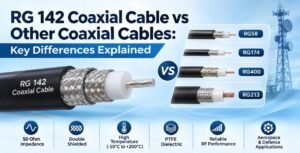
RG217 Cable vs Other RF Coaxial Cables
Different coaxial cable types are designed for different electrical and mechanical requirements. Selecting the correct cable depends on operating frequency, attenuation, power handling, flexibility, and installation conditions.
Here is a general comparison of common RF coaxial cable families.
| Cable Type | General Characteristics | Typical Considerations |
|---|---|---|
| RG217 | Traditional RG-series coaxial cable | Verify electrical and mechanical specifications |
| RG58 | Compact and flexible coaxial cable | Suitable for many low-power RF connections |
| RG213 | Larger RG-series coaxial cable | Used in various RF and antenna installations |
| RG214 | Double-shielded coaxial cable construction | Shielding and RF performance requirements |
| LMR-400 | Low-loss coaxial cable family | Commonly used for longer RF cable runs |
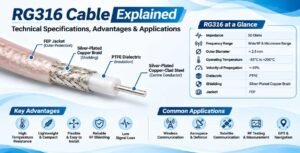
| RG316 | Small-diameter flexible coaxial cable | Compact equipment and internal RF connections |
The comparison is intended as a general overview, not a claim that these cables have interchangeable performance or identical specifications.
For professional installations, engineers should compare manufacturer datasheets rather than selecting cables based only on their RG numbers.
How to Choose the Right RG217 Cable
Choosing the right RG217 Cable requires evaluating the electrical, mechanical, and environmental requirements of the application.
The following factors can help simplify the selection process.
1. Identify the Operating Frequency
Determine the minimum and maximum frequency required by the RF system.
Check the cable’s attenuation and operating-frequency specifications to ensure that it can support the intended application.
2. Verify Characteristic Impedance
Check whether the equipment requires a 50 Ohm or 75 Ohm cable.
The cable, connectors, and connected RF equipment should have compatible impedance ratings.
3. Calculate Required Cable Length
Cable length directly influences signal attenuation.
Longer cable runs generally introduce greater insertion loss. Selecting an appropriate cable length helps maintain the required signal level.
4. Check Power Requirements
Determine the maximum continuous and peak RF power that the cable must handle.
Check the manufacturer’s power-handling specifications under the actual installation conditions.
5. Evaluate Environmental Conditions
Consider whether the cable will be installed indoors, outdoors, in industrial environments, or in areas exposed to temperature variations and moisture.
The outer jacket should be appropriate for the intended installation.
6. Select Compatible RF Connectors
Connector compatibility is essential for reliable RF performance.
Depending on the equipment interface and cable construction, suitable connector families may include:
- SMA Connectors
- N-Type Connectors
- TNC Connectors
- BNC Connectors
- 7/16 DIN Connectors
These are general RF connector families, not guaranteed direct-fit options for RG217 Cable. The correct connector must be specifically designed for the cable’s dimensions and electrical requirements.
7. Review Manufacturer Datasheets
Always review the manufacturer’s technical documentation before purchasing or installing RG217 Cable.
Important parameters include attenuation, impedance, power rating, frequency range, voltage rating, bending radius, and operating temperature.
Installation Guidelines for RG217 Cable
Correct installation is essential for maintaining the electrical and mechanical performance of any RF coaxial cable.
Even a cable with suitable specifications may experience performance problems if it is installed incorrectly.
Follow these installation guidelines when working with RG217 Cable.
1. Avoid Excessive Bending
Do not bend the cable beyond its recommended minimum bending radius. Excessive bending can damage the internal conductor, dielectric insulation, or shielding structure.
2. Use Proper Cable Termination
Use connectors designed specifically for the cable construction. Incorrect termination can result in impedance mismatch, signal reflections, and increased insertion loss.
3. Maintain Connector Quality
Ensure that connectors are properly installed, tightened, and inspected. Poor connector installation can negatively affect RF performance.
4. Avoid Mechanical Stress
Do not apply excessive pulling force, twisting, or compression during installation. Use appropriate cable supports to prevent unnecessary mechanical stress.
5. Protect Against Environmental Exposure
For outdoor applications, ensure that the cable jacket and connector termination provide the required environmental protection.
6. Perform Electrical Testing
After installation, test the cable assembly to verify its electrical performance.
Common testing methods include:
- Insertion loss measurement
- Return loss measurement
- VSWR testing
- Continuity testing
- Insulation resistance testing, where applicable
- Time Domain Reflectometry (TDR)
These tests help identify installation defects, impedance discontinuities, and potential cable assembly issues.
Common Problems Associated with RF Coaxial Cables
Understanding common cable-related problems helps engineers maintain reliable RF communication systems.
1. High Signal Attenuation
Excessive attenuation can result from long cable lengths, unsuitable cable selection, damaged conductors, or poor-quality connectors.
Solution: Check cable attenuation specifications, inspect the cable assembly, and select a suitable cable for the operating frequency.
2. High VSWR
High Voltage Standing Wave Ratio (VSWR) indicates impedance mismatch within an RF transmission system.
Solution: Check connector installation, cable impedance, termination quality, and equipment compatibility.
3. Signal Interference
Insufficient shielding or damaged cable construction may allow unwanted electromagnetic interference to affect signal transmission.
Solution: Inspect the outer conductor and use cables with appropriate shielding performance.
4. Connector Damage
Incorrect installation, excessive tightening, or repeated mechanical stress can damage RF connectors.
Solution: Use compatible connectors and follow the manufacturer’s installation guidelines.
5. Cable Overheating
Excessive RF power, unsuitable operating frequency, poor ventilation, or incorrect cable selection can lead to overheating.
Solution: Verify the manufacturer’s power-handling specifications and ensure appropriate thermal conditions.
Importance of Quality RF Cable Assemblies
An RF cable assembly consists of a coaxial cable terminated with suitable connectors at one or both ends. It provides a ready-to-install connection between RF equipment and other system components.
For applications involving RG217 Cable, the complete assembly must be evaluated rather than considering only the cable itself.
Important assembly considerations include:
- Correct cable selection
- Compatible connector interfaces
- Proper connector termination
- Suitable impedance matching
- Required operating frequency
- Low insertion loss
- Appropriate shielding performance
- Mechanical and environmental durability
A professionally manufactured RF cable assembly helps reduce installation errors and supports consistent electrical performance.
Why Datasheet Verification Is Important Before Buying RG217 Cable
The RG designation alone does not provide enough information to determine whether a particular cable is suitable for a high-power RF application.
Different manufacturers may offer different constructions and electrical characteristics. Therefore, buyers and engineers should request detailed technical documentation before placing an order.
A reliable RG217 Cable datasheet should ideally include:
- Nominal cable dimensions
- Inner conductor material and diameter
- Dielectric material and diameter
- Outer conductor construction
- Jacket material
- Characteristic impedance
- Operating frequency range
- Attenuation versus frequency
- Voltage rating
- Power-handling capacity
- Operating temperature
- Minimum bending radius
- Weight per unit length
This information helps determine whether the cable meets the electrical and mechanical requirements of a particular RF system.
Frequently Asked Questions About RG217 Cable
1. What is RG217 Cable?
RG217 Cable is a coaxial RF cable designation used to identify a particular cable construction. It consists of an inner conductor, dielectric insulation, an outer conducting shield, and a protective jacket for RF signal transmission.
2. What are the main applications of RG217 Cable?
RG217 Cable can be evaluated for RF communication systems, broadcasting equipment, transmitter connections, antenna feed systems, RF testing equipment, and industrial electronic applications, depending on its technical specifications.
3. Is RG217 Cable suitable for high-power RF applications?
Its suitability depends on the manufacturer’s specified power-handling capacity, operating frequency, thermal conditions, impedance, and installation environment. Always check the manufacturer’s power-rating curves before using it in high-power systems.
4. What is the impedance of RG217 Cable?
The characteristic impedance should be verified using the manufacturer’s datasheet. It should not be assumed based solely on the cable designation.
5. What materials are used in RG217 Cable?
A coaxial cable generally consists of a conductive inner conductor, dielectric insulation, an outer conducting shield, and an external protective jacket. The exact materials and construction should be confirmed with the cable manufacturer.
6. What factors affect RG217 Cable performance?
Important factors include operating frequency, cable length, conductor material, dielectric properties, shielding effectiveness, connector quality, temperature, and installation conditions.
7. Can RG217 Cable be used for antenna connections?
RG217 Cable may be considered for antenna connections when its impedance, frequency range, attenuation, power rating, and connector compatibility meet the requirements of the antenna system.
8. How does cable length affect RG217 Cable performance?
Increasing cable length generally increases insertion loss. Therefore, selecting an appropriate cable length and checking attenuation at the operating frequency are important for maintaining signal quality.
9. Which connectors can be used with RG217 Cable?
Connector selection depends on the cable’s physical dimensions and construction. SMA, N-Type, TNC, and other RF connector families may be considered only when compatible cable-specific versions are available.
10. What should I check before purchasing RG217 Cable?
Check characteristic impedance, frequency range, attenuation, power handling, voltage rating, cable dimensions, shielding, jacket material, operating temperature, and manufacturer documentation.
Conclusion
RG217 Cable is a coaxial cable designation relevant to RF signal transmission and communication infrastructure applications. Understanding its construction, electrical properties, shielding, attenuation, and installation requirements is important when selecting a suitable cable for professional RF systems.
For high-power RF applications, cable selection should always be based on verified technical specifications, including power-handling capacity, operating frequency, impedance, and thermal performance. Proper connector selection and professional cable assembly practices are equally important for maintaining reliable signal transmission.
At SRFS Teleinfra, we focus on RF and microwave components, coaxial cables, RF cable assemblies, connectors, adapters, attenuators, antennas, and communication infrastructure solutions. Selecting the right RF components helps engineers build reliable and efficient communication systems.
For product information and RF component requirements, visit www.srfsteleinfra.in or contact our team at info@srfsteleinfra.in.