RG Cable is one of the most widely used coaxial cables in RF and telecom communication systems. From television networks and CCTV installations to wireless communication and RF transmission systems, RG cables play a critical role in carrying high-frequency electrical signals with low interference and stable performance.
In the modern telecom and networking industry, RG cables are extensively used because of their excellent shielding capability, reliable signal transmission, flexibility, and durability. Whether in residential cable TV systems or advanced telecom infrastructure, RG cables continue to be an important part of communication technology.
This article explains the meaning of RG cable, its full form, working principle, types, applications, advantages, and key factors to consider while selecting the right RG cable for RF and telecom applications.
What is an RG Cable?
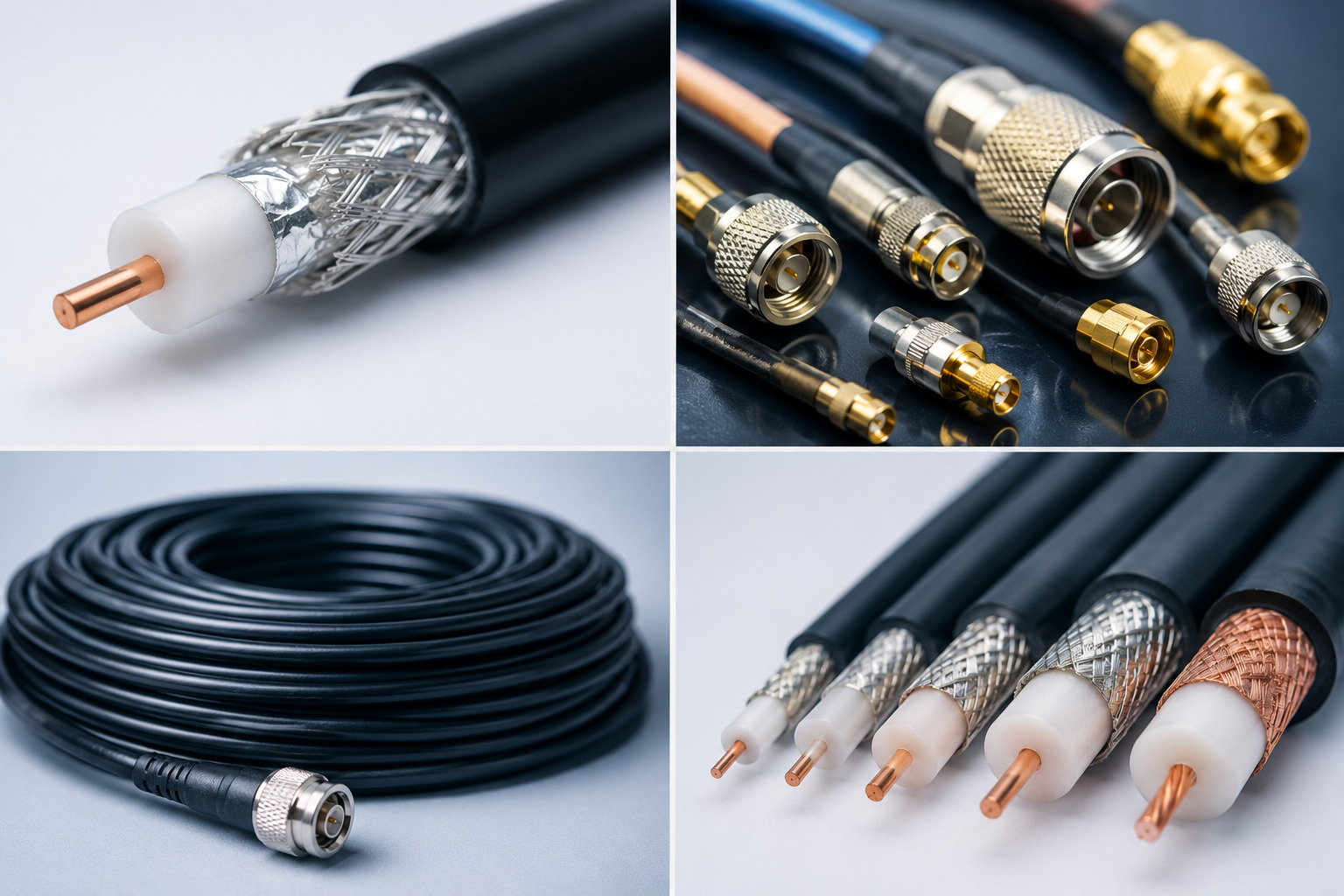
RG Cable is a type of coaxial cable designed for transmitting radio frequency (RF) signals with minimal signal loss and interference. It consists of a central conductor surrounded by insulation, metallic shielding, and an outer protective jacket.
The design of RG cable helps maintain stable impedance and protects signals from electromagnetic interference (EMI), making it highly suitable for high-frequency communication systems.
RG cables are commonly used in:
- RF communication systems
- Cable television networks
- Broadband internet connections
- CCTV surveillance systems
- Antenna installations
- Telecom infrastructure
- Wireless communication devices
- RF testing equipment
Because of their reliable performance and low-cost installation, RG cables remain one of the most preferred coaxial cable solutions across industries.
Full Form of RG Cable
The term “RG” stands for Radio Guide.
The designation was originally developed by the U.S. military to identify different types of coaxial cables used for radio frequency applications. Over time, RG cables became widely adopted in commercial telecom, broadcasting, networking, and RF communication industries.
Each RG cable type has unique characteristics such as:
- Diameter
- Shielding type
- Impedance
- Signal loss
- Frequency handling capability
- Application suitability
For example:
- RG58 is commonly used for RF communication and antennas
- RG59 is mainly used for CCTV systems
- RG6 is popular for cable TV and broadband
- RG11 is suitable for long-distance signal transmission
Structure of an RG Cable
An RG cable contains multiple layers that work together to provide stable RF signal transmission and shielding protection.
1. Center Conductor
The center conductor carries the RF signal. It is generally made from:
- Copper
- Tinned copper
- Copper-clad steel
A high-quality conductor improves signal transmission efficiency and reduces resistance.
2. Dielectric Insulation
The dielectric layer surrounds the conductor and maintains consistent spacing between the conductor and shield.
Its functions include:
- Maintaining cable impedance
- Reducing signal leakage
- Improving electrical performance
Common dielectric materials include:
- Polyethylene
- Foam PE
- PTFE
3. Shielding Layer
The shielding layer protects signals from electromagnetic interference and external noise.
Shielding may consist of:
- Aluminum foil
- Braided copper shield
- Dual shielding
- Quad shielding
Better shielding ensures stable signal quality in RF systems.
4. Outer Jacket
The outer protective jacket protects the cable from:
- Moisture
- Heat
- Mechanical damage
- UV exposure
- Environmental conditions
PVC and PE are commonly used jacket materials.
How Does RG Cable Work?
RG cable works by transmitting high-frequency RF signals through the center conductor while the outer shield prevents signal leakage and interference.
The coaxial structure ensures:
- Stable impedance
- Reduced attenuation
- Better shielding performance
- Reliable high-frequency transmission
This makes RG cables ideal for RF and telecom communication systems where signal quality is extremely important.
Common Types of RG Cable
Different RG cable types are designed for different applications and frequency requirements.
RG58 Cable
RG58 is a 50 Ohm coaxial cable widely used in RF communication systems.
Applications:
- Radio communication
- RF antennas
- Ham radio systems
- Wireless networking
- GPS systems
Features:
- Flexible design
- Moderate attenuation
- Easy installation
RG59 Cable
RG59 is commonly used in low-frequency video transmission applications.
Applications:
- CCTV camera systems
- Video surveillance
- Analog video systems
Features:
- 75 Ohm impedance
- Good video transmission quality
- Cost-effective solution
RG6 Cable
RG6 is one of the most widely used cables for television and broadband applications.
Applications:
- Cable TV systems
- Satellite television
- Broadband internet
- Home entertainment systems
Features:
- Better shielding than RG59
- Lower signal loss
- High-frequency support
RG11 Cable
RG11 is designed for long-distance RF signal transmission.
Applications:
- Long cable runs
- Broadband infrastructure
- Industrial RF systems
- Outdoor communication networks
Features:
- Lower attenuation
- Thick cable diameter
- Excellent long-distance performance
RG174 Cable
RG174 is a thin flexible RF coaxial cable used in compact electronic systems.
Applications:
- GPS devices
- Wireless modules
- RF communication systems
- Internal RF connections
Features:
- Compact size
- Lightweight design
- Flexible installation
Impedance in RG Cable
Impedance is one of the most important parameters in RG cable selection.
The two most common impedance ratings are:
50 Ohm RG Cable
Used in:
- RF communication
- Wireless systems
- Telecom equipment
- Antennas
Examples:
- RG58
- RG174
75 Ohm RG Cable
Used in:
- Television systems
- CCTV installations
- Video transmission
Examples:
- RG59
- RG6
- RG11
Proper impedance matching is important for minimizing signal reflection and maintaining RF performance.
Applications of RG Cable
RG cables are widely used across telecom, broadcasting, networking, and RF industries.
1. Telecom Infrastructure
RG cables are used in telecom systems for connecting:
- BTS equipment
- RF antennas
- Signal amplifiers
- Wireless communication devices
They ensure reliable RF transmission across telecom networks.
2. CCTV Surveillance Systems
RG59 and RG6 cables are commonly used in:
- CCTV cameras
- DVR systems
- Security surveillance installations
These cables help deliver stable video signals with low distortion.
3. Cable TV & Satellite Systems
RG6 and RG11 are widely used in:
- Television broadcasting
- Satellite TV systems
- Broadband internet installations
Their shielding performance ensures clear signal reception.
4. Wi-Fi & Wireless Communication
RG cables are used for connecting:
- Wi-Fi antennas
- RF modules
- Wireless routers
- IoT communication systems
They support stable RF connectivity in wireless networks.
5. RF Testing Equipment
RF laboratories and testing systems use RG cables for:
- Signal analysis
- RF measurement
- Communication testing
These cables help maintain signal integrity during testing processes.
6. GPS & Navigation Systems
RG174 and miniature RF cables are used in:
- GPS antennas
- Vehicle tracking systems
- Navigation equipment
Their compact structure supports small electronic devices.
Advantages of RG Cable
RG cables offer several benefits in RF and communication systems.
Excellent Shielding
The shielding layer protects signals from external EMI and noise interference.
Stable Signal Transmission
RG cables maintain consistent RF performance across high-frequency applications.
Low Signal Loss
High-quality RG cables minimize attenuation during signal transmission.
Wide Compatibility
They are compatible with:
- RF connectors
- Telecom systems
- Antenna systems
- Networking equipment
Flexible Installation
Many RG cables are lightweight and flexible, allowing easy routing and installation.
Durable Construction
Designed for indoor and outdoor use with long operational life.
Key Factors to Consider While Selecting RG Cable
Choosing the correct RG cable is important for achieving reliable communication performance.
Frequency Range
Select a cable suitable for your operating frequency.
Higher frequencies require lower-loss cables.
Cable Length
Longer cable runs increase attenuation.
Use low-loss cables such as RG11 for long-distance transmission.
Shielding Quality
Better shielding improves protection against EMI and RF interference.
Flexibility
Compact applications may require flexible cables like RG174.
Environmental Conditions
Outdoor installations require weather-resistant jackets.
Connector Compatibility
Ensure the cable supports required RF connectors such as:
- SMA
- N Type
- BNC
- TNC
Difference Between RG Cable and LMR Cable
Many users compare RG cables with LMR cables.
| Feature | RG Cable | LMR Cable |
|---|---|---|
| Signal Loss | Moderate | Very Low |
| Flexibility | High | Medium |
| Cost | Affordable | Higher |
| Shielding | Standard | Advanced |
| Application | General RF Systems | High-Performance Telecom |
LMR cables are generally preferred for advanced telecom and 5G systems because of their lower attenuation.
Future of RG Cables in Telecom Industry
Even with the growth of fiber optics and advanced RF technologies, RG cables continue to remain important in many industries.
Their demand remains strong because of:
- Cost-effectiveness
- Easy installation
- Reliable performance
- Compatibility with existing systems
- Versatile applications
RG cables continue to support:
- CCTV systems
- Cable TV networks
- RF communication
- Wireless infrastructure
- Broadband systems
As telecom networks expand, high-quality RG cables will continue to play a major role in RF signal transmission.
Why Choose SRFS Teleinfra for RG Cables?
SRFS Teleinfra is a trusted manufacturer and supplier of high-quality RF and telecom cable solutions. We provide premium RG cables engineered for reliable signal transmission, low attenuation, and long-lasting performance.
Our RG cable solutions are suitable for:
- Telecom infrastructure
- CCTV systems
- Wireless communication
- RF transmission
- Broadband applications
- Antenna systems
We offer:
- Premium-quality RF cables
- Multiple RG cable variants
- Custom cable solutions
- Competitive pricing
- Reliable technical support
- Fast delivery across India
Our products are manufactured using advanced production standards to ensure superior RF performance and long-term reliability.
Conclusion
RG Cable is an essential component in RF and telecom communication systems. Designed for reliable signal transmission and excellent shielding, RG cables are widely used in television networks, CCTV systems, wireless communication, antennas, and telecom infrastructure.
Understanding the meaning, full form, types, and applications of RG cables helps users select the right cable solution for their specific RF requirements.
Whether for broadband systems, RF communication, or wireless connectivity, choosing a high-quality RG cable ensures stable performance, low signal loss, and long operational life.
SRFS Teleinfra offers premium RG cable solutions designed to meet the growing demands of modern telecom and RF communication industries.