
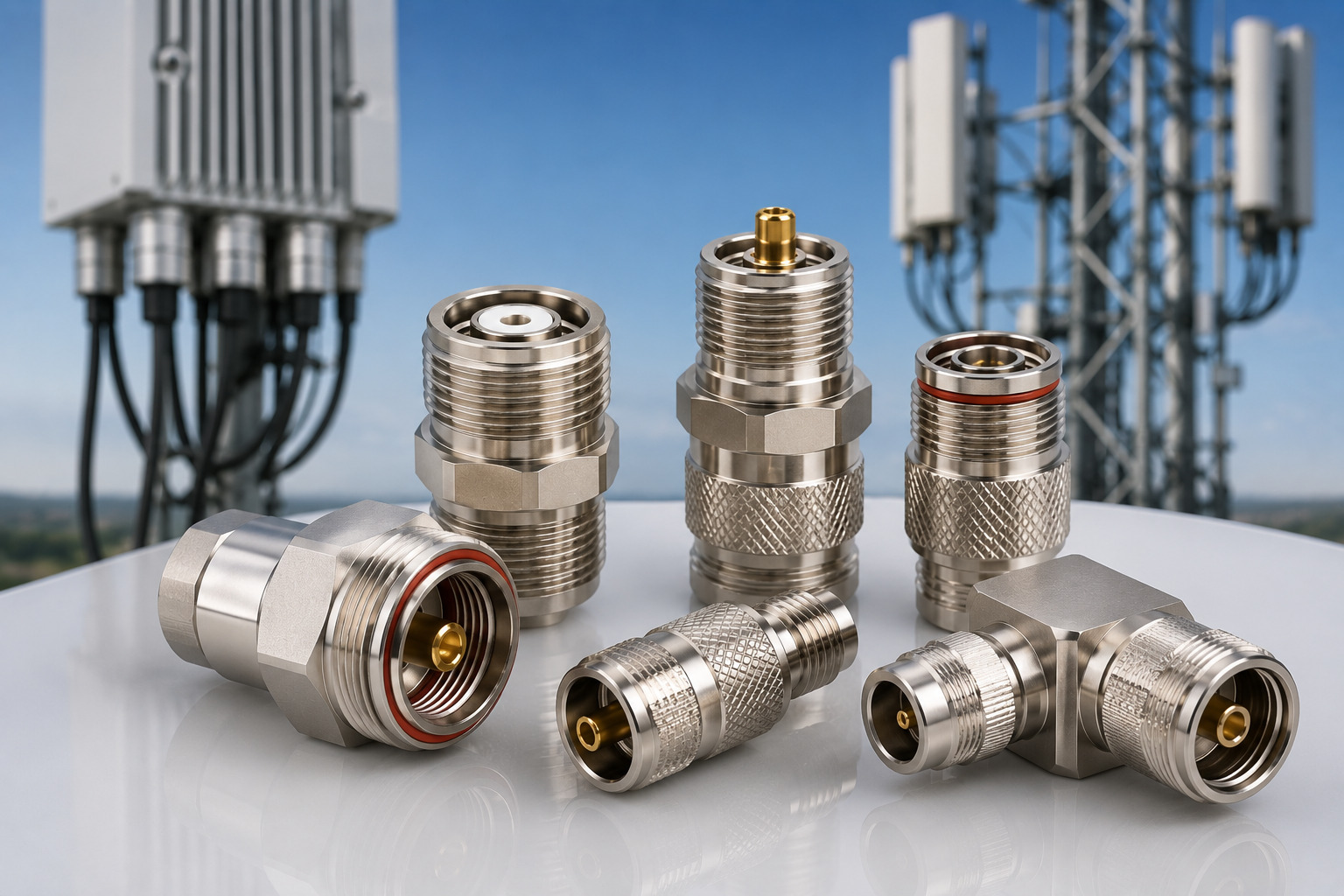
A Low PIM adaptor is a specialized RF connector adaptor designed to minimize Passive Intermodulation (PIM) in high-frequency communication systems. These adaptors are widely used in modern telecom infrastructure, 4G LTE networks, 5G communication systems, distributed antenna systems, wireless networking, and RF communication applications where signal quality and network performance are critical.
Low PIM adaptors are engineered with precision materials and advanced manufacturing techniques to reduce unwanted signal interference caused by passive intermodulation. In high-power multi-frequency communication systems, poor-quality RF connections can generate unwanted intermodulation signals that reduce network efficiency and affect communication quality.
Modern wireless communication systems rely heavily on Low PIM adaptors to maintain stable signal transmission, improve data throughput, enhance call quality, and support high-capacity telecom infrastructure. These adaptors are commonly used in base stations, antennas, RF combiners, DAS systems, repeaters, and wireless communication networks.
As 5G and advanced telecom technologies continue to expand, Low PIM adaptors have become essential components in RF communication systems.
What is a Low PIM Adaptor?
A Low PIM adaptor is a precision RF adaptor designed to connect RF cables, antennas, and communication equipment while minimizing Passive Intermodulation interference.
Passive Intermodulation occurs when multiple high-power RF signals interact with poor electrical contacts, low-quality materials, or imperfect RF connections, generating unwanted interference signals.
Low PIM adaptors are specially designed to:
- Reduce signal interference
- Maintain signal integrity
- Improve communication performance
- Support multi-band RF systems
- Enhance network reliability
These adaptors are commonly used in:
- Telecom base stations
- 4G LTE networks
- 5G communication systems
- Distributed antenna systems
- RF communication infrastructure
- Wireless networking systems
Low PIM adaptors help maintain stable RF communication in modern high-capacity wireless networks.
Importance of Low PIM Adaptors
Modern telecom systems use multiple frequency bands and high-power RF transmission. Even small levels of passive intermodulation can reduce network performance and communication quality.
Low PIM adaptors are important because they help:
- Improve network efficiency
- Reduce RF interference
- Enhance signal quality
- Increase data transmission performance
- Support stable wireless communication
- Improve overall telecom network reliability
Because of these advantages, Low PIM adaptors are widely used in advanced telecom and RF communication systems.
What is Passive Intermodulation (PIM)?
Passive Intermodulation is an unwanted RF interference phenomenon caused by poor electrical contacts, metal imperfections, corrosion, or low-quality RF components in communication systems.
When multiple high-power RF signals pass through imperfect RF connections, additional unwanted frequencies are generated. These unwanted signals interfere with communication channels and reduce network performance.
PIM can cause:
- Reduced signal quality
- Dropped calls
- Lower data speed
- Network interference
- Reduced communication reliability
Low PIM adaptors are specifically designed to minimize these interference problems.
How Does a Low PIM Adaptor Work?
A Low PIM adaptor works by creating highly stable RF connections using precision-engineered materials and advanced contact designs that reduce non-linear electrical behavior.
The adaptor ensures:
- Stable electrical conductivity
- Low signal reflection
- Strong mechanical connection
- Minimal RF interference
The working process includes:
- RF signal transmission
- Stable impedance matching
- Reduced passive intermodulation
- Improved signal continuity
High-quality Low PIM adaptors maintain efficient RF communication even in high-power multi-frequency telecom systems.
Components of a Low PIM Adaptor
A Low PIM adaptor contains several precision-engineered components designed for stable RF performance.
Center Conductor
The center conductor transfers RF signals between connected devices.
Precision Dielectric Insulator
The dielectric material maintains impedance consistency and electrical isolation.
Outer Shielding Body
The metal body provides RF shielding and grounding protection.
Threaded Coupling Mechanism
Threaded locking ensures secure and vibration-resistant connectivity.
Low PIM Contact Surfaces
Special contact surfaces reduce signal distortion and intermodulation.
Types of Low PIM Adaptors
Low PIM adaptors are available in multiple connector configurations.
DIN Low PIM Adaptor
DIN adaptors are widely used in telecom infrastructure and base station systems.
Applications
- Telecom towers
- DAS systems
- RF communication networks
4.3-10 Low PIM Adaptor
4.3-10 adaptors are designed for compact telecom installations with excellent PIM performance.
Uses
- 5G communication systems
- Small cells
- Wireless infrastructure
N Type Low PIM Adaptor
N Type adaptors provide stable RF connectivity for outdoor communication systems.
SMA Low PIM Adaptor
SMA adaptors are used in compact RF communication and testing applications.
Right Angle Low PIM Adaptor
Right-angle adaptors are designed for installations with limited space.
Specifications of Low PIM Adaptors
The specifications of Low PIM adaptors determine communication performance and compatibility.
Frequency Range
Low PIM adaptors support multiple telecom and RF frequency bands.
Common frequency ranges include:
- 698 MHz to 4000 MHz
- Microwave frequency bands
- 4G and 5G communication bands
Impedance
Most Low PIM adaptors are designed with:
- 50 ohm impedance
PIM Performance
Low PIM values are measured in:
- dBc
High-quality adaptors provide excellent low PIM performance.
VSWR
Low VSWR ensures proper impedance matching and reduced signal reflection.
Insertion Loss
Low insertion loss improves signal efficiency and communication quality.
Connector Types
Common connector interfaces include:
- DIN
- N Type
- SMA
- 4.3-10
Material
Low PIM adaptors are commonly manufactured using:
- Brass
- Stainless steel
- Silver plating
- High-quality conductive materials
Applications of Low PIM Adaptors
Low PIM adaptors are widely used across telecom and wireless communication industries.
5G Communication Systems
5G infrastructure requires extremely low RF interference for stable high-speed communication.
Applications
- 5G base stations
- Massive MIMO systems
- Small cell networks
Telecom Towers
Mobile communication towers use Low PIM adaptors for reliable RF connectivity.
Distributed Antenna Systems
DAS networks use Low PIM adaptors for indoor signal distribution.
Wireless Communication Infrastructure
Wireless communication systems use Low PIM adaptors for stable multi-band communication.
RF Testing and Measurement
Testing laboratories use precision Low PIM adaptors for RF performance analysis.
Public Safety Communication Systems
Emergency communication networks require low-interference RF connectivity.
Advantages of Low PIM Adaptors
Low PIM adaptors provide several important communication and networking benefits.
Reduced RF Interference
They minimize passive intermodulation and signal distortion.
Improved Signal Quality
Low PIM adaptors maintain stable communication performance.
Better Network Efficiency
They help improve wireless network reliability and capacity.
Enhanced Data Transmission
Reduced interference improves data speed and communication quality.
High Mechanical Reliability
Precision construction ensures stable long-term connectivity.
Excellent Environmental Resistance
Outdoor-rated adaptors resist moisture and harsh environmental conditions.
Technical Benefits in 5G Networks
Low PIM adaptors provide critical advantages for modern telecom infrastructure.
Multi-Band Communication Support
Supports simultaneous operation of multiple frequency bands.
Stable High-Power RF Transmission
Maintains communication quality under high RF power conditions.
Improved 5G Performance
Helps optimize modern high-speed wireless networks.
Reduced Signal Distortion
Minimizes unwanted intermodulation products.
Difference Between Standard RF Adaptors and Low PIM Adaptors
Both devices connect RF systems, but Low PIM adaptors provide advanced interference control.
Standard RF Adaptor
- General RF connectivity
- Basic signal transmission
- Standard communication applications
Low PIM Adaptor
- Reduced passive intermodulation
- High-performance telecom systems
- Advanced 4G and 5G communication networks
Low PIM adaptors are specifically designed for high-capacity telecom infrastructure.
Common Problems with Low PIM Adaptors
Improper installation or poor-quality components may affect performance.
Increased PIM Levels
Damaged or contaminated connectors may increase interference.
Signal Reflection
Improper impedance matching can reduce communication efficiency.
Connector Corrosion
Outdoor environments may affect connector surfaces.
Loose RF Connections
Improper tightening may interrupt signal stability.
Tips for Choosing the Right Low PIM Adaptor
Selecting the correct adaptor improves network performance and communication reliability.
Verify Frequency Compatibility
Choose adaptors suitable for required telecom frequency bands.
Check PIM Performance Ratings
Lower PIM values provide better RF communication quality.
Verify Connector Compatibility
Ensure compatibility with RF cables and communication equipment.
Choose Weatherproof Designs
Outdoor systems require environmental protection.
Select High-Quality Materials
Precision materials improve RF performance and durability.
Future of Low PIM Adaptors
Modern telecom systems continue to demand advanced low-interference RF solutions.
Recent developments include:
- 5G low PIM infrastructure
- Massive MIMO communication systems
- High-frequency RF adaptors
- Advanced wireless communication networks
- Smart telecom infrastructure
As 5G deployment and wireless communication technologies continue to grow, Low PIM adaptors will remain essential components in high-performance telecom and RF systems.
Conclusion
A Low PIM adaptor is a specialized RF component designed to minimize passive intermodulation interference in telecom and wireless communication systems. These adaptors help improve signal quality, network efficiency, and communication reliability in modern 4G LTE and 5G infrastructure.
From telecom towers and DAS systems to wireless communication networks and RF testing applications, Low PIM adaptors provide stable and efficient RF connectivity for advanced communication environments.
Understanding Low PIM adaptor types, specifications, applications, advantages, and working principles helps telecom professionals select the right RF connectivity solution for modern wireless communication systems.