
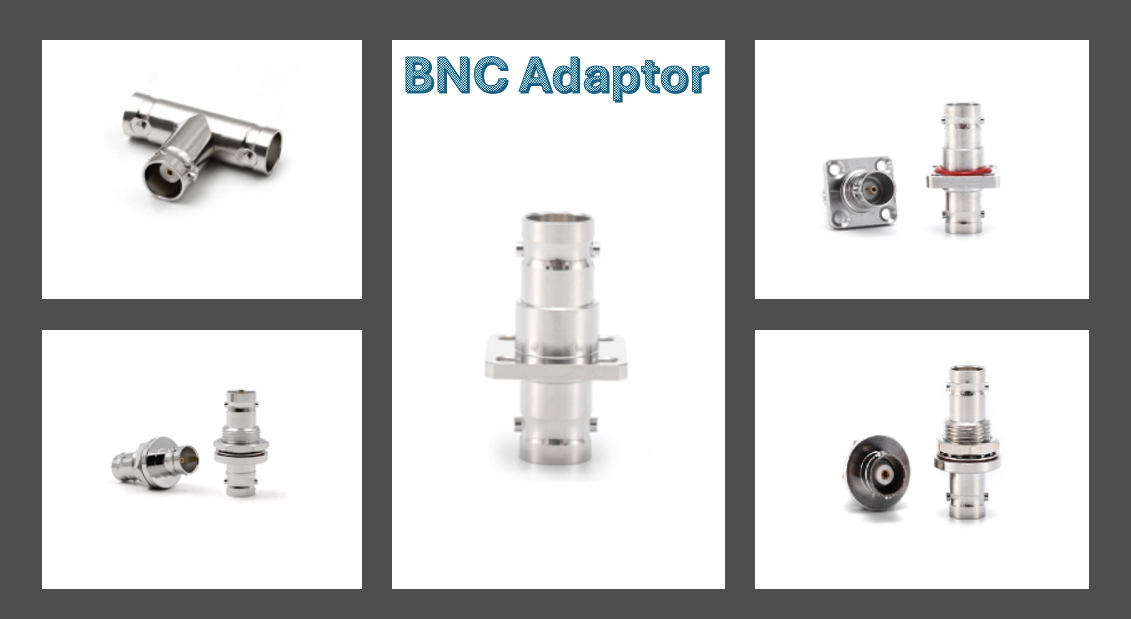
A BNC adaptor is an essential connectivity component used in electronic, telecommunications, broadcasting, networking, and surveillance systems. It serves as an interface that allows different BNC connectors, cables, or devices to connect seamlessly. BNC adaptors are widely used in applications that require reliable signal transmission, particularly in radio frequency (RF), video, and data communication systems.
The term BNC stands for Bayonet Neill-Concelman, named after its inventors, Paul Neill and Carl Concelman. The BNC connector is known for its quick-connect and secure bayonet locking mechanism, making it a preferred choice in professional environments where stable and uninterrupted signal transmission is critical.
As industries increasingly depend on high-quality signal connections, BNC adaptors play a crucial role in ensuring compatibility between various devices and cable configurations. Whether used in CCTV installations, laboratory testing equipment, broadcast systems, or telecommunications networks, BNC adaptors provide flexibility, convenience, and reliable performance.
What is a BNC Adaptor?
A BNC adaptor is a connector accessory designed to join, convert, or extend BNC connections. It enables users to connect devices with different connector types or genders without replacing existing cables or equipment.
For example, a BNC adaptor may be used to:
- Connect two BNC cables together.
- Convert a BNC connector to another interface type.
- Change connector gender from male to female.
- Split signals between multiple devices.
- Adapt testing equipment for specific measurement requirements.
These adaptors are manufactured with precision to maintain signal integrity and minimize losses, making them suitable for both low-frequency and high-frequency applications.
Importance of BNC Adaptors in Modern Connectivity
In many communication and signal transmission systems, devices often come with different connector configurations. Replacing cables or redesigning installations can be expensive and time-consuming. BNC adaptors provide a cost-effective solution by allowing existing components to work together efficiently.
Key benefits include:
- Enhanced system compatibility
- Reduced installation costs
- Quick and easy deployment
- Reliable signal transmission
- Improved maintenance and troubleshooting
Their versatility makes them indispensable across multiple industries and technical environments.
Key Features of BNC Adaptors
1. Secure Bayonet Locking Mechanism
One of the defining characteristics of BNC adaptors is the bayonet locking system. Unlike threaded connectors, BNC connectors lock into place with a simple quarter-turn motion.
Benefits include:
- Fast installation
- Secure connection
- Resistance to accidental disconnection
- Consistent signal performance
This feature is especially valuable in environments where equipment is frequently connected and disconnected.
2. Excellent Signal Integrity
High-quality BNC adaptors are designed to maintain signal quality across the connection path.
Advantages include:
- Low insertion loss
- Reduced signal reflection
- Stable impedance matching
- Reliable RF performance
These characteristics help ensure accurate data transmission in critical communication systems.
3. Durable Construction
Most BNC adaptors are manufactured using robust materials such as:
- Brass
- Nickel-plated brass
- Stainless steel
- Gold-plated contacts
These materials provide:
- Corrosion resistance
- Mechanical durability
- Long service life
- Reliable electrical conductivity
Durability is particularly important in industrial and outdoor installations.
4. Wide Frequency Range
BNC adaptors support a broad range of frequencies, making them suitable for:
- RF applications
- Video transmission
- Test and measurement systems
- Telecommunications equipment
Many premium adaptors can handle frequencies up to several gigahertz while maintaining signal quality.
5. Compact Design
The compact form factor of BNC adaptors allows them to fit into space-constrained equipment and installations.
Benefits include:
- Efficient cable management
- Reduced installation complexity
- Improved equipment accessibility
This makes them ideal for dense networking and broadcasting environments.
Types of BNC Adaptors
Different applications require different adaptor configurations. Some of the most common types include:
BNC Male to BNC Female Adaptor
This adaptor connects a male BNC connector to a female BNC interface.
Common uses:
- Cable extension
- Equipment compatibility
- Temporary installations
BNC Female to Female Adaptor
Also known as a BNC coupler, this adaptor joins two male BNC cables.
Applications include:
- Extending cable length
- Repairing damaged cable assemblies
- Creating custom cable configurations
BNC Male to Male Adaptor
This type connects two female BNC ports.
Typical applications:
- Equipment interconnection
- Laboratory setups
- Signal routing systems
BNC T Adaptor
A BNC T adaptor features three connection points arranged in a T-shape.
Uses include:
- Signal splitting
- Network testing
- Oscilloscope connections
These adaptors are commonly found in laboratory and networking environments.
BNC Right-Angle Adaptor
Right-angle adaptors allow cable routing in confined spaces.
Advantages:
- Reduced cable strain
- Improved cable organization
- Easier installation in racks and cabinets
BNC to SMA Adaptor
This adaptor converts between BNC and SMA connector types.
Commonly used in:
- RF testing
- Wireless communication systems
- Antenna installations
BNC to N-Type Adaptor
Used for connecting BNC-equipped devices to N-type connectors.
Applications include:
- RF infrastructure
- Telecommunications systems
- Radio communication equipment
BNC to RCA Adaptor
This adaptor converts BNC connections to RCA interfaces.
Frequently used in:
- Audio-video systems
- CCTV installations
- Consumer electronics
Technical Specifications of BNC Adaptors
When selecting a BNC adaptor, several technical specifications should be considered.
Impedance
BNC adaptors are generally available in:
50 Ohm BNC Adaptors
Used for:
- RF communications
- Wireless systems
- Test equipment
75 Ohm BNC Adaptors
Used for:
- Video transmission
- Broadcasting
- CCTV systems
Choosing the correct impedance is essential for minimizing signal reflections and maintaining performance.
Frequency Rating
The frequency rating determines the maximum operating frequency of the adaptor.
Typical ranges:
- DC to 1 GHz
- DC to 2 GHz
- DC to 4 GHz
- Higher-frequency specialized models
Voltage Rating
Voltage ratings vary depending on application requirements.
Common ratings include:
- Low-voltage signal applications
- Medium-voltage RF systems
- Specialized testing environments
Material and Plating
Popular material options include:
- Brass body
- Nickel plating
- Gold-plated contacts
- Stainless steel construction
These materials affect durability, conductivity, and environmental resistance.
Applications of BNC Adaptors
CCTV and Surveillance Systems
One of the most common applications of BNC adaptors is in CCTV installations.
Benefits include:
- Easy camera connections
- Flexible cable management
- Simplified maintenance
- Quick equipment replacement
BNC adaptors help connect cameras, DVRs, monitors, and video distribution systems efficiently.
Broadcasting Industry
Broadcast facilities rely heavily on BNC connectivity for transmitting video signals.
Applications include:
- Studio equipment
- Video routers
- Production systems
- Monitoring stations
The reliable locking mechanism ensures uninterrupted signal transmission during live broadcasts.
Telecommunications
Telecommunication networks utilize BNC adaptors in various signal transmission systems.
Applications include:
- RF communication equipment
- Network infrastructure
- Signal distribution systems
- Testing and maintenance operations
Their compatibility and reliability make them valuable components in communication networks.
Test and Measurement Equipment
Laboratories and engineering facilities frequently use BNC adaptors with:
- Oscilloscopes
- Signal generators
- Spectrum analyzers
- Network analyzers
Engineers rely on BNC adaptors to create flexible testing configurations and accurate measurement setups.
Radio Frequency Systems
RF systems require dependable connectors to maintain signal quality.
BNC adaptors are used in:
- Antenna systems
- Radio equipment
- Wireless communication devices
- RF testing environments
Their low-loss characteristics support accurate RF signal transmission.
Aerospace and Defense
Mission-critical systems often employ BNC adaptors for communication and testing purposes.
Applications include:
- Radar systems
- Electronic warfare equipment
- Military communications
- Aircraft testing systems
The durability and reliability of BNC adaptors make them suitable for demanding environments.
Industrial Automation
Industrial control systems use BNC adaptors for:
- Monitoring equipment
- Process control systems
- Sensor connections
- Data acquisition systems
Their robust construction ensures dependable operation in challenging industrial conditions.
Educational and Research Laboratories
Universities and research institutions use BNC adaptors extensively in laboratories.
Applications include:
- Physics experiments
- Electronics training
- Scientific measurements
- Research instrumentation
Their ease of use makes them ideal for educational environments.
Advantages of Using BNC Adaptors
Improved Flexibility
BNC adaptors allow users to connect different equipment types without replacing existing cables or connectors.
Cost Savings
Instead of purchasing new cables or equipment, users can simply install the appropriate adaptor.
Quick Installation
The bayonet locking mechanism enables fast and tool-free installation.
Reliable Performance
High-quality BNC adaptors provide consistent signal transmission and long-term reliability.
Easy Maintenance
Technicians can quickly replace or reconfigure connections during maintenance procedures.
How to Choose the Right BNC Adaptor
Selecting the correct adaptor depends on several factors.
Identify Connector Types
Determine the connector interfaces on both devices.
Examples:
- BNC to BNC
- BNC to SMA
- BNC to RCA
- BNC to N-Type
Verify Impedance Requirements
Ensure impedance compatibility between the adaptor and connected equipment.
- 50 Ohm for RF systems
- 75 Ohm for video applications
Check Frequency Specifications
Choose an adaptor capable of handling the required operating frequency range.
Evaluate Environmental Conditions
Consider:
- Temperature
- Humidity
- Outdoor exposure
- Vibration
Select materials and finishes suited to the operating environment.
Prioritize Quality
High-quality adaptors offer:
- Better signal integrity
- Longer lifespan
- Improved corrosion resistance
- Reliable performance
Investing in premium components often reduces long-term maintenance costs.
Installation Best Practices
To maximize performance:
Keep Connections Clean
Dust and contamination can affect signal quality.
Avoid Excessive Force
Use the bayonet lock correctly without over-tightening.
Inspect Regularly
Check connectors for wear, corrosion, or physical damage.
Maintain Proper Cable Routing
Prevent sharp bends and excessive strain on cables.
Use Compatible Components
Always match impedance and frequency requirements.
Future Trends in BNC Adaptor Technology
As communication systems continue to evolve, BNC adaptors are also advancing.
Emerging trends include:
- Higher frequency support
- Improved shielding technologies
- Enhanced corrosion-resistant materials
- Miniaturized designs
- Advanced precision manufacturing
These developments will continue to improve performance in increasingly demanding applications.
Conclusion
A BNC adaptor is a versatile and indispensable connectivity solution used across telecommunications, broadcasting, CCTV surveillance, RF communication, industrial automation, and testing environments. Its secure bayonet locking mechanism, excellent signal integrity, durable construction, and broad compatibility make it a preferred choice for professionals worldwide.
Whether connecting video equipment, extending cable runs, adapting connector types, or configuring laboratory instruments, BNC adaptors provide a reliable and cost-effective way to ensure seamless signal transmission. By understanding the different types, features, specifications, and applications of BNC adaptors, users can select the most suitable solution for their specific connectivity needs.
As technology continues to advance, BNC adaptors will remain a critical component in modern communication and signal transmission systems, delivering dependable performance, flexibility, and efficiency across a wide range of industries.