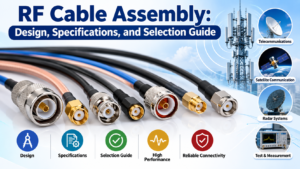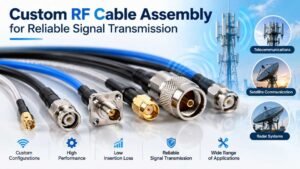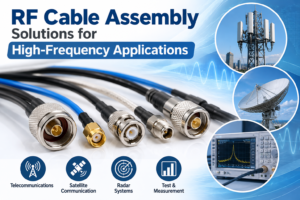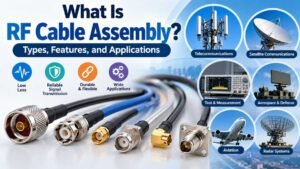
RF Cable Assembly plays a vital role in modern telecommunications and wireless systems by enabling reliable transmission of radio frequency signals between electronic components, antennas, transmitters, receivers, and communication equipment. As wireless communication technologies continue to advance, the demand for high-performance RF cable assemblies has increased across cellular networks, satellite communication, broadband infrastructure, wireless networking, and industrial communication systems.
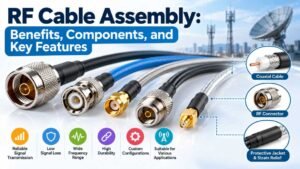
An RF cable assembly typically consists of a coaxial cable, RF connectors, and other components designed to maintain signal integrity across a specific frequency range. These assemblies are engineered to minimize signal loss, reduce electromagnetic interference, and support consistent performance in demanding operating environments.
For telecommunications infrastructure providers, equipment manufacturers, and wireless system integrators, selecting the right RF Cable Assembly is essential for achieving dependable connectivity, efficient signal transmission, and long-term system reliability.
What Is an RF Cable Assembly?
An RF Cable Assembly is a pre-terminated cable solution designed to transmit radio frequency signals between connected devices. It combines a suitable RF coaxial cable with compatible connectors to create a complete interconnection system.
Unlike ordinary electrical cables, RF cable assemblies are specifically designed to control signal behavior at high frequencies. Their construction helps maintain the characteristic impedance required for efficient transmission while minimizing reflections, attenuation, and interference.
RF cable assemblies are commonly available in different cable lengths, connector configurations, impedance ratings, and frequency ranges. Depending on the application, they may be designed for indoor equipment connections, outdoor antenna installations, testing environments, or specialized wireless communication systems.
Typical applications include cellular base stations, antenna systems, radio communication equipment, microwave links, Wi-Fi infrastructure, satellite terminals, and telecommunications testing equipment.
Importance of RF Cable Assembly in Telecommunications
Telecommunications networks rely on the accurate transmission of high-frequency signals between different components. An RF Cable Assembly provides the physical connection that allows these signals to travel between antennas, radio units, amplifiers, filters, and other communication devices.
A properly selected assembly helps maintain signal quality and supports consistent network performance. Poor-quality cables, incompatible connectors, or incorrectly installed assemblies can introduce excessive insertion loss, impedance mismatches, and unwanted reflections.
These problems may reduce signal strength, affect receiver sensitivity, and limit overall communication performance. In demanding network environments, even small losses can become important when multiple connections are present in the signal path.
High-quality RF cable assemblies help telecommunications engineers build dependable connections, simplify equipment integration, and maintain the performance of wireless communication infrastructure.
Key Components of an RF Cable Assembly
Understanding the primary components of an RF cable assembly helps identify the right solution for a specific telecommunications application.
1. RF Coaxial Cable
The coaxial cable carries RF signals between connected devices. It generally consists of a central conductor, dielectric insulation, an outer conductive shield, and a protective outer jacket.
The cable design influences attenuation, flexibility, shielding effectiveness, power handling, and operating frequency. Flexible coaxial cables are useful for equipment interconnections, while low-loss cables may be preferred for longer transmission paths where signal attenuation must be controlled.
2. RF Connectors
RF connectors provide secure electrical and mechanical connections between the cable and communication equipment. Connector selection depends on the required frequency range, impedance, interface dimensions, environmental conditions, and installation requirements.
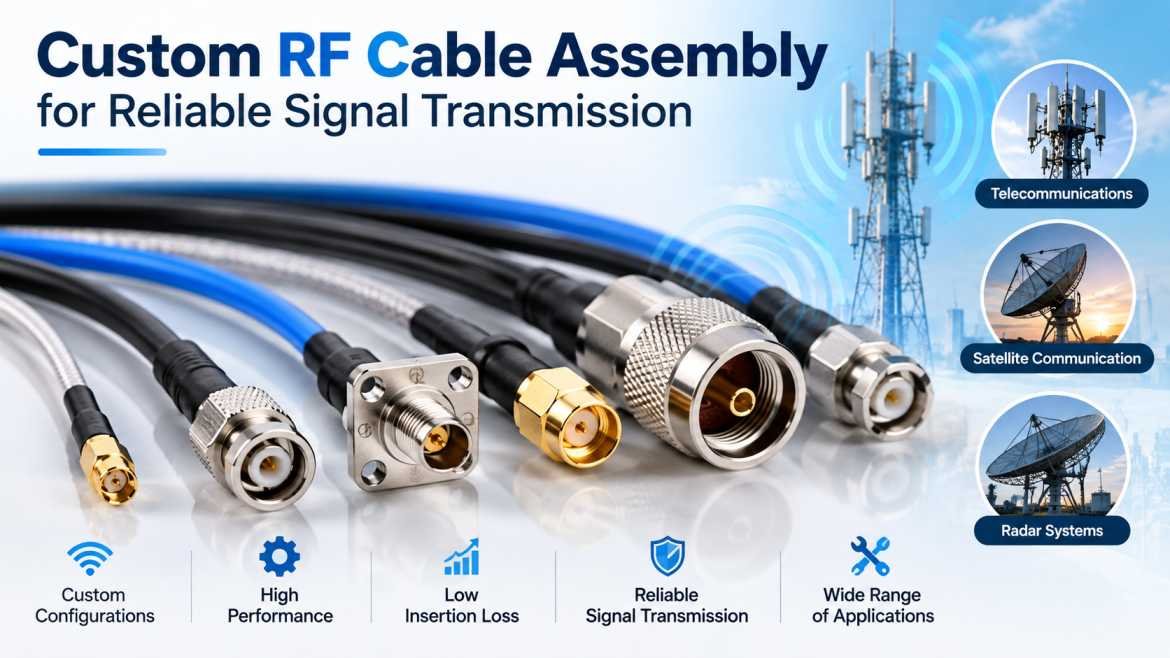
Common connector types include SMA, N-Type, TNC, BNC, 2.92 mm, and other specialized RF interfaces. Each connector has its own electrical and mechanical characteristics, so compatibility must be verified before installation.
3. Cable Termination
Cable termination connects the RF cable to its connectors while maintaining electrical continuity and the intended impedance characteristics. Proper termination is important for minimizing signal reflections, maintaining shielding performance, and ensuring mechanical durability.
4. Protective Components
Depending on the intended application, RF cable assemblies may include strain relief, heat-shrink tubing, protective boots, environmental sealing, or abrasion-resistant jackets. These features help protect connections against mechanical stress, moisture, dust, and other environmental challenges.
Applications of RF Cable Assembly in Wireless Systems
1. Cellular Communication Networks
RF cable assemblies are widely used in cellular base stations, antenna systems, radio units, and distributed antenna systems. They connect RF equipment to antennas and help carry signals used for mobile voice and data communication.
In 4G LTE and 5G infrastructure, the cable assembly must meet the frequency, loss, connector, and environmental requirements of the particular system. Some installations use short RF jumpers, while others require specialized low-loss interconnections.
2. Wi-Fi and Wireless Networking
Wireless routers, access points, wireless bridges, and network equipment may use RF cable assemblies to connect internal radio modules or external antennas. Correct impedance and suitable cable characteristics help maintain reliable RF performance.
These assemblies are especially important in applications where antenna placement, equipment enclosure design, and cable routing influence overall wireless coverage.
3. Satellite Communication Systems
Satellite communication equipment depends on RF interconnections between antennas, transceivers, low-noise amplifiers, frequency converters, and other components.
RF cable assemblies used in these systems must be selected according to frequency, insertion loss, environmental exposure, and installation requirements. In satellite ground stations and communication terminals, reliable interconnections support signal reception and transmission.
4. Microwave Communication Links
Microwave links provide point-to-point connectivity for telecommunications backhaul, enterprise networks, and specialized communication systems. RF cable assemblies connect the relevant radio equipment, test ports, and supporting components.
Applications operating at higher frequencies require careful consideration of connector performance, cable attenuation, and impedance matching.
5. Public Safety and Radio Communication
Public safety organizations, transportation networks, industrial facilities, and emergency communication systems use RF equipment for dependable wireless communication.
Suitable cable assemblies help connect antennas, radios, repeaters, and communication infrastructure. Depending on the installation, assemblies may need enhanced durability, weather resistance, or compatibility with specialized radio equipment.
6. RF Testing and Measurement
Telecommunications laboratories and production facilities use RF cable assemblies to connect spectrum analyzers, signal generators, network analyzers, and devices under test.
For accurate measurements, the assembly should provide appropriate frequency performance, repeatability, connector quality, and phase stability when required. Calibration and inspection practices may also be necessary for precision applications.
Important Technical Specifications of RF Cable Assembly
Selecting an RF Cable Assembly requires evaluating several technical parameters.
Operating Frequency
The operating frequency range indicates the frequencies over which the assembly is designed to function. The cable and connectors must both support the intended frequency range.
Characteristic Impedance
Many telecommunications RF systems use 50-ohm components and interconnections. Other applications, including certain video systems, may use 75-ohm impedance. Matching the assembly to the system helps reduce reflections and signal degradation.
Insertion Loss
Insertion loss represents the reduction in signal power caused by introducing the cable assembly into the transmission path. Lower insertion loss is generally desirable, particularly in systems with long cable runs or weak received signals.
Return Loss and VSWR
Return loss and voltage standing wave ratio (VSWR) describe impedance matching and reflected signal behavior. Better impedance matching generally results in lower reflections and more efficient power transfer.
Cable Length and Flexibility
Cable length influences attenuation and installation convenience. Shorter cables may reduce losses, while flexibility helps simplify routing through equipment enclosures and confined spaces.
Shielding Effectiveness
Shielding helps limit electromagnetic interference entering or escaping the cable. Effective shielding is particularly important in environments containing multiple radios, electronic systems, and high-frequency equipment.
Environmental Resistance
Outdoor telecommunications installations may require protection against ultraviolet exposure, moisture, temperature variation, vibration, and corrosion. The appropriate cable jacket, connector finish, and sealing method depend on the operating environment.
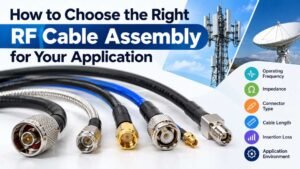
How to Choose the Right RF Cable Assembly
Choosing the correct RF Cable Assembly begins with understanding the system’s electrical and mechanical requirements.
First, identify the operating frequency range and required impedance. These parameters help determine suitable cable and connector options.
Second, evaluate insertion loss and cable length. Applications involving long transmission paths or sensitive receivers may benefit from low-loss cable designs.
Third, verify connector compatibility. Connector gender, interface type, mounting configuration, and frequency rating must match the connected equipment.
Fourth, consider the installation environment. Indoor equipment may require flexibility and compact dimensions, whereas outdoor infrastructure may need weather-resistant materials and secure environmental sealing.
Fifth, assess mechanical requirements, including bend radius, repeated flexing, vibration, and strain relief. These factors can affect the service life of the assembly.
Finally, review quality requirements and testing procedures. Depending on the application, verification may include continuity, insertion loss, return loss, VSWR, and dimensional inspection.
Working with an experienced RF cable assembly manufacturer can help ensure that the selected solution meets the required electrical performance, mechanical specifications, and installation conditions.
Benefits of High-Quality RF Cable Assembly
High-quality RF cable assemblies provide several benefits for telecommunications and wireless systems.
- Reliable signal transmission: Appropriate cable construction and connector interfaces help maintain signal integrity.
- Reduced signal loss: Suitable low-loss designs help preserve signal strength across the connection.
- Improved electromagnetic compatibility: Effective shielding helps control unwanted interference.
- Installation flexibility: Custom lengths and connector configurations simplify equipment integration.
- Mechanical durability: Proper materials and strain relief can improve resistance to wear and handling.
- Consistent system performance: Quality control and electrical testing help reduce connection-related problems.
- Application-specific customization: Assemblies can be configured for different frequency ranges, environmental conditions, and equipment requirements.
These advantages make RF cable assemblies an important part of reliable wireless communication infrastructure.
Future Trends in RF Cable Assembly Technology
The continued development of 5G networks, private wireless systems, advanced satellite communications, and high-frequency communication technologies is increasing the need for carefully engineered RF interconnections.
Higher operating frequencies can introduce greater attenuation and tighter mechanical tolerances, making connector precision and cable selection increasingly important. Compact equipment designs also create demand for smaller connectors, flexible cable configurations, and space-efficient routing solutions.
At the same time, network operators and equipment manufacturers continue to emphasize product consistency, installation reliability, and lifecycle performance. Custom-engineered RF cable assemblies can support these objectives when they are designed and tested against the requirements of the intended application.
As wireless technologies evolve, selecting suitable RF interconnections will remain essential for maintaining reliable communication links and supporting the performance of modern telecommunications infrastructure.
Conclusion
RF Cable Assembly is a fundamental component of telecommunications and wireless systems, providing dependable RF connections between antennas, transmitters, receivers, radio units, and testing equipment. Its performance depends on cable construction, connector compatibility, impedance matching, frequency capability, shielding, and environmental suitability.
From cellular networks and Wi-Fi infrastructure to satellite communication and microwave links, the right assembly helps reduce signal loss, maintain connection quality, and improve equipment reliability. By evaluating technical specifications and working with a qualified manufacturer, telecommunications companies and system integrators can select RF cable assemblies that meet their performance and installation requirements.
Frequently Asked Questions (FAQs)
1. What is an RF Cable Assembly used for?
An RF Cable Assembly transmits radio frequency signals between electronic devices, antennas, transmitters, receivers, and communication equipment. It is commonly used in telecommunications, wireless networking, satellite communication, and RF testing.
2. Why is RF Cable Assembly important in telecommunications?
It provides a controlled connection between RF components and helps maintain signal integrity. A suitable assembly minimizes unwanted signal loss and reflections while supporting reliable network operation.
3. Which connectors are commonly used in RF Cable Assemblies?
Common connector types include SMA, N-Type, TNC, BNC, and 2.92 mm connectors. The appropriate type depends on frequency requirements, impedance, mechanical compatibility, and environmental conditions.
4. What impedance is commonly used for telecommunications RF cable assemblies?
Many RF telecommunications systems use 50-ohm impedance. However, the required impedance depends on the equipment and application, so system specifications should always be checked.
5. How does cable length affect RF performance?
Longer cables generally introduce greater insertion loss. Selecting an appropriate cable type and length helps preserve signal strength and maintain system performance.
6. Can RF Cable Assemblies be customized?
Yes. RF cable assemblies can be customized by cable length, connector type, frequency range, impedance, jacket material, and other application-specific requirements.
7. What tests are performed on RF Cable Assemblies?
Depending on the design and application, tests may include continuity, insertion loss, return loss, VSWR, connector inspection, and dimensional verification. Additional environmental or mechanical tests may be required for specialized applications.
8. How can I select the best RF Cable Assembly for a wireless system?
Determine the frequency range, impedance, acceptable insertion loss, cable length, connector interfaces, installation environment, and mechanical requirements. These details help identify an assembly that is compatible with the intended wireless system.