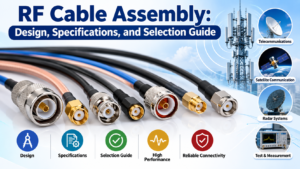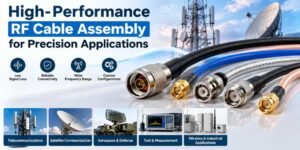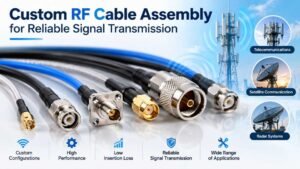
Semi-Flexible FS Series Cable is a high-performance RF coaxial cable designed for microwave, radio frequency (RF), and high-speed communication systems that require a balance between electrical performance and installation flexibility. Unlike conventional flexible coaxial cables, the FS Series features a specially engineered corrugated or reinforced outer conductor that provides improved mechanical stability while still allowing controlled bending during installation.
These cables are widely used in aerospace, defense, telecommunications, satellite communication, wireless infrastructure, medical equipment, radar systems, and laboratory testing because of their low insertion loss, excellent shielding effectiveness, and stable electrical performance. Semi-Flexible FS Series cables are ideal for applications where repeated movement is not required but easier installation is preferred over fully semi-rigid cables.
As modern communication technologies continue to evolve with 5G, 6G, satellite internet, IoT, and advanced radar systems, Semi-Flexible FS Series cables have become an essential solution for reliable RF signal transmission.
This guide explains everything about Semi-Flexible FS Series Cable, including its construction, working principle, technical specifications, applications, advantages, limitations, and selection criteria.
What Is Semi-Flexible FS Series Cable?
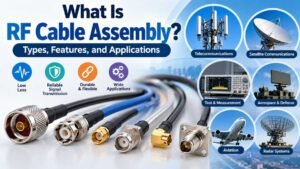
Semi-Flexible FS Series Cable is a precision RF coaxial cable that combines the electrical advantages of semi-rigid cables with the installation convenience of flexible coaxial cables. It features a solid or corrugated metallic outer conductor, a precision dielectric, and a high-conductivity center conductor that together provide excellent signal transmission across high-frequency RF and microwave applications.
Unlike braided coaxial cables, FS Series cables maintain their shape after installation while still allowing controlled bending during assembly. This makes them highly suitable for permanent installations where stable electrical performance is critical.
The cable is specifically designed to maintain constant impedance, minimize insertion loss, reduce signal reflections, and provide excellent electromagnetic shielding throughout its operating frequency range.
How Does Semi-Flexible FS Series Cable Work?
Semi-Flexible FS Series Cable works by transmitting RF energy through its center conductor while the dielectric maintains precise spacing between the center conductor and the outer conductor.
The outer conductor acts as a highly effective electromagnetic shield that prevents external interference and minimizes signal leakage. Because of its precision construction, the cable maintains constant impedance throughout its length, ensuring reliable signal transmission with very low attenuation.
Its semi-flexible design allows installers to bend the cable into the required shape without significantly affecting electrical performance.
Construction of Semi-Flexible FS Series Cable
Center Conductor
The center conductor carries RF and microwave signals with minimal resistance.
Common materials include:
- Silver-Plated Copper
- Oxygen-Free Copper
- Copper-Clad Steel
Silver-plated conductors improve conductivity and reduce RF losses at high frequencies.
Dielectric
The dielectric separates the center conductor from the outer conductor while maintaining characteristic impedance.
Common dielectric materials include:
- PTFE
- Expanded PTFE
- Low-Density PTFE
These materials provide low dielectric loss and excellent temperature stability.
Outer Conductor
The outer conductor provides shielding and mechanical protection.
Common materials include:
- Seamless Copper Tube
- Corrugated Copper
- Tin-Plated Copper
- Silver-Plated Copper
The reinforced outer conductor significantly improves shielding effectiveness and phase stability.
Outer Jacket
Some Semi-Flexible FS Series cables include protective jackets manufactured from:
- FEP
- PVC
- Polyethylene
- LSZH
These jackets provide additional environmental protection.
Key Features of Semi-Flexible FS Series Cable
- Low insertion loss
- Excellent shielding effectiveness
- Stable electrical performance
- High-frequency capability
- Superior phase stability
- Constant 50 Ohm impedance
- Easy installation
- Shape retention after bending
- Excellent temperature resistance
- High power handling
- Durable construction
- Long service life
Technical Specifications
| Specification | Typical Value |
| Characteristic Impedance | 50 Ohms |
| Frequency Range | DC to 67 GHz |
| Dielectric Material | PTFE |
| Center Conductor | Silver-Plated Copper |
| Outer Conductor | Corrugated Copper Tube |
| Shielding Effectiveness | >90 dB |
| VSWR | ≤1.20 |
| Operating Temperature | -55°C to +200°C |
| Velocity Factor | Approximately 69% |
| Bend Radius | Small Controlled Bend Radius |
Common Cable Sizes
| Cable Size | Outside Diameter | Typical Applications |
| FS-047 | 1.19 mm | RF Modules |
| FS-086 | 2.18 mm | Laboratory Equipment |
| FS-141 | 3.58 mm | Microwave Systems |
| FS-250 | 6.35 mm | Aerospace & Defense |
| FS-402 | 10.21 mm | High-Power RF Systems |
Frequency Range
Semi-Flexible FS Series cables support various RF frequency ranges including:
- DC to 6 GHz
- DC to 12 GHz
- DC to 18 GHz
- DC to 26.5 GHz
- DC to 40 GHz
- DC to 50 GHz
- DC to 67 GHz
Certain premium models are capable of operating beyond 70 GHz depending on cable diameter and connector type.
Compatible RF Connectors
Semi-Flexible FS Series cables can be terminated with numerous RF connectors, including:
- SMA
- N-Type
- TNC
- BNC
- 2.92 mm
- 2.4 mm
- 1.85 mm
- SMP
- SMPM
- SSMP
- QMA
Applications of Semi-Flexible FS Series Cable
Telecommunications
- Cellular Base Stations
- 4G Networks
- 5G Infrastructure
- DAS Systems
Aerospace
- Aircraft Communication
- Navigation Systems
- Avionics
- Flight Testing
Defense
- Radar Systems
- Electronic Warfare
- Military Communication
- Missile Systems
Satellite Communication
- VSAT Systems
- Ground Stations
- Satellite Payloads
- Space Communication
Medical Equipment
- MRI Systems
- RF Diagnostic Equipment
- Imaging Devices
- Healthcare Electronics
Industrial Automation
- Factory Automation
- Industrial Sensors
- Robotics
- Wireless Monitoring
Laboratory Testing
- Spectrum Analyzers
- Network Analyzers
- Signal Generators
- Oscilloscopes
- RF Calibration Systems
Advantages of Semi-Flexible FS Series Cable
- Low attenuation
- Excellent EMI shielding
- Consistent impedance
- High-frequency capability
- Stable phase performance
- Compact installation
- Easy routing
- High durability
- Reliable long-term performance
- Reduced signal reflections
- Excellent mechanical stability
- Suitable for demanding RF applications
Limitations of Semi-Flexible FS Series Cable
- Less flexible than braided RF cables
- Not designed for continuous movement
- Higher cost than standard coaxial cables
- Requires proper installation techniques
- Specialized connector termination may be required
How to Choose the Right Semi-Flexible FS Series Cable
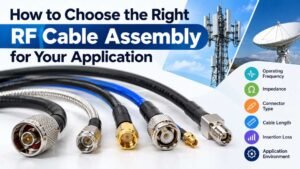
When selecting an FS Series cable, consider:
- Operating frequency
- Cable diameter
- Connector compatibility
- Power handling requirements
- Installation space
- Shielding effectiveness
- VSWR
- Insertion loss
- Environmental conditions
- Temperature requirements
Semi-Flexible FS Series Cable vs Flexible RF Cable
| Feature | Semi-Flexible FS Series | Flexible RF Cable |
| Outer Conductor | Corrugated/Solid | Braided Shield |
| Flexibility | Moderate | High |
| Shielding | Excellent | Good |
| Signal Loss | Very Low | Moderate |
| Phase Stability | Excellent | Moderate |
| Installation | Permanent | Flexible |
| EMI Protection | Superior | Standard |
| Frequency Capability | Higher | Lower |
Industries Using Semi-Flexible FS Series Cable
These cables are widely used in:
- Telecommunications
- Aerospace
- Defense
- Satellite Communication
- Medical Electronics
- Broadcasting
- Semiconductor Manufacturing
- RF Laboratories
- Wireless Infrastructure
- Industrial Automation
Installation Tips
For best performance:
- Avoid excessive bending
- Maintain recommended bend radius
- Use precision RF connectors
- Prevent cable twisting
- Keep connectors clean
- Secure cables properly after installation
- Inspect connectors regularly
Future Trends of Semi-Flexible FS Series Cable
The growing deployment of 5G, 6G, satellite communication, aerospace electronics, autonomous vehicles, and advanced radar technologies continues to increase demand for Semi-Flexible FS Series cables. Future innovations include lighter materials, lower insertion loss, improved shielding, higher power handling, and support for frequencies exceeding 100 GHz. These advancements will help meet the evolving requirements of next-generation communication and microwave systems.
Conclusion
Semi-Flexible FS Series Cable offers an ideal balance between the electrical performance of semi-rigid cables and the installation convenience of flexible coaxial cables. Its low attenuation, excellent shielding, stable impedance, and high-frequency capability make it an outstanding solution for telecommunications, aerospace, defense, medical equipment, satellite communication, industrial automation, and RF laboratory applications. By selecting the appropriate cable size, connector type, and electrical specifications, users can ensure long-term reliability and superior RF performance.
Frequently Asked Questions (FAQs)
1. What is a Semi-Flexible FS Series Cable?
A Semi-Flexible FS Series Cable is a precision RF coaxial cable designed for high-frequency applications that require low signal loss, excellent shielding, and moderate installation flexibility.
2. What is Semi-Flexible FS Series Cable used for?
It is widely used in telecommunications, aerospace, defense, satellite communication, medical equipment, RF laboratories, industrial automation, and wireless infrastructure.
3. What is the impedance of a Semi-Flexible FS Series Cable?
Most Semi-Flexible FS Series cables have a characteristic impedance of 50 Ohms, making them suitable for RF and microwave systems.
4. What frequency range does the FS Series support?
Depending on the model, Semi-Flexible FS Series cables typically support frequencies from DC up to 67 GHz, with specialized versions available for even higher frequencies.
5. What are the advantages of Semi-Flexible FS Series Cable?
Key advantages include low insertion loss, excellent EMI shielding, stable phase performance, high-frequency capability, constant impedance, and long service life.
6. Can Semi-Flexible FS Series Cable be bent?
Yes. It is designed to allow controlled bending during installation while maintaining excellent electrical performance.
7. Which connectors are compatible with Semi-Flexible FS Series Cable?
Common connectors include SMA, N-Type, TNC, BNC, 2.92 mm, 2.4 mm, 1.85 mm, SMP, SMPM, SSMP, and QMA.
8. Is Semi-Flexible FS Series Cable suitable for outdoor applications?
Yes. With appropriate jackets and sealed RF connectors, it performs reliably in outdoor and harsh environmental conditions.
9. Which industries commonly use Semi-Flexible FS Series Cable?
Industries include aerospace, defense, telecommunications, satellite communication, medical electronics, industrial automation, semiconductor manufacturing, and RF testing.
10. How do I choose the right Semi-Flexible FS Series Cable?
Choose based on operating frequency, cable diameter, connector compatibility, insertion loss, shielding performance, impedance, power handling, and installation requirements.