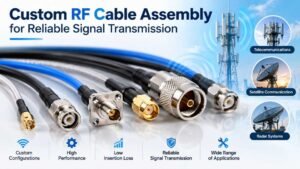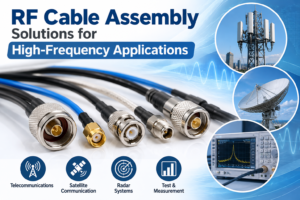
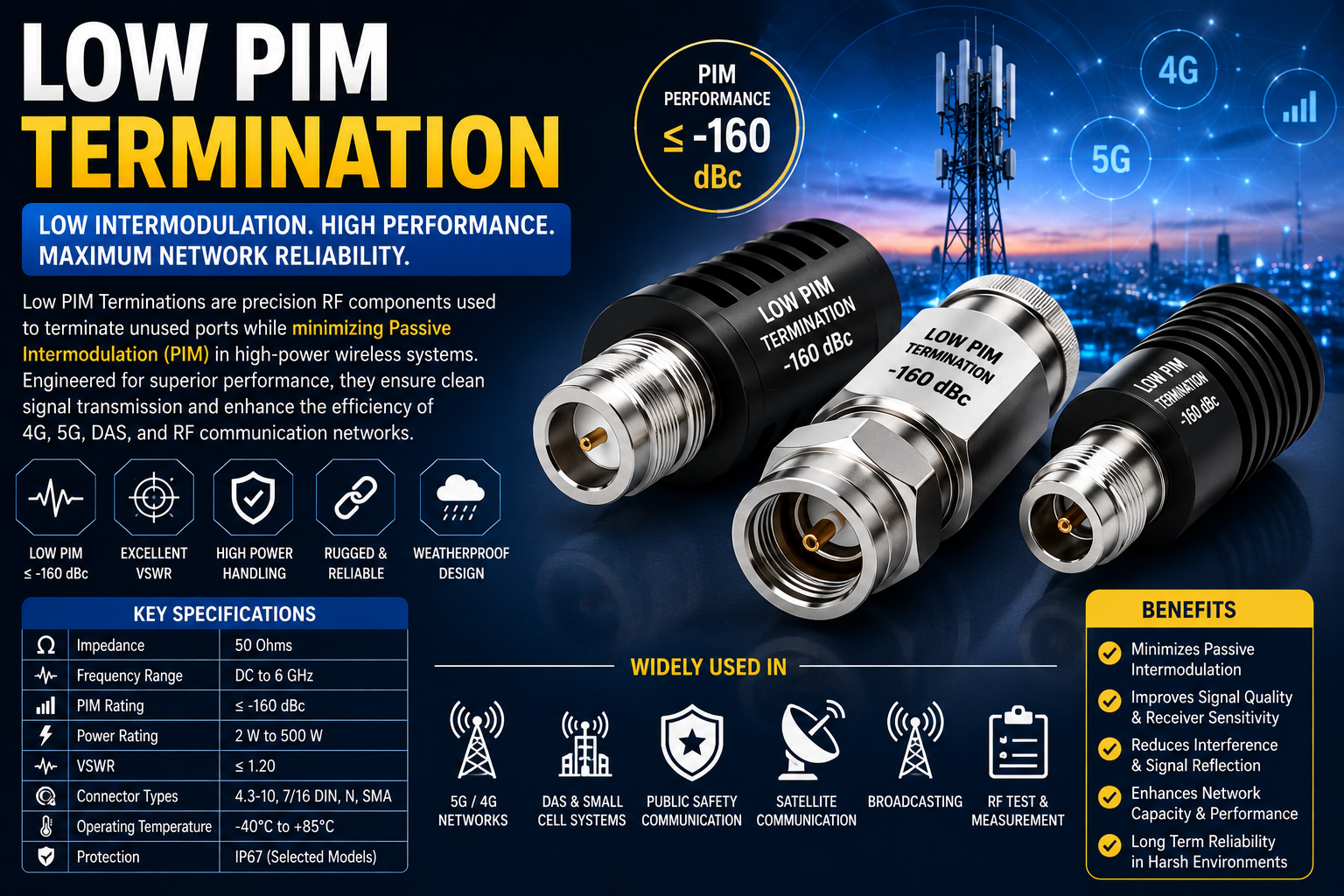
Low PIM Terminations are essential passive RF components designed to terminate unused ports in high-performance radio frequency (RF) systems while minimizing Passive Intermodulation (PIM). As modern wireless communication networks continue evolving with 4G LTE, 5G, public safety communications, distributed antenna systems (DAS), and in-building wireless coverage, maintaining high signal quality has become increasingly important. One of the major challenges in these high-frequency systems is Passive Intermodulation, which can generate unwanted interference and reduce network performance.
Low PIM Terminations are specifically engineered to absorb RF energy from unused ports without reflecting signals back into the system or creating unwanted intermodulation products. These precision components are manufactured using premium conductive materials, precision connectors, and advanced plating technologies to ensure extremely low PIM values, excellent impedance matching, and superior reliability.
Unlike standard RF terminations, Low PIM Terminations undergo stringent testing and quality control to meet demanding telecommunication standards. They are widely deployed in cellular base stations, distributed antenna systems, repeater networks, small cells, public safety communication systems, satellite communication, and RF testing laboratories.
This comprehensive guide explains everything about Low PIM Terminations, including their working principle, construction, specifications, applications, advantages, selection criteria, and maintenance practices.
What Is a Low PIM Termination?
A Low PIM Termination is a precision RF termination designed to absorb radio frequency energy while producing extremely low Passive Intermodulation (PIM). It is installed on unused RF ports to maintain impedance matching, reduce signal reflections, and preserve the overall performance of RF communication systems.
Low PIM Terminations are typically manufactured with a characteristic impedance of 50 Ohms and are engineered to handle different power levels depending on the application.
These components play a critical role in ensuring high network efficiency by preventing unwanted reflections and minimizing interference caused by nonlinear electrical junctions.
What Is Passive Intermodulation (PIM)?
Passive Intermodulation (PIM) is an unwanted RF phenomenon that occurs when two or more high-power RF signals pass through imperfect passive components or mechanical junctions. Poor metal contacts, loose connectors, corrosion, contamination, or inferior materials can create nonlinear electrical behavior, generating additional unwanted frequencies.
These unwanted frequencies interfere with receiver sensitivity, reduce data throughput, degrade call quality, and limit overall network performance.
Low PIM components are specially designed to minimize these nonlinear effects.
How Does a Low PIM Termination Work?
A Low PIM Termination absorbs incoming RF energy from an unused transmission port and safely dissipates it as heat while maintaining excellent impedance matching.
Its precision resistor network ensures that virtually no signal is reflected back into the RF system. At the same time, high-quality conductive materials and carefully engineered mechanical construction minimize nonlinear electrical junctions that can generate Passive Intermodulation.
This allows communication systems to maintain clean signal transmission with improved receiver sensitivity and higher network capacity.
Construction of a Low PIM Termination
Precision RF Connector
Low PIM Terminations are manufactured using precision RF connectors that provide stable electrical contact and minimize contact resistance.
Common connector types include:
- 4.3-10
- 7/16 DIN
- N-Type
- SMA
- TNC
Precision Resistor Element
The resistor absorbs RF power while maintaining constant impedance.
It is designed to provide:
- Accurate impedance
- Low reflection
- Stable performance
- Excellent thermal characteristics
Conductive Housing
The outer housing is manufactured using corrosion-resistant materials such as:
- Brass
- Stainless Steel
- Copper Alloy
Many products include premium silver or tri-metal plating to reduce PIM.
Heat Dissipation Structure
High-power Low PIM Terminations include finned housings or heat sinks that efficiently dissipate RF energy.
Key Features of Low PIM Terminations
- Extremely Low Passive Intermodulation
- Excellent Impedance Matching
- Low VSWR
- High Return Loss
- High Power Handling
- Rugged Construction
- Weatherproof Design
- Corrosion Resistant
- Wide Frequency Coverage
- Long Service Life
- Stable Electrical Performance
- Suitable for Outdoor Installations
Technical Specifications
| Specification | Typical Value |
| Characteristic Impedance | 50 Ohms |
| Frequency Range | DC to 6 GHz (Model Dependent) |
| Passive Intermodulation | ≤ -160 dBc |
| VSWR | ≤ 1.20 |
| Return Loss | Better than 26 dB |
| Power Rating | 2 W to 500 W |
| Connector Types | N, 4.3-10, 7/16 DIN, SMA |
| Operating Temperature | -40°C to +85°C |
| Weather Protection | IP67 (Selected Models) |
Common Power Ratings
Low PIM Terminations are available in multiple power capacities.
| Power Rating | Typical Application |
| 2 W | Indoor RF Equipment |
| 5 W | Laboratory Testing |
| 10 W | Small Cells |
| 25 W | DAS Systems |
| 50 W | Cellular Base Stations |
| 100 W | Outdoor Networks |
| 250 W | High-Power RF Systems |
| 500 W | Broadcast Infrastructure |
Connector Types
Common Low PIM connector interfaces include:
- 4.3-10 Male
- 4.3-10 Female
- 7/16 DIN Male
- 7/16 DIN Female
- N Male
- N Female
- SMA Male
- SMA Female
Frequency Range
Depending on the model, Low PIM Terminations support:
- DC to 2 GHz
- DC to 3 GHz
- DC to 4 GHz
- DC to 6 GHz
Some specialized models support even higher microwave frequencies.
Applications of Low PIM Terminations
5G Networks
Low PIM Terminations help maintain signal quality in massive MIMO antennas, small cells, and macro base stations.
4G LTE Infrastructure
Used to terminate unused RF ports while minimizing network interference.
Distributed Antenna Systems (DAS)
Ensure reliable indoor wireless coverage with minimal signal degradation.
Public Safety Networks
Support mission-critical communication systems with high reliability.
Cellular Base Stations
Prevent reflections and improve receiver sensitivity.
RF Laboratories
Used in precision testing and measurement applications.
Satellite Communication
Maintain impedance matching in satellite RF systems.
Broadcasting
Improve transmission quality in radio and television infrastructure.
Military Communication
Used in tactical RF systems requiring extremely low interference.
Industrial RF Systems
Support wireless automation and industrial communication equipment.
Advantages of Low PIM Terminations
- Reduces Passive Intermodulation
- Improves Receiver Sensitivity
- Minimizes Signal Reflection
- Enhances Network Capacity
- Improves Data Throughput
- Excellent Return Loss
- High Reliability
- Weather Resistant
- Long Operational Life
- Supports High-Power Applications
- Easy Installation
- Low Maintenance
Limitations of Low PIM Terminations
- Higher cost than standard terminations
- Requires proper torque during installation
- Performance depends on connector cleanliness
- Not intended for continuous signal transmission
- Must match system impedance
How to Choose the Right Low PIM Termination
When selecting a Low PIM Termination, consider the following:
- Operating frequency
- Power handling
- Required PIM performance
- Connector type
- VSWR
- Return loss
- Outdoor or indoor installation
- Environmental protection
- Compliance with telecom standards
- Manufacturer quality certifications
Low PIM Termination vs Standard RF Termination
| Feature | Low PIM Termination | Standard Termination |
| Passive Intermodulation | Extremely Low | Standard |
| Signal Reflection | Very Low | Moderate |
| Network Performance | Excellent | Standard |
| Receiver Sensitivity | Improved | Normal |
| Outdoor Applications | Yes | Limited |
| High Power Capability | Excellent | Moderate |
| Cost | Higher | Lower |
Industries Using Low PIM Terminations
Low PIM Terminations are widely used in:
- Telecommunications
- 5G Infrastructure
- Mobile Network Operators
- Distributed Antenna Systems
- Public Safety Communication
- Military Communication
- Aerospace
- Satellite Communication
- Broadcasting
- RF Testing Laboratories
Installation and Maintenance Tips
To maximize performance:
- Clean connectors before installation.
- Use the recommended torque wrench.
- Avoid over-tightening RF connectors.
- Inspect connectors regularly for corrosion.
- Protect outdoor installations with weatherproof sealing.
- Replace damaged connectors immediately.
- Verify PIM performance during preventive maintenance.
Future Trends of Low PIM Terminations
As wireless communication continues to evolve with 5G Advanced, future 6G networks, satellite broadband, and high-capacity indoor coverage systems, the demand for ultra-low PIM components will continue to increase. Manufacturers are developing Low PIM Terminations with improved materials, enhanced weather protection, wider frequency support, lower insertion loss, higher power handling, and even lower PIM performance to meet the requirements of next-generation RF communication infrastructure.
Conclusion
Low PIM Terminations are critical passive components that ensure optimal performance in modern RF communication systems. By terminating unused RF ports while minimizing Passive Intermodulation, these devices improve signal quality, enhance receiver sensitivity, reduce interference, and maximize network efficiency. Their precision construction, excellent impedance matching, rugged design, and high reliability make them indispensable for 4G LTE, 5G, DAS, satellite communication, broadcasting, military electronics, and laboratory testing. Selecting the right Low PIM Termination based on power rating, connector type, frequency range, and PIM specification helps maintain long-term network stability and superior RF performance.
Frequently Asked Questions (FAQs)
1. What is a Low PIM Termination?
A Low PIM Termination is an RF component designed to terminate unused ports while minimizing Passive Intermodulation and maintaining proper impedance matching.
2. What does Low PIM mean?
Low PIM refers to Low Passive Intermodulation, which indicates that the component generates extremely low unwanted intermodulation signals when handling high-power RF transmissions.
3. Why are Low PIM Terminations important?
They reduce interference, improve receiver sensitivity, minimize signal reflections, and enhance the overall performance of wireless communication systems.
4. Where are Low PIM Terminations used?
They are commonly used in 4G LTE, 5G networks, distributed antenna systems (DAS), base stations, public safety communication, satellite systems, broadcasting, and RF laboratories.
5. What impedance do Low PIM Terminations typically have?
Most Low PIM Terminations are designed with a 50 Ohm characteristic impedance.
6. What connector types are available?
Common connector options include 4.3-10, 7/16 DIN, N-Type, SMA, and TNC.
7. What is the typical PIM rating?
High-quality Low PIM Terminations generally offer ≤ -160 dBc, with premium models achieving even lower PIM values.
8. Can Low PIM Terminations be used outdoors?
Yes. Many models are designed with weatherproof and IP67-rated housings for reliable outdoor operation.
9. How do I select the right Low PIM Termination?
Choose based on operating frequency, power rating, connector type, PIM specification, VSWR, return loss, and environmental conditions.
10. What are the benefits of using a Low PIM Termination?
Key benefits include lower Passive Intermodulation, improved signal quality, better network capacity, higher receiver sensitivity, reduced reflections, and long-term reliability in RF communication systems.