
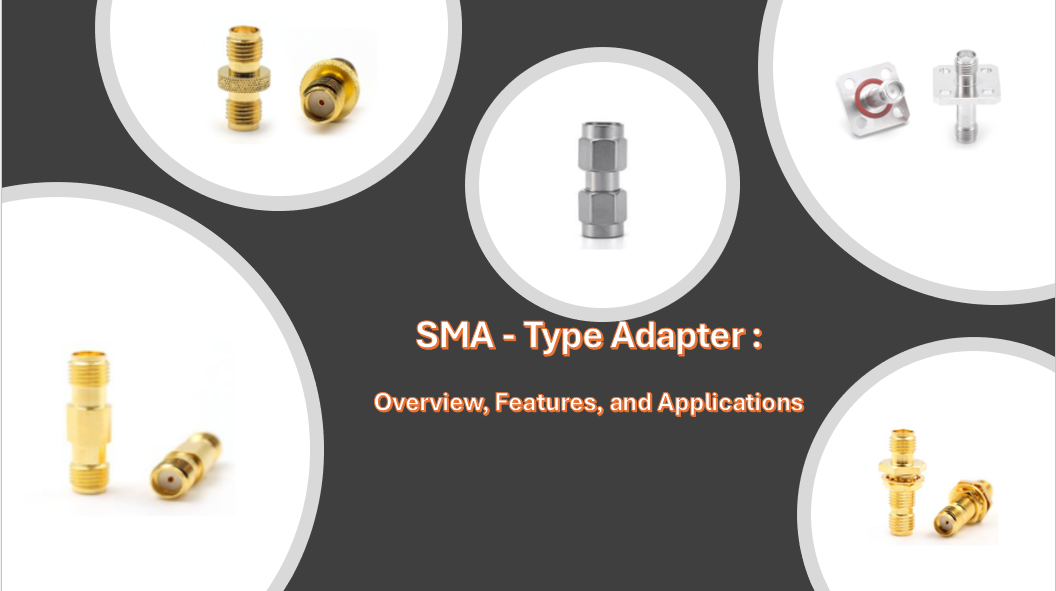
SMA adapters are one of the most widely used RF interconnect components in modern communication systems. They provide a reliable interface between different RF connectors while maintaining excellent signal integrity across high-frequency applications. Whether used in telecommunications, aerospace, defense, medical equipment, satellite communication, or laboratory testing, SMA adapters ensure seamless connectivity between RF devices.
Designed for frequencies ranging from DC to 18 GHz, 26.5 GHz, and even 40 GHz in precision versions, SMA adapters offer outstanding electrical performance with low insertion loss, excellent return loss, and superior mechanical durability. Their compact design and threaded coupling mechanism make them ideal for applications where stable and vibration-resistant connections are required.
This guide explains everything you need to know about SMA adapters, including their working principle, features, specifications, types, applications, and selection criteria.
What is an SMA Adapter?
An SMA adapter is a precision RF connector accessory designed to join two SMA connectors or convert one connector interface into another. It enables engineers to connect devices with different connector genders, orientations, or connector types without replacing existing equipment.
SMA stands for SubMiniature Version A, a connector standard introduced for microwave applications. SMA adapters preserve impedance matching while minimizing signal reflection and insertion loss.
These adapters are commonly manufactured with a 50-ohm impedance, making them suitable for most RF and microwave systems.
How Does an SMA Adapter Work?
An SMA adapter acts as an electrical bridge between two RF components.
When RF signals travel through the adapter:
- The center conductor carries the RF signal.
- The outer conductor provides shielding and grounding.
- The precision dielectric maintains impedance.
- The threaded coupling ensures secure mechanical contact.
A well-designed SMA adapter minimizes:
- Signal reflections
- Power loss
- VSWR
- Phase variations
- Electromagnetic interference
This results in stable and consistent RF performance.
Construction of an SMA Adapter
A typical SMA adapter consists of:
Center Contact
Usually made from beryllium copper with gold plating for excellent conductivity.
Outer Body
Manufactured using stainless steel or brass with nickel or passivated finishes.
Dielectric
High-quality PTFE (Teflon) dielectric maintains electrical insulation and impedance.
Threaded Coupling
Provides vibration-resistant and secure connections.
Precision Machining
Ensures accurate alignment and repeatable RF performance.
Key Features of SMA Adapters
Wide Frequency Range
Supports frequencies from DC up to:
- 18 GHz
- 26.5 GHz
- 40 GHz (precision models)
Low Insertion Loss
Efficient transmission with minimal signal attenuation.
Excellent Return Loss
Maintains impedance matching for reduced reflections.
High Reliability
Suitable for continuous operation in demanding environments.
Compact Size
Ideal for dense RF assemblies.
Durable Construction
Designed for thousands of mating cycles.
Excellent Shielding
Protects signals against EMI and external interference.
Corrosion Resistance
Gold-plated contacts and stainless-steel bodies provide long service life.
Common Types of SMA Adapters
SMA Male to SMA Female
Used for extending cable assemblies or connecting equipment.
SMA Female to SMA Female
Allows two SMA male connectors to be joined.
SMA Male to SMA Male
Connects two SMA female ports.
Right Angle SMA Adapter
Provides cable routing flexibility where space is limited.
Bulkhead SMA Adapter
Designed for panel mounting applications.
SMA to N Adapter
Connects SMA connectors with N-type interfaces.
SMA to BNC Adapter
Used when integrating RF systems with test equipment.
SMA to TNC Adapter
Provides compatibility between SMA and TNC connectors.
SMA to SMB Adapter
Suitable for compact RF devices.
SMA to MMCX Adapter
Commonly used in wireless modules and embedded electronics.
Technical Specifications
| Parameter | Typical Value |
|---|---|
| Impedance | 50 Ohm |
| Frequency Range | DC to 18 GHz / 26.5 GHz / 40 GHz |
| VSWR | ≤1.20:1 |
| Insertion Loss | Very Low |
| Return Loss | High |
| Connector Type | SMA Male/Female |
| Body Material | Brass or Stainless Steel |
| Contact Material | Beryllium Copper |
| Contact Finish | Gold Plated |
| Dielectric | PTFE |
| Coupling | Threaded |
Advantages of SMA Adapters
Excellent Signal Integrity
Maintains RF performance across high-frequency systems.
Easy Installation
Simple threaded coupling enables quick assembly.
High Mechanical Strength
Suitable for vibration-prone environments.
Long Operational Life
Supports repeated connections without performance degradation.
Wide Compatibility
Works with numerous RF connector standards.
Cost-Effective Solution
Eliminates the need to replace cables or equipment.
Applications of SMA Adapters
Telecommunications
Used in:
- Cellular base stations
- 4G infrastructure
- 5G networks
- DAS systems
- RF repeaters
Satellite Communication
Ideal for:
- Ground stations
- Satellite payloads
- RF transceivers
- Earth observation systems
Defense Systems
Widely used in:
- Military radios
- Radar systems
- Electronic warfare
- Secure communication systems
- Missile guidance electronics
Aerospace
Suitable for:
- Aircraft communication
- Navigation systems
- Flight instrumentation
- Avionics testing
RF Test Laboratories
Used with:
- Vector Network Analyzers
- Spectrum Analyzers
- Signal Generators
- Oscilloscopes
- RF Calibration Equipment
Medical Equipment
Integrated into:
- MRI systems
- Diagnostic instruments
- RF imaging equipment
- Laboratory analyzers
Industrial Automation
Supports:
- Wireless monitoring
- Industrial communication
- IoT gateways
- Factory automation
Broadcasting
Used in:
- Television transmission
- Radio broadcasting
- Studio equipment
- Signal distribution
Research and Development
Preferred by laboratories developing:
- Microwave circuits
- RF modules
- Antenna systems
- Wireless communication devices
SMA Adapter vs SMA Connector
| Feature | SMA Adapter | SMA Connector |
|---|---|---|
| Purpose | Connects existing connectors | Terminates cable |
| Installation | Ready to use | Requires cable termination |
| Cable Required | No | Yes |
| Signal Conversion | Yes | No |
| Connector Gender Conversion | Yes | No |
Factors to Consider When Choosing an SMA Adapter
Frequency Rating
Choose an adapter that supports your operating frequency.
Connector Configuration
Verify male-to-female or female-to-female requirements.
Impedance
Most RF systems require 50-ohm adapters.
Material Quality
Gold-plated contacts improve conductivity and durability.
Environmental Conditions
Consider temperature, humidity, and vibration requirements.
Mechanical Strength
Select precision-machined adapters for repeated use.
Installation Tips
Always clean connectors before installation.
Avoid over-tightening.
Use an RF torque wrench for proper tightening.
Protect unused connectors with dust caps.
Inspect adapters periodically for wear.
Avoid contamination of gold-plated contacts.
Maintenance Guidelines
Regularly inspect connectors.
Keep interfaces free from dust and moisture.
Replace damaged adapters immediately.
Store unused adapters with protective caps.
Use proper cleaning tools for RF connectors.
Why Choose High-Quality SMA Adapters?
Premium SMA adapters provide:
- Stable RF performance
- Longer service life
- Reduced maintenance
- Better impedance matching
- Lower VSWR
- Higher reliability
- Consistent microwave performance
For critical RF systems, investing in precision SMA adapters significantly improves network reliability and measurement accuracy.
Conclusion
SMA adapters are essential RF components that provide reliable, low-loss connectivity between RF devices operating at microwave frequencies. Their compact size, excellent electrical performance, and mechanical durability make them suitable for telecommunications, aerospace, defense, satellite communication, industrial automation, and laboratory testing. By selecting the correct SMA adapter based on frequency, impedance, connector configuration, and application requirements, engineers can ensure optimal signal transmission and long-term system reliability.
Frequently Asked Questions (FAQs)
What is an SMA adapter used for?
An SMA adapter connects two RF connectors or converts one connector interface into another while maintaining signal integrity.
What impedance do SMA adapters use?
Most SMA adapters are designed with a standard impedance of 50 Ohms for RF and microwave applications.
What frequency range do SMA adapters support?
Standard models support frequencies up to 18 GHz, while precision versions operate up to 26.5 GHz or 40 GHz.
Where are SMA adapters commonly used?
They are widely used in telecommunications, satellite communication, defense, aerospace, RF laboratories, broadcasting, medical equipment, and industrial automation.
What are the advantages of gold-plated SMA adapters?
Gold plating improves conductivity, minimizes signal loss, resists corrosion, and increases connector lifespan.
Can SMA adapters be used outdoors?
Yes, provided they are manufactured with weather-resistant materials and properly protected from moisture and environmental exposure.
What is the difference between an SMA adapter and an SMA connector?
An SMA connector terminates an RF cable, while an SMA adapter joins two connectors or converts one connector interface into another.
How can I improve the lifespan of an SMA adapter?
Use the correct torque during installation, keep connectors clean, protect them with dust caps when not in use, and inspect them regularly for wear or damage.