Network testing and installation are essential processes in modern communication and IT infrastructure. Every business, data center, office, industrial facility, and telecom network depends on reliable network connectivity for smooth operations, secure communication, and fast data transmission. Proper network installation ensures that all hardware and cabling components are correctly deployed, while network testing verifies that the system performs efficiently without faults or connectivity issues.
A professionally installed and tested network improves operational performance, minimizes downtime, enhances security, and supports long-term scalability. From structured cabling systems and fiber optic networks to LAN, WAN, and wireless infrastructure, network testing and installation play a major role in ensuring stable communication between devices and systems.
Today, organizations invest heavily in professional network testing and installation services to maintain high-speed connectivity, improve system reliability, and reduce network failures. Whether for small offices or large industrial environments, a properly tested network infrastructure is critical for uninterrupted communication and business continuity.
What is Network Installation?
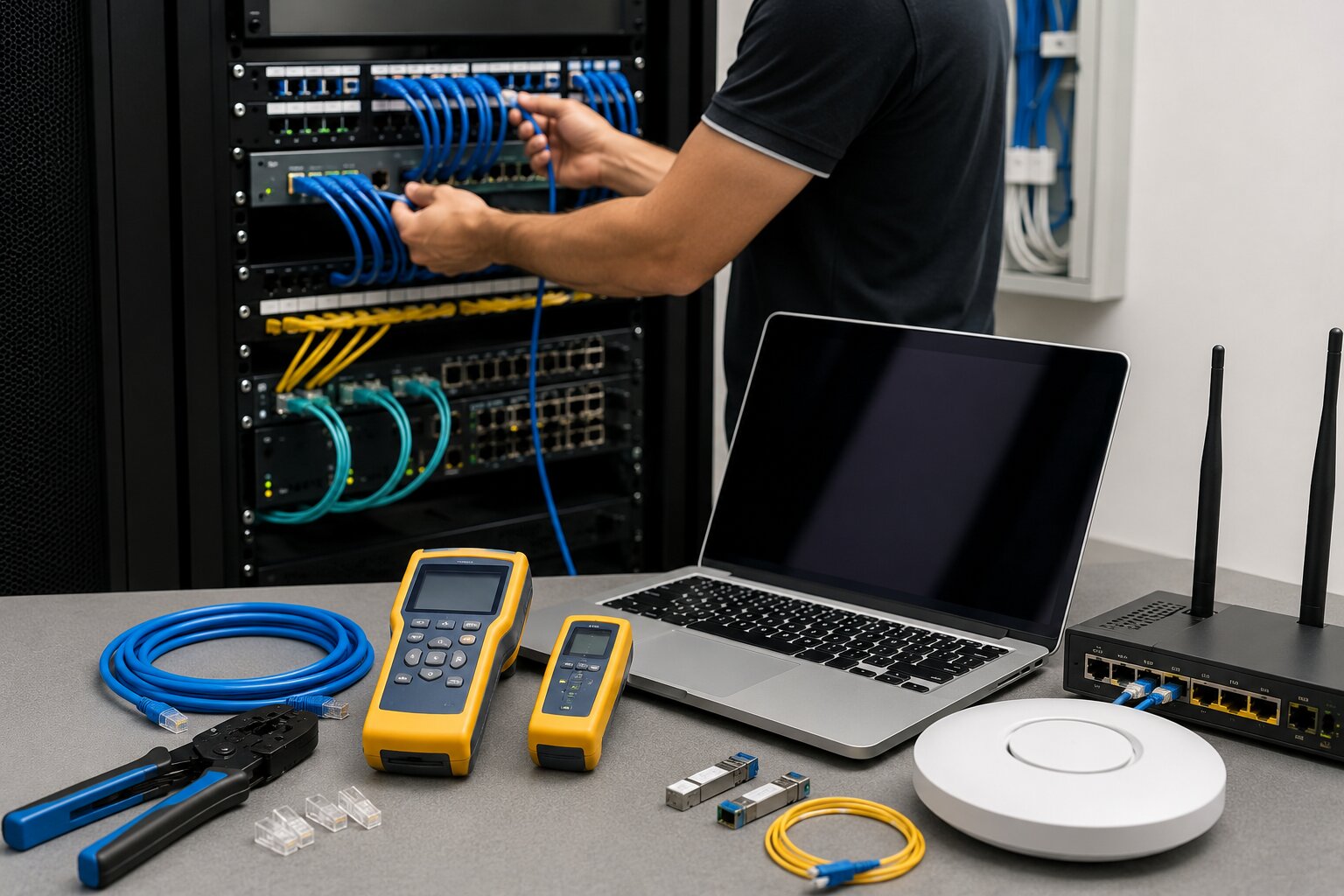
Network installation is the process of setting up communication infrastructure that allows devices, systems, and users to connect and exchange data efficiently. It includes the installation of cables, switches, routers, servers, wireless access points, patch panels, and network racks.
The main objective of network installation is to create a secure, organized, and high-performance network environment that supports voice, video, internet, and data communication.
Network installation generally includes:
- Structured cabling setup
- Fiber optic cable installation
- Router and switch configuration
- Wireless network deployment
- Server room setup
- Rack installation
- Patch panel termination
- Network device integration
A well-planned installation ensures stable connectivity, efficient data transfer, and future scalability.
Importance of Professional Network Installation
Professional network installation ensures that the infrastructure is properly designed and configured according to industry standards. Incorrect installation can lead to signal loss, poor network performance, downtime, and security vulnerabilities.
A professionally installed network offers:
- Better performance
- Reduced maintenance issues
- Improved scalability
- Strong security
- Reliable connectivity
- Easier troubleshooting
Businesses rely on expert network installation services to build reliable communication systems that support daily operations and future expansion.
What is Network Testing?
Network testing is the process of checking and analyzing the performance, stability, connectivity, and reliability of a network infrastructure. It helps identify faults, signal loss, cable damage, configuration errors, and performance issues before the network becomes operational.
Testing is performed after installation as well as during maintenance and upgrades to ensure that all network components function correctly.
Network testing verifies:
- Cable continuity
- Signal strength
- Data transmission quality
- Network speed
- Connectivity performance
- Packet loss
- System reliability
Without proper testing, network issues may remain undetected and lead to communication failures or downtime.
Why Network Testing is Important
Network testing is essential because it helps maintain stable and secure communication. Even a small fault in cabling or device configuration can affect the entire network.
Proper network testing helps:
- Detect faults early
- Prevent downtime
- Improve network performance
- Ensure data accuracy
- Maintain signal quality
- Reduce maintenance costs
Organizations use network testing to ensure their systems operate efficiently and meet required performance standards.
Types of Network Installation
Different types of network installation are used depending on infrastructure requirements and communication needs.
LAN Installation
Local Area Network installation connects devices within a limited area such as offices, schools, or buildings.
LAN installation includes:
- Ethernet cabling
- Switch installation
- Patch panel setup
- Router configuration
LAN networks provide high-speed internal communication between connected devices.
WAN Installation
Wide Area Network installation connects multiple locations over large geographical distances.
WAN systems are commonly used by:
- Corporate offices
- Telecom operators
- Government organizations
- Data centers
WAN installation often involves fiber optic communication and leased line connectivity.
Wireless Network Installation
Wireless installation involves setting up Wi-Fi infrastructure for cable-free communication.
This includes:
- Wireless access points
- Wi-Fi routers
- Signal optimization
- Security configuration
Wireless networks provide flexibility and mobility for users.
Fiber Optic Network Installation
Fiber optic installation is used for high-speed data transmission over long distances.
Fiber networks offer:
- Higher bandwidth
- Faster speed
- Low signal loss
- Better reliability
Fiber optic systems are widely used in telecom, enterprise, and data center environments.
Types of Network Testing
Various testing methods are used to verify network performance and reliability.
Cable Testing
Cable testing checks the integrity and performance of network cables.
It helps identify:
- Broken wires
- Signal attenuation
- Crosstalk issues
- Improper termination
Cable testing is essential for both copper and fiber optic networks.
Performance Testing
Performance testing measures network speed, bandwidth, and response time.
This helps determine whether the network can handle required traffic loads.
Connectivity Testing
Connectivity testing verifies communication between devices, switches, routers, and servers.
It ensures that all network components are properly connected and configured.
Security Testing
Security testing identifies vulnerabilities and weaknesses within the network.
This includes:
- Firewall testing
- Access control verification
- Intrusion detection analysis
Fiber Optic Testing
Fiber testing checks optical signal strength and cable continuity.
Common fiber tests include:
- OTDR testing
- Insertion loss testing
- Power meter testing
Tools Used in Network Testing & Installation
Professional network engineers use specialized tools for installation and testing.
Cable Testers
Cable testers verify copper cable continuity and performance.
They help identify:
- Open circuits
- Short circuits
- Miswiring
OTDR Equipment
OTDR devices are used for fiber optic testing and fault detection.
These tools help locate:
- Fiber breaks
- Signal loss points
- Connector faults
Network Analyzers
Network analyzers monitor traffic, bandwidth, and communication performance.
Crimping Tools
Crimping tools are used to terminate network connectors on cables.
Fusion Splicing Machines
Fusion splicing machines join fiber optic cables with minimal signal loss.
Steps Involved in Network Installation
A professional network installation process follows several important stages.
Site Survey and Planning
The first step involves analyzing the installation area and determining network requirements.
This includes:
- Cable routing planning
- Equipment placement
- Power availability
- Future expansion planning
Cabling Installation
Cables are installed according to structured cabling standards.
This includes:
- Copper cable installation
- Fiber optic laying
- Cable management
Device Installation
Network devices such as routers, switches, and access points are installed and configured.
Termination and Labeling
All cables are properly terminated and labeled for easy maintenance.
Testing and Certification
The installed network undergoes testing to verify performance and compliance.
Benefits of Network Testing & Installation
Proper network installation and testing provide multiple operational and technical advantages.
Improved Network Performance
Well-installed networks deliver faster and more stable communication.
Reduced Downtime
Testing helps identify issues before they affect operations.
Better Security
Proper configuration improves network protection against threats.
Easy Troubleshooting
Organized cabling and proper labeling simplify maintenance.
Long-Term Reliability
Professional installation ensures stable long-term performance.
Scalability
Well-designed networks support future expansion and upgrades.
Applications of Network Testing & Installation
Network testing and installation services are used across various industries and environments.
Corporate Offices
Businesses require reliable networking for communication and data sharing.
Data Centers
Data centers depend on high-speed and fault-free connectivity.
Telecom Industry
Telecommunication networks require extensive fiber and RF infrastructure.
Industrial Facilities
Factories and industrial plants use networking for automation and monitoring systems.
Educational Institutions
Schools and universities rely on network connectivity for digital learning.
Healthcare Facilities
Hospitals use secure networks for medical systems and patient management.
Common Challenges in Network Installation
Network deployment can face several technical and operational challenges.
Poor Cable Management
Improper cable routing may create maintenance difficulties.
Signal Interference
Electromagnetic interference can reduce network performance.
Improper Configuration
Incorrect device settings can lead to connectivity issues.
Hardware Compatibility Issues
Mismatched equipment may affect communication performance.
Fiber Signal Loss
Poor fiber splicing or connector installation can increase attenuation.
Best Practices for Network Testing & Installation
Following industry best practices ensures reliable and efficient network infrastructure.
Use High-Quality Components
Quality cables and connectors improve performance and durability.
Follow Structured Cabling Standards
Proper standards ensure organized and scalable infrastructure.
Perform Complete Testing
Every installed cable and device should be tested before deployment.
Maintain Proper Documentation
Detailed documentation simplifies troubleshooting and upgrades.
Plan for Future Expansion
Networks should support future growth and increased bandwidth requirements.
Future of Network Testing & Installation
Modern networking technologies continue to evolve rapidly. Advanced systems require more sophisticated installation and testing solutions.
Emerging technologies include:
- 5G infrastructure
- High-speed fiber networks
- Cloud networking
- Smart building systems
- AI-powered network monitoring
- Data center automation
As communication demands increase, professional network testing and installation services will become even more important for maintaining reliable and secure connectivity.
Conclusion
Network testing and installation are critical processes for building reliable communication infrastructure in modern organizations. Proper installation ensures organized and secure connectivity, while network testing verifies performance, stability, and fault-free operation.
From LAN and WAN systems to fiber optic and wireless networks, professional testing and installation services help businesses maintain efficient communication, reduce downtime, and support future expansion.
With growing demand for high-speed connectivity and advanced communication systems, network testing and installation continue to play a vital role in ensuring stable, secure, and high-performance networking environments.