Radio Frequency (RF) engineering is one of the most critical disciplines in modern wireless communication. Every mobile phone call, satellite transmission, GPS signal, Wi-Fi connection, radar system, and 5G network depends on RF technology working reliably. Behind these advanced communication systems are RF Engineers, professionals who design, develop, test, and optimize high-frequency electronic systems.
As wireless technologies continue to evolve with 5G, satellite communications, IoT, autonomous vehicles, aerospace, and the future transition to 6G, the demand for skilled RF engineers continues to grow across the world.
This comprehensive guide explains what an RF engineer does, their daily responsibilities, required skills, tools, industries, career opportunities, and the RF components they work with.
What is an RF Engineer?
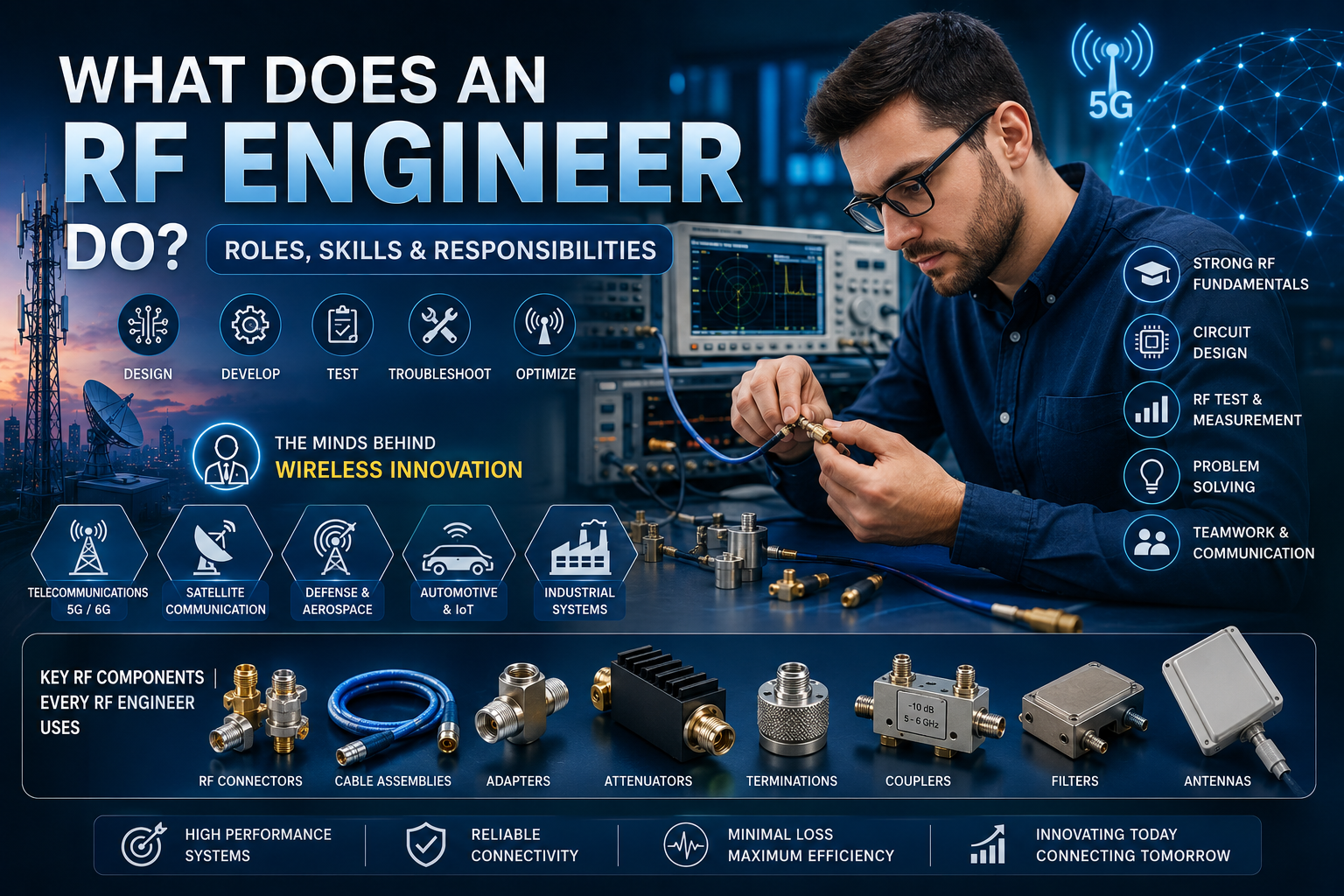
An RF Engineer (Radio Frequency Engineer) is an electronics and telecommunications professional who specializes in designing, developing, testing, and maintaining systems that operate using radio frequency signals.
RF engineers work with frequencies ranging from a few kilohertz (kHz) to several hundred gigahertz (GHz), depending on the application.
Their primary goal is to ensure efficient transmission and reception of electromagnetic signals while minimizing signal loss, interference, and noise.
They play a vital role in developing communication systems used in:
- Mobile networks
- Satellite communication
- Radar systems
- Aerospace
- Defense
- Broadcasting
- Medical equipment
- Wireless networking
- Internet of Things (IoT)
- Industrial automation
What Does an RF Engineer Do?
The responsibilities of an RF engineer vary depending on the industry and project. However, their work generally focuses on designing and optimizing RF systems for maximum performance and reliability.
Typical responsibilities include:
- Designing RF circuits
- Developing wireless communication systems
- Selecting RF components
- Performing simulations
- Testing RF equipment
- Troubleshooting signal issues
- Optimizing antenna performance
- Measuring insertion loss and return loss
- Performing impedance matching
- Ensuring regulatory compliance
- Preparing technical documentation
RF engineers combine theoretical knowledge with practical testing to build reliable communication systems.
Daily Responsibilities of an RF Engineer
A typical working day may include:
RF System Design
RF engineers design complete communication systems consisting of:
- RF transmitters
- RF receivers
- Antenna systems
- RF front-end circuits
- Microwave components
- Power amplifiers
- Filters
- Matching networks
Designs must satisfy performance, efficiency, and cost requirements.
RF Simulation
Before manufacturing hardware, engineers simulate circuits using software tools to predict performance.
Simulation includes:
- S-Parameters
- Gain
- VSWR
- Return Loss
- Radiation Pattern
- Power Distribution
- Electromagnetic Analysis
Simulation reduces development costs and improves product reliability.
RF Component Selection
One of the most important responsibilities is selecting suitable RF components.
Common RF components include:
- RF Connectors
- RF Adapters
- RF Cable Assemblies
- RF Attenuators
- RF Terminations
- Directional Couplers
- Power Dividers
- RF Filters
- Waveguide Components
- DC Blocks
- Bias Tees
- RF Switches
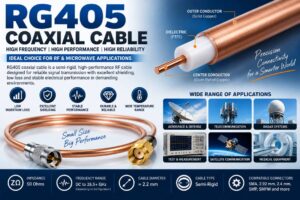
- Coaxial Cables
- Antennas
Component selection directly affects overall system performance.
Testing RF Equipment
RF engineers perform extensive testing before deployment.
Common tests include:
- Insertion Loss
- Return Loss
- VSWR
- Isolation
- Phase Stability
- Power Handling
- Frequency Response
- Noise Figure
- Gain Measurement
- Harmonic Analysis
Testing ensures products meet customer and industry specifications.
Troubleshooting
When communication systems fail or perform poorly, RF engineers diagnose problems such as:
- Signal attenuation
- Connector damage
- Cable losses
- Impedance mismatch
- Interference
- Poor antenna alignment
- Component failure
- Frequency instability
Their troubleshooting skills minimize system downtime.
Antenna Optimization
Antennas are among the most important components in RF systems.
Engineers optimize:
- Antenna gain
- Polarization
- Radiation pattern
- Beamwidth
- Efficiency
- Impedance
- Coverage area
This is especially important for cellular networks and satellite communication.
RF Measurements
Engineers frequently measure:
- Frequency
- Power
- Bandwidth
- Phase
- Noise
- Signal Strength
- Spectrum
- Reflection
- Transmission
These measurements ensure compliance with design requirements.
Key Roles of an RF Engineer
Depending on specialization, RF engineers may work in several different roles.
RF Design Engineer
Designs RF circuits and microwave systems.
RF Test Engineer
Performs laboratory testing and product validation.
RF Application Engineer
Supports customers with product integration and technical solutions.
RF Systems Engineer
Develops complete communication architectures.
Microwave Engineer
Works on systems operating above 1 GHz using microwave components.
Antenna Engineer
Specializes in antenna design and optimization.
Wireless Network Engineer
Deploys and optimizes cellular communication networks.
EMC/EMI Engineer
Ensures electronic products comply with electromagnetic compatibility standards.
Essential Skills Every RF Engineer Needs
Successful RF engineers require both technical and analytical skills.
Strong RF Fundamentals
Understanding:
- Electromagnetic theory
- Maxwell’s equations
- Transmission lines
- Wave propagation
- Microwave engineering
forms the foundation of RF engineering.
Circuit Design
RF engineers should understand:
- Analog electronics
- High-frequency PCB design
- Amplifiers
- Oscillators
- Filters
- Mixers
RF Measurement Techniques
Knowledge of measurement techniques includes:
- S-Parameters
- Smith Chart
- VSWR
- Return Loss
- Gain
- Noise Figure
- Phase Measurement
Problem Solving
Engineers frequently troubleshoot complex wireless communication issues that require analytical thinking.
Communication Skills
They regularly collaborate with:
- Design teams
- Manufacturing engineers
- Customers
- Telecom operators
- Quality engineers
Clear technical communication is essential.
Software Used by RF Engineers
Modern RF engineers rely on specialized software for simulation, PCB design, and electromagnetic analysis.
Popular software includes:
- Keysight ADS
- CST Studio Suite
- Ansys HFSS
- Cadence AWR Microwave Office
- MATLAB
- Simulink
- Altium Designer
- KiCad
- AutoCAD
- SolidWorks
These tools accelerate product development and improve design accuracy.
Test Equipment Used by RF Engineers
Accurate measurements require specialized RF test equipment.
Common instruments include:
Vector Network Analyzer (VNA)
Used for:
- S-Parameter measurement
- Return Loss
- VSWR
- Insertion Loss
Spectrum Analyzer
Measures:
- Signal strength
- Frequency spectrum
- Harmonics
- Spurious emissions
Signal Generator
Generates RF signals for testing communication equipment.
Power Meter
Measures RF output power accurately.
Oscilloscope
Used to analyze electrical waveforms and timing.
RF Cable Test Equipment
Verifies cable assemblies and connectors.
RF Components Every RF Engineer Uses
RF systems depend on high-quality components that maintain signal integrity across a wide frequency range.
Frequently used RF components include:
RF Connectors
Examples:
- SMA
- N Type
- TNC
- BNC
- 2.92mm
- 2.4mm
- 1.85mm
- SMP
- SMPM
- MMCX
- MCX
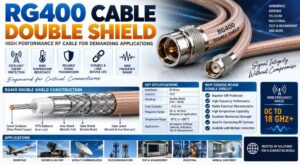
RF Cable Assemblies
Used for:
- Test equipment
- Aerospace
- Military
- Telecom infrastructure
- Satellite systems
RF Adapters
Allow different connector interfaces to connect without affecting performance.
RF Attenuators
Reduce signal power while maintaining impedance matching.
RF Terminations
Absorb unwanted signals and eliminate reflections.
RF Filters
Allow only specific frequency bands to pass while rejecting interference.
Power Dividers
Split one RF signal into multiple outputs.
Directional Couplers
Sample transmitted power without interrupting the main signal.
Antennas
Transmit and receive electromagnetic waves efficiently.
Industries That Hire RF Engineers
RF engineers work across many industries.
Telecommunications
- 4G LTE
- 5G
- Private Networks
- Future 6G
Aerospace
Communication and navigation systems for aircraft.
Defense
Radar, electronic warfare, secure communication, and surveillance systems.
Satellite Communication
Ground stations, satellite payloads, and tracking systems.
Automotive
Connected vehicles and autonomous driving.
Medical Electronics
MRI equipment, wireless monitoring, and imaging systems.
Semiconductor Industry
Development of RF integrated circuits and wireless chipsets.
Consumer Electronics
Smartphones, routers, wearables, smart TVs, and IoT devices.
Educational Qualifications
Most RF engineers hold degrees in:
- Electronics Engineering
- Electronics & Communication Engineering
- Telecommunications Engineering
- Electrical Engineering
- Microwave Engineering
Advanced positions may require a master’s degree or specialized RF certifications.
Career Path of an RF Engineer
A typical career progression includes:
- RF Engineering Intern
- Junior RF Engineer
- RF Design Engineer
- RF Test Engineer
- Senior RF Engineer
- RF Systems Engineer
- Technical Lead
- Engineering Manager
- RF Consultant
With experience, engineers often specialize in 5G, satellite communications, microwave engineering, or RF product development.
Future of RF Engineering
The future of RF engineering is closely tied to the rapid expansion of wireless technologies. The deployment of 5G Advanced, 6G research, satellite internet, IoT ecosystems, and smart cities is creating new opportunities for RF professionals.
Emerging technologies such as Terahertz communication, AI-powered network optimization, reconfigurable intelligent surfaces, and advanced millimeter-wave systems will require engineers with expertise in high-frequency RF design, testing, and system integration. As communication networks become faster and more complex, RF engineers will remain at the center of innovation.
Why High-Quality RF Components Matter
Even the most advanced RF design can fail if poor-quality components are used. Precision-engineered RF connectors, cable assemblies, adapters, attenuators, filters, and waveguide components help reduce insertion loss, improve impedance matching, minimize reflections, and ensure long-term reliability.
Manufacturers like SRFS Teleinfra provide a wide range of RF and microwave components designed for telecommunications, aerospace, defense, laboratory testing, and industrial applications, enabling RF engineers to build reliable, high-performance communication systems.
Conclusion
RF engineers are the driving force behind the wireless technologies that power our connected world. From designing RF circuits and selecting precision RF components to testing, troubleshooting, and optimizing communication systems, they play a critical role in industries ranging from telecommunications and aerospace to defense and healthcare.
As technologies like 5G, satellite communications, IoT, and 6G continue to evolve, the demand for skilled RF engineers and high-quality RF components will only increase. Whether you’re considering a career in RF engineering or looking to understand the profession better, mastering RF fundamentals, measurement techniques, and component selection is essential for success in this dynamic field.
Frequently Asked Questions (FAQs)
What does an RF engineer do?
An RF engineer designs, develops, tests, and maintains radio frequency communication systems and components used in wireless communication, radar, satellite, and telecommunications.
What qualifications are required to become an RF engineer?
Most RF engineers have a degree in Electronics Engineering, Electronics & Communication Engineering, Telecommunications, or Electrical Engineering.
Which industries hire RF engineers?
Telecommunications, aerospace, defense, automotive, semiconductor, satellite communication, medical electronics, and consumer electronics industries all employ RF engineers.
What tools do RF engineers use?
Common tools include Vector Network Analyzers (VNAs), Spectrum Analyzers, Signal Generators, Oscilloscopes, Power Meters, and RF simulation software such as Keysight ADS, Ansys HFSS, and CST Studio Suite.
What RF components do RF engineers work with?
RF engineers regularly use RF connectors, cable assemblies, adapters, attenuators, terminations, filters, antennas, power dividers, directional couplers, waveguide components, and RF switches.
Is RF engineering a good career?
Yes. RF engineering is a highly specialized and rewarding career with strong demand in 5G, aerospace, defense, satellite communication, IoT, and future 6G technologies.
Why are RF components important in wireless communication?
High-quality RF components ensure efficient signal transmission, minimize insertion loss and reflections, maintain impedance matching, and improve the reliability and performance of wireless communication systems.