Telecom service providers play a critical role in modern communication infrastructure by delivering voice, internet, data, and networking services to businesses, industries, governments, and consumers. In today’s digitally connected world, telecom providers form the backbone of communication systems that support mobile connectivity, broadband internet, cloud communication, enterprise networking, and data transmission.
A telecom service provider is responsible for building, operating, and maintaining communication networks that enable users to communicate over long distances through wireless, wired, and fiber optic technologies. These providers manage complex telecom infrastructure including mobile towers, fiber networks, satellite systems, switching centers, and internet gateways.
The demand for telecom services continues to grow rapidly because of increasing internet usage, digital transformation, smart devices, cloud computing, and high-speed data communication. Telecom providers support industries such as healthcare, education, banking, manufacturing, IT, transportation, defense, and broadcasting.
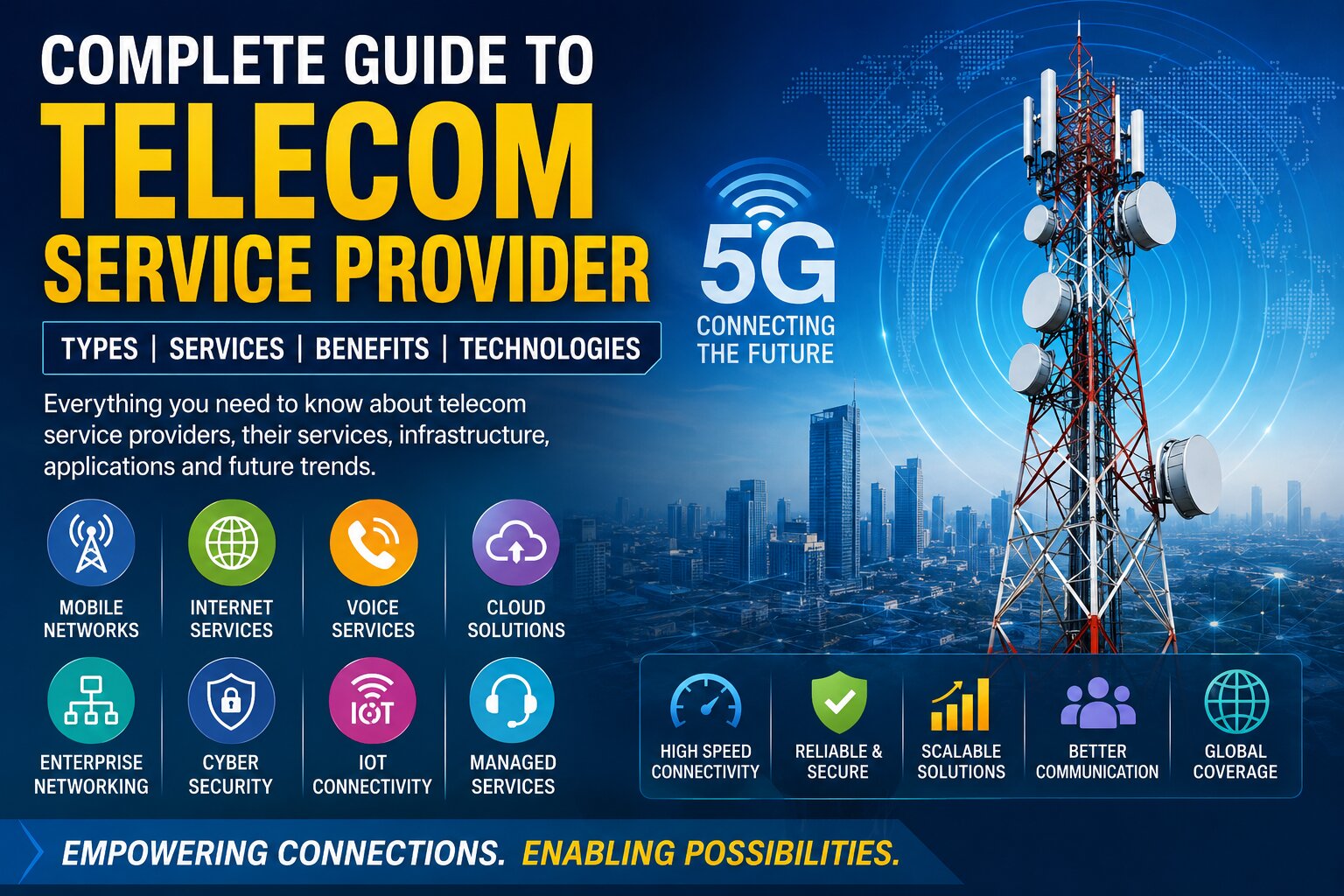
Modern telecom companies now offer a wide range of services including mobile communication, internet connectivity, enterprise networking, cloud solutions, IoT connectivity, cybersecurity, and managed telecom services.
What is a Telecom Service Provider?
A telecom service provider is a company or organization that offers telecommunication services such as voice communication, internet access, wireless connectivity, and data transmission to customers and businesses.
Telecom providers build and operate communication infrastructure that enables users to connect through:
- Mobile networks
- Fiber optic networks
- Broadband internet
- Satellite communication
- Wireless communication
- Cloud-based communication systems
Telecom service providers ensure seamless communication between individuals, devices, and organizations across local, national, and international networks.
These providers may serve:
- Residential customers
- Corporate businesses
- Government organizations
- Telecom operators
- Industrial facilities
Telecom providers are essential for enabling digital communication and modern networking systems.
Importance of Telecom Service Providers
Telecom service providers are important because they support communication and data exchange across industries and regions. Without telecom infrastructure, internet connectivity, mobile communication, and digital business operations would not be possible.
Telecom service providers help:
- Improve connectivity
- Support digital communication
- Enable remote work
- Provide internet access
- Support cloud computing
- Enhance business productivity
- Enable smart technologies
Their services are vital for economic growth, digital transformation, and global communication.
Types of Telecom Service Providers
Telecom service providers are categorized based on the type of services they offer.
Mobile Network Operators
Mobile network operators provide wireless communication services through cellular infrastructure.
Services Offered
- Mobile calling
- SMS services
- Mobile internet
- 4G and 5G connectivity
These operators manage mobile towers, spectrum, and wireless communication systems.
Internet Service Providers
Internet service providers deliver internet connectivity to homes, businesses, and organizations.
Services Include
- Broadband internet
- Fiber internet
- Wireless internet
- Dedicated leased lines
ISPs ensure reliable internet access and data communication.
Fixed-Line Telecom Providers
Fixed-line providers offer wired communication services using copper or fiber networks.
Applications
- Landline communication
- Enterprise connectivity
- Broadband services
Satellite Telecom Providers
Satellite telecom companies provide communication services in remote or inaccessible areas.
Services
- Satellite internet
- Satellite communication
- GPS connectivity
- Remote networking
Cloud Communication Providers
Cloud telecom providers offer internet-based communication services.
Examples
- VoIP services
- Virtual PBX
- Cloud calling
- Unified communication systems
Services Offered by Telecom Service Providers
Telecom companies provide a wide range of communication and networking solutions.
Voice Communication Services
Voice services allow users to communicate through mobile or fixed-line networks.
Includes
- Mobile calling
- VoIP communication
- International calling
- Business telephony
Internet Connectivity Services
Telecom providers deliver high-speed internet services using fiber, wireless, or broadband technologies.
Data Communication Services
Data communication services support secure data transmission between systems and locations.
Applications
- Enterprise networking
- VPN connectivity
- Cloud access
- Data center communication
Fiber Optic Services
Fiber services provide high-speed and low-latency connectivity.
Benefits
- Faster data transmission
- High bandwidth
- Reliable communication
Managed Network Services
Telecom providers manage enterprise communication infrastructure.
Services Include
- Network monitoring
- Infrastructure management
- Security management
- Maintenance support
IoT Connectivity Services
Telecom companies support Internet of Things devices with wireless communication solutions.
Cybersecurity Services
Many telecom providers now offer advanced cybersecurity and network protection solutions.
Telecom Network Infrastructure
Telecom service providers operate complex infrastructure to support communication systems.
Mobile Towers
Mobile towers transmit wireless communication signals between devices and telecom networks.
Fiber Optic Networks
Fiber infrastructure supports high-speed internet and data communication.
Data Centers
Data centers store and process digital communication and cloud services.
Switching Centers
Switching systems route voice and data traffic across communication networks.
Satellite Systems
Satellite infrastructure supports remote communication and broadcasting services.
Applications of Telecom Services
Telecom services are used across numerous industries and sectors.
Corporate Businesses
Businesses use telecom services for communication, networking, and cloud operations.
Healthcare Industry
Hospitals rely on telecom infrastructure for patient management and telemedicine.
Education Sector
Educational institutions use telecom services for online learning and digital communication.
Banking and Finance
Banks require secure telecom networks for digital transactions and data protection.
Manufacturing Industry
Industrial facilities use telecom systems for automation and monitoring.
Government Organizations
Government departments use telecom infrastructure for communication and security operations.
Benefits of Telecom Service Providers
Telecom service providers offer several operational and technological benefits.
Reliable Communication
Telecom services enable stable and uninterrupted communication.
High-Speed Connectivity
Modern fiber and wireless systems provide fast internet access.
Global Connectivity
Telecom providers support international communication and networking.
Improved Business Productivity
Efficient communication systems enhance business operations.
Scalability
Telecom infrastructure can support future expansion and growing bandwidth needs.
Enhanced Security
Modern telecom providers implement advanced network security measures.
Technologies Used by Telecom Service Providers
Telecom providers use advanced technologies to deliver communication services.
5G Technology
5G networks provide ultra-fast wireless communication with low latency.
Fiber Optic Technology
Fiber networks support high-speed and long-distance data transmission.
Cloud Computing
Cloud platforms support communication and enterprise networking services.
IoT Technology
IoT connectivity enables communication between smart devices and systems.
Artificial Intelligence
AI helps telecom companies improve network monitoring and automation.
Challenges Faced by Telecom Service Providers
Telecom companies face several technical and operational challenges.
High Infrastructure Costs
Building telecom networks requires significant investment.
Cybersecurity Threats
Communication networks are vulnerable to cyberattacks and data breaches.
Increasing Data Demand
Growing internet usage requires continuous network upgrades.
Regulatory Compliance
Telecom providers must follow government regulations and licensing requirements.
Network Downtime
Technical failures can affect communication services and business operations.
Future of Telecom Service Providers
The telecom industry continues to evolve with advancements in communication technologies.
Future developments include:
- Expansion of 5G networks
- Smart city infrastructure
- AI-driven telecom management
- Edge computing
- Advanced fiber networks
- IoT expansion
- Cloud-based telecom systems
As digital communication continues to grow, telecom service providers will play an even bigger role in supporting global connectivity and technological innovation.
How to Choose the Right Telecom Service Provider
Selecting the right telecom provider is important for reliable communication and business performance.
Evaluate Network Coverage
Choose providers with strong network availability and signal strength.
Check Internet Speed and Reliability
Reliable connectivity is essential for smooth communication.
Review Service Support
Good technical support helps resolve issues quickly.
Compare Pricing and Plans
Select services that match your budget and business requirements.
Assess Security Features
Strong cybersecurity measures are important for protecting communication systems.
Difference Between Telecom Service Providers and Internet Service Providers
Although both support communication services, they have different roles.
Telecom Service Provider
Provides voice, wireless, internet, and enterprise communication services.
Internet Service Provider
Mainly focuses on internet connectivity services.
Many telecom providers also function as internet service providers.
Conclusion
Telecom service providers are essential for enabling modern communication, internet connectivity, and digital networking across industries and businesses. They support mobile communication, broadband internet, cloud services, enterprise networking, and high-speed data transmission through advanced telecom infrastructure.
From wireless communication and fiber optic networks to cloud connectivity and IoT solutions, telecom service providers help organizations maintain reliable, secure, and scalable communication systems.
As digital transformation, 5G technology, and smart communication systems continue to grow, telecom service providers will remain a key part of global communication infrastructure and future technological development.
Frequently Asked Questions (FAQs) About Telecom Service Providers
1. What is a Telecom Service Provider (TSP)?
A Telecom Service Provider (TSP) is a company that offers communication services such as voice calls, mobile connectivity, broadband internet, data transmission, and enterprise networking solutions. These providers build and maintain the infrastructure that enables seamless communication for individuals and businesses.
2. What are the different types of Telecom Service Providers?
Telecom Service Providers can be categorized into Mobile Network Operators (MNOs), Internet Service Providers (ISPs), Fixed-Line Operators, Satellite Communication Providers, Virtual Network Operators (MVNOs), and Enterprise Network Service Providers. Each serves different communication needs based on technology and coverage.
3. What services do Telecom Service Providers offer?
Telecom Service Providers offer a wide range of services, including mobile voice and data plans, fiber broadband, leased lines, cloud connectivity, IoT solutions, 4G/5G network services, VPNs, VoIP, managed network services, data center connectivity, and business communication solutions.
4. Why are Telecom Service Providers important for businesses?
Telecom Service Providers enable reliable communication, secure data transfer, high-speed internet access, cloud connectivity, remote collaboration, and digital transformation. They help businesses improve productivity, customer service, and operational efficiency.
5. How do Telecom Service Providers support 5G networks?
Telecom Service Providers deploy and manage 5G infrastructure, including base stations, fiber backhaul, small cells, RF components, antennas, and network equipment. This enables ultra-fast data speeds, low latency, and improved connectivity for smart cities, IoT, and industrial automation.
6. What factors should you consider when choosing a Telecom Service Provider?
When selecting a Telecom Service Provider, consider network coverage, service reliability, internet speed, customer support, pricing, scalability, security features, service-level agreements (SLAs), uptime, and compatibility with your business requirements.
7. What is the difference between a Telecom Service Provider and an Internet Service Provider (ISP)?
A Telecom Service Provider offers a broad range of communication services, including mobile, voice, internet, and enterprise networking. An Internet Service Provider primarily focuses on delivering internet connectivity through fiber, cable, wireless, or satellite technologies.
8. Which industries rely on Telecom Service Providers?
Telecom Service Providers support industries such as telecommunications, healthcare, banking, manufacturing, education, retail, transportation, government, defense, smart cities, IT services, media, and logistics by providing secure and reliable communication networks.
9. What infrastructure is required for Telecom Service Providers?
Telecom Service Providers rely on network towers, fiber optic cables, RF cable assemblies, antennas, routers, switches, data centers, microwave links, transmission equipment, power systems, and advanced RF components to deliver uninterrupted communication services.
10. How do RF components contribute to Telecom Service Providers?
RF components such as RF connectors, cable assemblies, attenuators, filters, couplers, power splitters, antennas, adapters, and test cables play a crucial role in ensuring efficient signal transmission, minimizing signal loss, improving network reliability, and supporting high-performance 4G, 5G, and future communication networks.