The rapid deployment of 5G technology has transformed the way people communicate, work, and access digital services. As mobile operators continue expanding network coverage, delivering reliable high-speed connectivity both indoors and outdoors has become increasingly important. This is where IBS (In-Building Solution) and BTS (Base Transceiver Station) play a vital role in modern 5G networks.
While BTS provides wireless coverage over large outdoor areas, IBS ensures that users receive strong and stable mobile signals inside buildings where traditional outdoor towers often struggle to penetrate. Together, IBS and BTS create a seamless communication infrastructure capable of supporting ultra-fast data speeds, low latency, massive IoT connectivity, and uninterrupted voice communication.
From airports, hospitals, shopping malls, office buildings, hotels, factories, stadiums, and universities to smart cities and industrial facilities, IBS and BTS systems are becoming essential components of modern telecommunications infrastructure.
This comprehensive guide explains everything about IBS and BTS in 5G networks, including their working principles, components, advantages, applications, challenges, and future trends.
What Is IBS (In-Building Solution)?
An In-Building Solution (IBS) is a dedicated indoor wireless coverage system designed to distribute cellular signals efficiently throughout buildings where outdoor mobile signals are weak or unavailable.
IBS improves indoor network performance by using distributed antennas, RF cables, power splitters, couplers, repeaters, and other passive or active components to ensure consistent signal coverage.
Modern IBS systems support multiple mobile technologies, including:
- 2G
- 3G
- 4G LTE
- 5G NR
- Private LTE
- Private 5G Networks
What Is BTS (Base Transceiver Station)?
A Base Transceiver Station (BTS) is the primary radio communication equipment that connects mobile devices with the cellular network.
The BTS contains radio transmitters, receivers, antennas, amplifiers, and digital processing units that enable wireless communication between user devices and the mobile operator’s core network.
In modern 5G deployments, BTS equipment often integrates advanced technologies such as Massive MIMO, beamforming, carrier aggregation, and network slicing to improve network capacity and performance.
How IBS & BTS Work Together in 5G Networks
Outdoor BTS towers generate cellular signals that provide wide-area wireless coverage.
However, thick walls, glass structures, underground areas, and dense construction materials often weaken these signals indoors.
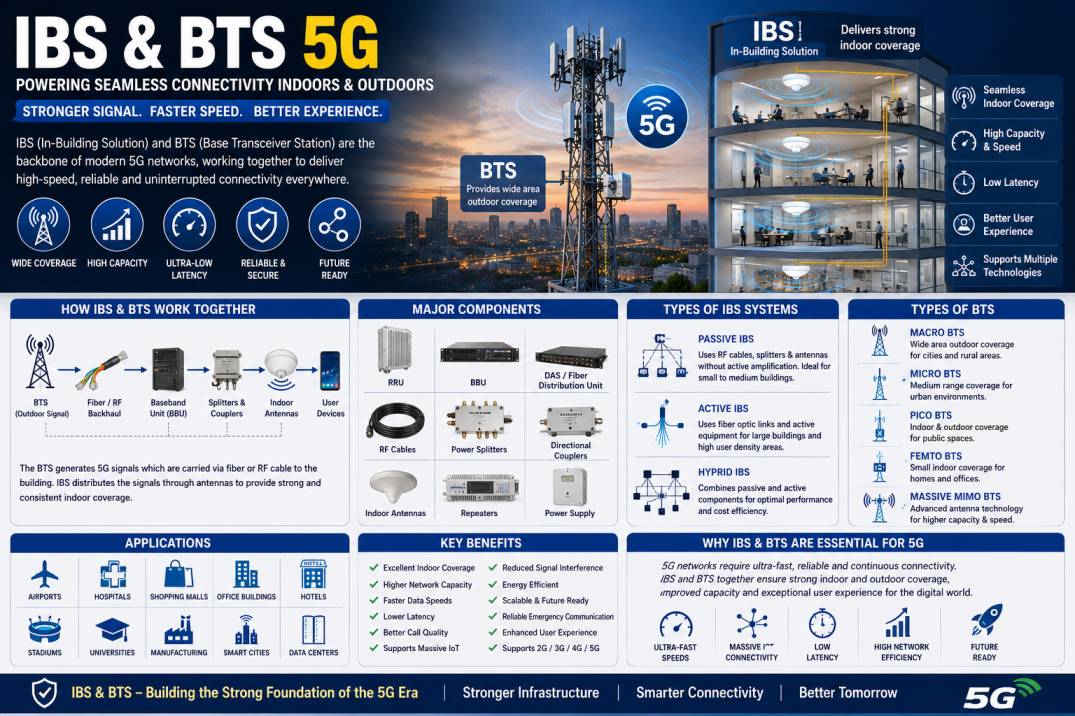
IBS receives the RF signal from the BTS and distributes it through strategically installed antennas inside the building.
The process includes:
- BTS generates RF signals.
- Fiber optic or RF cable carries signals to the building.
- Baseband equipment processes the signal.
- Signal passes through splitters and couplers.
- Distributed antennas transmit signals throughout the building.
- Mobile devices connect seamlessly with the nearest indoor antenna.
This integrated architecture delivers uninterrupted 5G coverage with excellent signal quality.
Major Components of an IBS & BTS 5G System
Base Transceiver Station (BTS)
The BTS acts as the primary communication node connecting users to the cellular network.
Remote Radio Unit (RRU)
The RRU converts digital signals into RF signals and transmits them to antennas.
Baseband Unit (BBU)
The BBU processes voice, video, and data traffic while managing radio resources.
Distributed Antenna System (DAS)
The DAS distributes wireless signals evenly throughout large buildings.
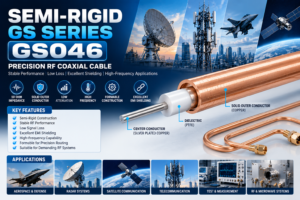
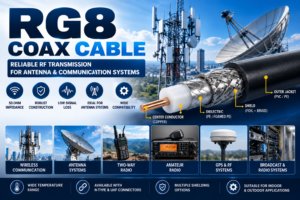
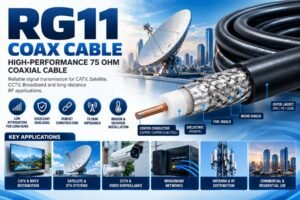
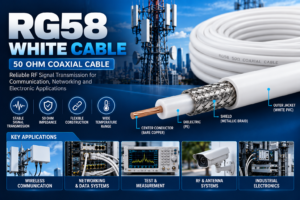
RF Cables
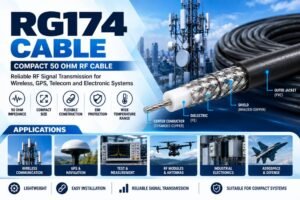
Low-loss RF cables carry high-frequency signals between equipment with minimal attenuation.
Power Splitters
Power splitters divide RF signals into multiple output paths.
Directional Couplers
Directional couplers distribute RF signals while maintaining system balance.
Indoor Antennas
Ceiling-mounted or wall-mounted antennas provide wireless coverage throughout the building.
Fiber Optic Network
Fiber cables connect BBUs, RRUs, and remote equipment over long distances.
Types of IBS Systems
Passive IBS
Passive systems use RF cables, splitters, couplers, and antennas without active amplification.
Suitable for:
- Small offices
- Retail stores
- Hotels
- Residential buildings
Active IBS
Active IBS converts RF signals into optical signals using fiber optics.
Suitable for:
- Airports
- Hospitals
- Shopping malls
- Stadiums
- Large commercial buildings
Hybrid IBS
Hybrid systems combine passive and active components for optimal coverage and cost efficiency.
Types of BTS in 5G Networks
Macro BTS
Provides wide-area outdoor coverage.
Micro BTS
Designed for urban areas with medium traffic density.
Pico BTS
Provides coverage inside buildings and shopping centers.
Femto BTS
Small indoor base stations for homes and offices.
Massive MIMO BTS
Uses multiple antennas to improve network capacity and coverage.
Technical Specifications
| Specification | Typical Value |
|---|---|
| Network Technology | 2G / 3G / 4G LTE / 5G NR |
| Frequency Range | 600 MHz – 6 GHz (Sub-6 GHz) |
| mmWave Support | Up to 52 GHz |
| Coverage Area | Indoor & Outdoor |
| Latency | Less than 10 ms |
| Data Speed | Up to Multi-Gigabit |
| Antenna Type | Omni & Directional |
| Transmission Medium | RF Cable & Fiber Optic |
| Power Supply | AC/DC |
| Scalability | High |
Advantages of IBS & BTS 5G
- Excellent indoor signal coverage
- Higher network capacity
- Improved call quality
- Faster internet speeds
- Lower network latency
- Better user experience
- Enhanced IoT connectivity
- Reduced signal interference
- Increased spectral efficiency
- Energy-efficient network design
- Reliable emergency communication
- Easy scalability
Applications of IBS & BTS 5G
Airports
Reliable connectivity for passengers and airport operations.
Hospitals
Supports critical communication for medical staff and connected healthcare devices.
Shopping Malls
Provides uninterrupted mobile coverage for visitors and retailers.
Office Buildings
Ensures high-speed connectivity for employees and enterprise applications.
Hotels
Improves guest experience through reliable indoor mobile coverage.
Manufacturing Plants
Supports Industrial IoT, automation, and smart manufacturing.
Stadiums
Handles thousands of simultaneous mobile users during events.
Universities
Provides seamless connectivity across classrooms, libraries, and campuses.
Smart Cities
Supports intelligent transportation, surveillance, and connected infrastructure.
Data Centers
Enables high-performance wireless communication for monitoring and management.
Challenges of IBS & BTS Deployment
- High initial deployment cost
- Complex network planning
- Building infrastructure limitations
- Spectrum management requirements
- Equipment compatibility
- Regular maintenance
- Signal optimization challenges
- Power consumption management
How to Choose the Right IBS & BTS Solution
When selecting an IBS and BTS solution, consider:
- Building size
- Number of users
- Frequency bands
- Coverage requirements
- Future scalability
- Network operator compatibility
- Fiber infrastructure
- RF cable quality
- Installation budget
- Maintenance requirements
IBS vs BTS
| Feature | IBS | BTS |
|---|---|---|
| Primary Purpose | Indoor Coverage | Outdoor Coverage |
| Installation | Inside Buildings | Outdoor Towers |
| Coverage Area | Localized | Wide Area |
| Signal Distribution | Distributed Antennas | Sector Antennas |
| Main Components | DAS, Splitters, Antennas | Radio Units, Antennas |
| Users | Indoor Users | Outdoor Users |
Industries Using IBS & BTS 5G
Modern IBS and BTS systems are widely used in:
- Telecommunications
- Healthcare
- Transportation
- Smart Cities
- Manufacturing
- Hospitality
- Education
- Defense
- Retail
- Government Infrastructure
Future Trends of IBS & BTS 5G
The future of IBS and BTS technology is closely linked to the evolution of 5G Advanced and 6G networks. Telecom operators are investing in AI-powered network optimization, Open RAN (O-RAN), cloud-native base stations, edge computing, and intelligent beamforming to improve network performance. Indoor wireless systems will increasingly support private 5G, industrial IoT, autonomous robotics, smart buildings, and immersive applications such as augmented reality (AR) and virtual reality (VR). These advancements will enable faster deployment, lower operational costs, and enhanced user experiences across commercial and industrial environments.
Conclusion
IBS and BTS are fundamental building blocks of modern 5G communication networks. While BTS provides large-scale outdoor cellular coverage, IBS ensures seamless indoor connectivity where conventional mobile signals cannot reach effectively. Together, they deliver high-speed internet, reliable voice communication, low latency, and improved network capacity for businesses, public venues, industrial facilities, and smart cities. As 5G adoption continues to grow and future 6G technologies emerge, IBS and BTS solutions will remain essential for building resilient, scalable, and high-performance wireless communication infrastructure.
Frequently Asked Questions (FAQs)
1. What is IBS in 5G?
IBS (In-Building Solution) is an indoor wireless system that distributes mobile signals throughout buildings to improve network coverage and capacity.
2. What is BTS in telecommunications?
A BTS (Base Transceiver Station) is the radio communication equipment that connects mobile devices to a cellular network by transmitting and receiving RF signals.
3. Why are IBS systems important for 5G?
IBS systems ensure strong indoor coverage, improve network capacity, reduce signal dead zones, and deliver a better user experience in buildings.
4. What is the difference between IBS and BTS?
IBS provides indoor signal distribution using distributed antennas, while BTS generates and manages cellular signals for outdoor and wide-area coverage.
5. Where are IBS and BTS systems used?
They are widely deployed in airports, hospitals, shopping malls, offices, hotels, factories, stadiums, universities, smart cities, and transportation hubs.
6. What are the main components of an IBS system?
Key components include distributed antenna systems (DAS), RF cables, splitters, couplers, indoor antennas, repeaters, fiber optic cables, and remote radio units.
7. What frequency bands do 5G IBS and BTS systems support?
They typically support Sub-6 GHz bands (600 MHz–6 GHz) and, in advanced deployments, mmWave frequencies up to approximately 52 GHz.
8. What are the benefits of BTS in a 5G network?
BTS improves network coverage, increases capacity, supports high-speed data transmission, enables low-latency communication, and connects users to the mobile core network.
9. Can IBS support multiple mobile operators?
Yes. Many modern IBS deployments are designed as multi-operator systems that support multiple carriers on shared infrastructure.
10. How do I choose the right IBS and BTS solution?
Choose a solution based on building size, user density, supported frequency bands, scalability, network operator compatibility, infrastructure, budget, and future expansion requirements.