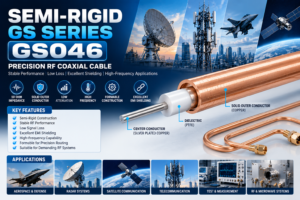
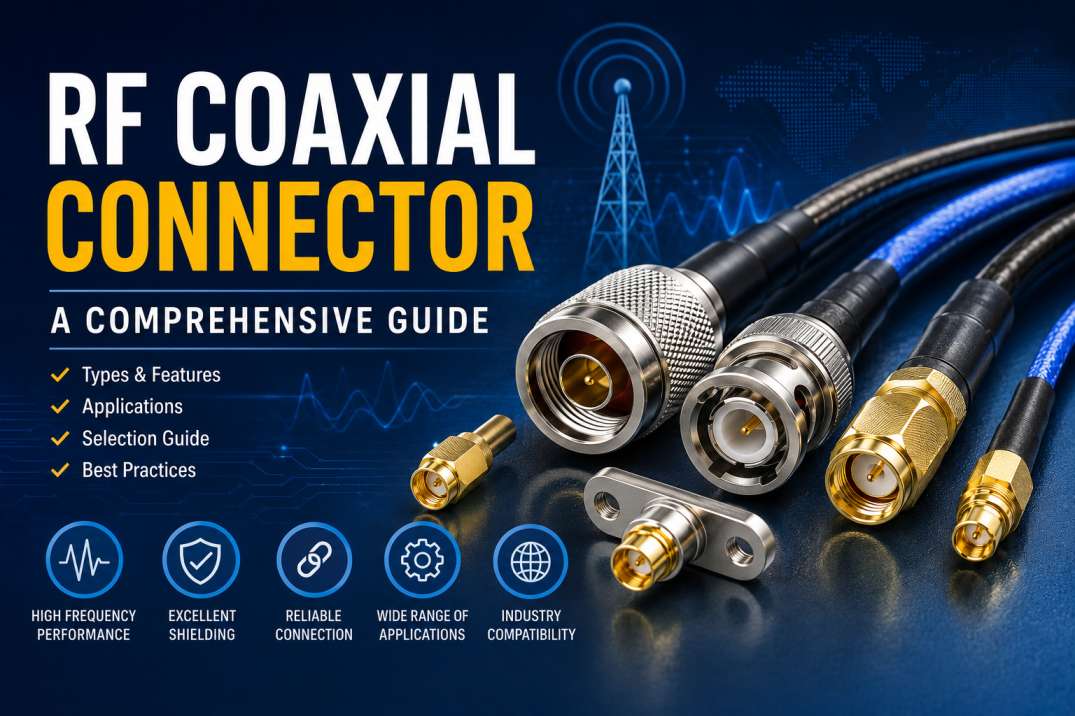
In the world of telecommunications, wireless communication, broadcasting, aerospace, defense, and test equipment, RF coaxial connectors play a critical role in ensuring seamless signal transmission. These connectors serve as the interface between RF cables and electronic devices, enabling efficient transfer of high-frequency signals with minimal loss and interference.
As modern communication systems continue to evolve with technologies such as 5G, IoT, satellite communications, and advanced radar systems, the demand for high-performance RF coaxial connectors has increased significantly. Selecting the right RF connector is essential for maintaining signal integrity, minimizing return loss, and ensuring long-term system reliability.
This comprehensive guide explores RF coaxial connectors, their construction, working principles, types, features, benefits, applications, and selection criteria.
What is an RF Coaxial Connector?
An RF coaxial connector is an electrical connector specifically designed to connect coaxial cables with electronic devices while maintaining the cable’s characteristic impedance and shielding effectiveness.
These connectors are engineered to carry radio frequency signals ranging from a few megahertz (MHz) to several gigahertz (GHz) and, in some cases, beyond 100 GHz.
RF coaxial connectors provide:
- Secure electrical connection
- Consistent impedance matching
- Low insertion loss
- High-frequency performance
- Effective shielding against EMI and RFI
They are commonly used in communication systems, antennas, wireless networks, satellite equipment, military electronics, medical devices, and test instruments.
Understanding the Structure of RF Coaxial Connectors
A typical RF coaxial connector consists of several components:
1. Center Contact
The center contact carries the RF signal from one device to another. It is typically made from brass, beryllium copper, or phosphor bronze with gold or silver plating.
2. Insulator
The insulator separates the center conductor from the outer conductor and maintains precise spacing to preserve impedance.
Common materials include:
- PTFE (Teflon)
- PEEK
- Polyethylene
3. Outer Conductor
The outer conductor provides grounding and shielding while preventing electromagnetic interference.
4. Coupling Mechanism
The coupling mechanism secures the connection.
Examples include:
- Threaded coupling
- Bayonet coupling
- Snap-on coupling
- Push-pull coupling
5. Connector Body
The connector body provides mechanical strength and environmental protection.
How RF Coaxial Connectors Work
RF connectors operate by maintaining the coaxial geometry of the cable throughout the connection point.
The center conductor carries the signal while the outer conductor acts as a shield. Maintaining a constant impedance across the connector minimizes signal reflections and power loss.
When properly installed, RF coaxial connectors provide:
- Efficient signal transfer
- Reduced VSWR
- Lower attenuation
- Improved overall system performance
Key Features of RF Coaxial Connectors
High-Frequency Performance
Modern RF connectors support frequencies ranging from DC to over 110 GHz.
Low Insertion Loss
Quality connectors minimize signal attenuation and maintain transmission efficiency.
Excellent Shielding
RF connectors help prevent EMI (Electromagnetic Interference) and RFI (Radio Frequency Interference).
Precise Impedance Matching
Most RF connectors are designed for:
- 50 Ohm systems
- 75 Ohm systems
Consistent impedance helps reduce signal reflections.
Mechanical Durability
Many RF connectors are designed to withstand:
- Frequent mating cycles
- Vibration
- Mechanical stress
- Outdoor conditions
Corrosion Resistance
Gold-plated and nickel-plated connectors offer excellent corrosion protection.
Secure Connection
Advanced locking mechanisms ensure reliable operation in demanding environments.
Benefits of RF Coaxial Connectors
Superior Signal Integrity
Proper connector design minimizes signal degradation and distortion.
Enhanced Reliability
High-quality RF connectors provide stable and repeatable performance.
Easy Installation
Many connector types are designed for quick installation and maintenance.
Long Service Life
Durable materials and robust construction contribute to extended operational life.
Compatibility
RF connectors support a wide variety of cable types and electronic systems.
Reduced Downtime
Reliable connectivity minimizes maintenance requirements and system failures.
Common Types of RF Coaxial Connectors
SMA Connector
Overview
The SubMiniature Version A (SMA) connector is one of the most widely used RF connectors.
Features
- Threaded coupling
- Compact design
- Excellent microwave performance
- Frequency range up to 18 GHz and beyond
Applications
- Wi-Fi systems
- GPS equipment
- Wireless communication devices
- Test equipment
BNC Connector
Overview
The Bayonet Neill-Concelman (BNC) connector uses a quick-connect bayonet locking system.
Features
- Easy installation
- Reliable performance
- Cost-effective
Applications
- Video equipment
- Test instruments
- Broadcasting systems
- Security systems
TNC Connector
Overview
The Threaded Neill-Concelman (TNC) connector is a threaded version of the BNC connector.
Features
- Improved environmental resistance
- Better vibration performance
- Reliable RF characteristics
Applications
- Wireless infrastructure
- Antenna systems
- Military equipment
N-Type Connector
Overview
N-Type connectors are widely used for outdoor RF installations.
Features
- Weather-resistant design
- High power handling
- Frequency support up to 18 GHz
Applications
- Base stations
- Antenna systems
- Satellite communications
MCX Connector
Overview
Micro Coaxial (MCX) connectors offer compact RF connectivity.
Features
- Small size
- Snap-on coupling
- Lightweight
Applications
- GPS modules
- Portable devices
- Wireless communication systems
MMCX Connector
Overview
MMCX connectors are smaller than MCX connectors and support rotational flexibility.
Applications
- Mobile devices
- Embedded systems
- Medical electronics
UHF Connector
Overview
UHF connectors are commonly used in lower-frequency radio applications.
Applications
- Amateur radio
- CB radio
- Industrial communications
F-Type Connector
Overview
F-Type connectors are extensively used in television and broadband systems.
Applications
- Cable TV
- Satellite TV
- Broadband internet
7/16 DIN Connector
Overview
7/16 DIN connectors are designed for high-power RF applications.
Features
- Low passive intermodulation (PIM)
- High power capacity
- Excellent weather resistance
Applications
- Cellular networks
- Telecom infrastructure
- Base stations
RF Connector Frequency Range Comparison
| Connector Type | Typical Frequency Range |
|---|---|
| SMA | Up to 18 GHz+ |
| BNC | Up to 4 GHz |
| TNC | Up to 11 GHz |
| N-Type | Up to 18 GHz |
| MCX | Up to 6 GHz |
| MMCX | Up to 6 GHz |
| F-Type | Up to 3 GHz |
| 7/16 DIN | Up to 7.5 GHz |
Applications of RF Coaxial Connectors
Telecommunications
RF connectors are fundamental components in:
- Cellular networks
- 4G LTE infrastructure
- 5G networks
- Distributed antenna systems
Wireless Networking
Applications include:
- Wi-Fi routers
- Wireless access points
- IoT devices
- Bluetooth systems
Aerospace and Defense
RF connectors are used in:
- Radar systems
- Aircraft communications
- Satellite systems
- Military electronics
- Navigation systems
These industries require connectors with exceptional reliability and environmental resistance.
Satellite Communication
Satellite communication systems depend on RF connectors for:
- Ground stations
- Satellite terminals
- VSAT networks
- Space communication equipment
Broadcasting
Broadcasting applications include:
- Television transmitters
- Radio stations
- Studio systems
- Signal distribution networks
Medical Equipment
Medical devices utilize RF connectors in:
- MRI systems
- Diagnostic equipment
- Monitoring systems
- Imaging devices
Automotive Industry
Modern vehicles use RF connectors for:
- GPS navigation
- Telematics
- Vehicle antennas
- ADAS systems
Test and Measurement
RF connectors are critical in:
- Spectrum analyzers
- Signal generators
- Network analyzers
- RF test benches
Factors to Consider When Choosing an RF Coaxial Connector
Frequency Requirements
Ensure the connector supports the required operating frequency.
Impedance
Choose the appropriate impedance:
- 50 Ohm
- 75 Ohm
Power Handling
Consider the maximum RF power level the connector must handle.
Environmental Conditions
Evaluate:
- Temperature range
- Humidity
- Dust exposure
- Outdoor installation requirements
Mating Cycles
Applications involving frequent connections require connectors with high durability ratings.
Connector Size
Compact devices often require miniature connector solutions such as MCX or MMCX.
Cable Compatibility
Verify compatibility with the selected coaxial cable type.
Importance of Connector Quality
Poor-quality RF connectors can lead to:
- Signal reflections
- Increased insertion loss
- Poor VSWR
- System instability
- Equipment damage
Premium RF connectors offer:
- Precision machining
- Superior plating
- Consistent electrical performance
- Longer operational life
Future Trends in RF Coaxial Connectors
Expansion of 5G Networks
The rollout of 5G technology is driving demand for higher-frequency RF connectors.
Miniaturization
Smaller electronic devices require compact, lightweight connector designs.
High-Frequency Applications
Emerging technologies increasingly operate at millimeter-wave frequencies.
Advanced Materials
Manufacturers are adopting innovative materials to improve conductivity, durability, and environmental resistance.
Increased Automation
Automated manufacturing processes are improving connector precision and consistency.
Conclusion
RF coaxial connectors are indispensable components in modern communication and electronic systems. They ensure reliable transmission of high-frequency signals while maintaining impedance consistency, minimizing losses, and protecting against interference.
From telecommunications and wireless networking to aerospace, defense, medical equipment, and broadcasting, RF coaxial connectors provide the critical link between devices and cables. Understanding connector types, features, and application requirements helps engineers and procurement professionals select the most suitable solution for optimal performance.
As technologies such as 5G, IoT, satellite communications, and advanced wireless systems continue to expand, RF coaxial connectors will remain essential for achieving efficient, reliable, and high-performance connectivity across industries.