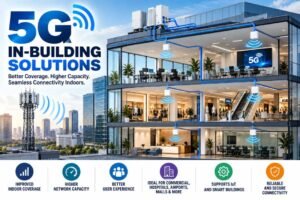
In today’s digital world, uninterrupted mobile connectivity has become essential for businesses, hospitals, shopping malls, airports, hotels, office buildings, factories, educational institutions, and residential complexes. While outdoor cellular towers provide excellent coverage in open areas, signals often become weak or completely unavailable inside large buildings due to thick concrete walls, steel structures, energy-efficient glass, and other construction materials. This results in poor voice quality, slow internet speeds, dropped calls, and unreliable wireless communication.
To overcome these challenges, telecom operators and network infrastructure providers deploy In Building Solutions (IBS). An IBS is a specialized indoor wireless network designed to distribute mobile signals throughout a building, ensuring consistent voice, data, and internet connectivity in every corner of the facility.
Modern In Building Solutions support multiple technologies, including 2G, 3G, 4G LTE, 5G, Wi-Fi, Public Safety Networks, and Private LTE, making them a critical component of today’s communication infrastructure. As businesses increasingly depend on cloud computing, IoT devices, smart building technologies, and high-speed wireless communication, IBS systems have become indispensable for maintaining reliable indoor network performance.
This comprehensive guide explains everything you need to know about In Building Solutions, including how they work, their components, types, applications, advantages, installation process, and future trends.
What Is In Building Solutions (IBS)?
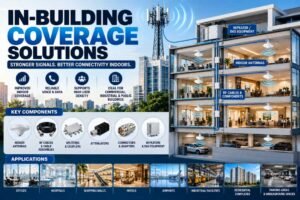
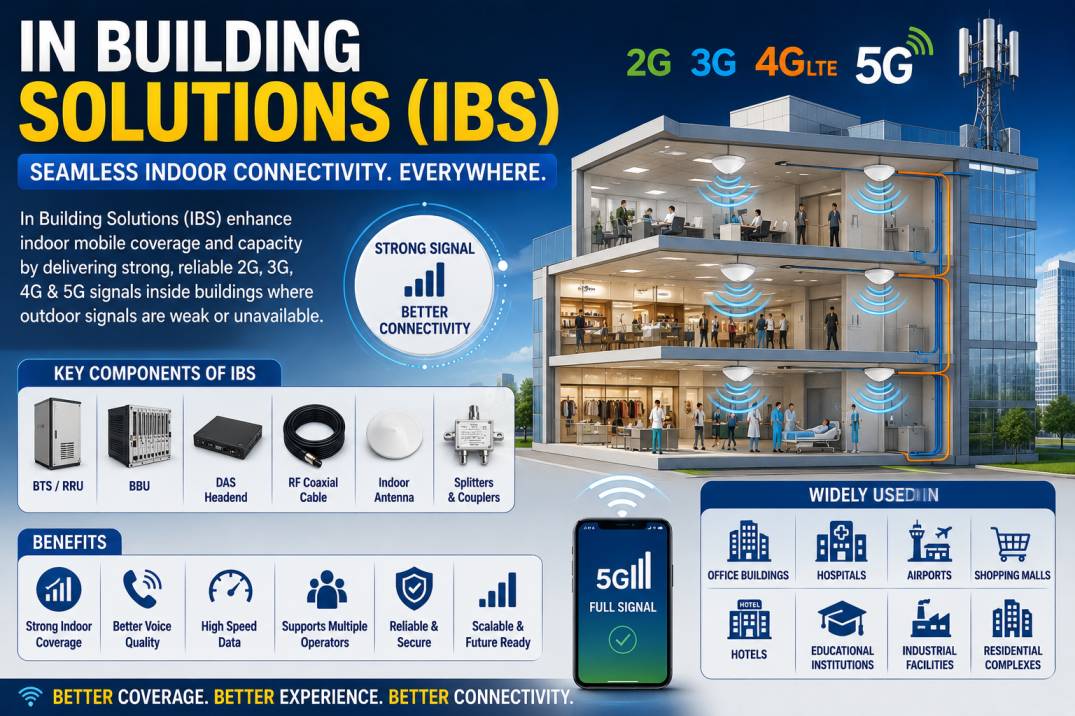
An In Building Solution (IBS) is an indoor wireless communication system designed to improve mobile network coverage and capacity inside buildings where outdoor cellular signals are weak or unavailable. The system captures RF signals from a mobile operator’s network and distributes them throughout the building using antennas, coaxial cables, fiber optics, and signal amplification equipment.
IBS ensures that users experience strong and stable voice calls, high-speed mobile internet, seamless video streaming, and reliable data connectivity regardless of their location inside the building.
Unlike traditional outdoor base stations that primarily provide external coverage, IBS is specifically engineered to optimize indoor signal strength and network performance.
Why Is In Building Solutions Important?
Modern buildings are constructed using reinforced concrete, steel frameworks, low-emissivity glass, and energy-efficient materials that significantly weaken radio frequency signals. As a result, mobile devices struggle to maintain stable connections with nearby cellular towers.
An IBS eliminates these coverage gaps by delivering consistent wireless signals throughout the building.
The importance of IBS continues to grow because:
- Indoor mobile usage accounts for the majority of data consumption.
- 5G networks require stronger indoor signal penetration.
- Businesses rely on uninterrupted wireless communication.
- Emergency communication systems require reliable indoor coverage.
- Smart buildings depend on connected devices and IoT infrastructure.
How Does an In Building Solution Work?
An IBS works by receiving cellular signals from a nearby base station or directly from the operator’s core network. These signals are then processed, amplified if necessary, and distributed across the building using a network of indoor antennas and cables.
The system consists of several interconnected components that work together to provide seamless wireless coverage.
The basic workflow includes:
Receiving RF signals from the mobile operator.
Amplifying or processing the signal.
Distributing the signal through coaxial or fiber cables.
Broadcasting the signal through indoor antennas.
Receiving signals from mobile users and transmitting them back to the operator’s network.
This two-way communication ensures reliable voice and data connectivity.
Main Components of an IBS System
An In Building Solution consists of multiple RF and telecom components.
Base Transceiver Station (BTS)
The BTS provides the original cellular signal from the telecom operator.
Baseband Unit (BBU)
Processes digital communication signals before transmission.
Remote Radio Unit (RRU)
Converts digital signals into RF signals for wireless transmission.
Distributed Antenna System (DAS)
Distributes RF signals evenly throughout the building.
Indoor Antennas
Transmit wireless signals to mobile devices.
Common antenna types include:
Ceiling antennas
Panel antennas
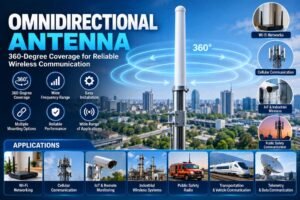
Omnidirectional antennas
Directional antennas
RF Coaxial Cables
Carry RF signals between equipment and antennas with minimal signal loss.
Fiber Optic Cables
Used in large buildings where long-distance signal transmission is required.
Splitters
Divide RF signals into multiple paths.
Couplers
Distribute signals while maintaining proper power levels.
RF Connectors
Provide secure electrical connections between RF components.
Surge Protectors
Protect the IBS network from lightning and electrical surges.
Power Supplies
Provide stable electrical power to active IBS equipment.
Types of In Building Solutions
Several IBS architectures are available depending on building size and network requirements.
Passive DAS
Passive Distributed Antenna Systems use coaxial cables, splitters, couplers, and antennas without active signal amplification throughout the distribution network.
Suitable for:
Small offices
Retail stores
Hotels
Schools
Residential complexes
Active DAS
Active DAS converts RF signals into optical signals and distributes them over fiber optic cables.
Suitable for:
Airports
Hospitals
Shopping malls
Large office towers
Convention centers
Industrial facilities
Hybrid DAS
Hybrid DAS combines passive and active technologies to optimize performance and reduce installation costs.
Small Cell Solutions
Small cells provide localized cellular coverage for high-capacity environments.
Common in:
Corporate offices
Stadiums
Universities
High-rise buildings
Key Features of In Building Solutions
- Reliable indoor cellular coverage
- Supports multiple mobile operators
- Compatible with 2G, 3G, 4G, and 5G
- High-speed data transmission
- Improved voice quality
- Low call drop rates
- Better network capacity
- Scalable architecture
- Easy integration with existing infrastructure
- High system reliability
- Supports IoT connectivity
- Low maintenance requirements
Technical Specifications
| Specification | Typical Value |
| Frequency Bands | 700 MHz–3800 MHz |
| Network Support | 2G, 3G, 4G LTE, 5G |
| Impedance | 50 Ohms |
| Signal Distribution | Coaxial / Fiber |
| Antenna Type | Ceiling, Panel, Omni |
| Cable Type | Low Loss RF Cable |
| Connector Type | N-Type, DIN, SMA |
| Power Supply | AC/DC |
| Operating Temperature | -20°C to +60°C |
Applications of In Building Solutions
IBS systems are deployed across numerous industries.
Commercial Buildings
Corporate offices
Business parks
IT campuses
Banks
Healthcare
Hospitals
Medical colleges
Diagnostic centers
Emergency care facilities
Hospitality
Hotels
Resorts
Convention centers
Transportation
Airports
Metro stations
Railway stations
Bus terminals
Shopping Centers
Retail malls
Hypermarkets
Entertainment complexes
Education
Schools
Universities
Research institutes
Libraries
Industrial Facilities
Factories
Warehouses
Manufacturing plants
Oil and gas facilities
Residential Buildings
Apartments
High-rise towers
Luxury housing
Smart homes
Advantages of In Building Solutions
- Eliminates indoor dead zones
- Improves mobile signal strength
- Faster mobile internet
- Better voice quality
- Supports multiple operators
- Enhanced 5G performance
- Increased network capacity
- Higher customer satisfaction
- Improved emergency communication
- Supports smart building technologies
- Reliable IoT connectivity
- Long-term infrastructure investment
Challenges of IBS Deployment
Although highly beneficial, IBS deployment involves several challenges.
- Initial installation cost
- RF network planning complexity
- Cable routing requirements
- Regulatory compliance
- Multi-operator coordination
- Periodic maintenance
- Building-specific design considerations
How to Choose the Right IBS Solution
Selecting the right IBS depends on several factors.
Consider:
- Building size
- Number of users
- Required network capacity
- Supported frequency bands
- Future 5G expansion
- Budget
- Building architecture
- Cable infrastructure
- Operator compatibility
- Maintenance requirements
IBS vs Outdoor Cellular Network
| Feature | IBS | Outdoor Cellular Network |
| Coverage | Indoor | Outdoor |
| Signal Quality | Excellent | Moderate Indoors |
| Capacity | High | Shared |
| Call Drops | Very Low | Higher Indoors |
| Data Speed | High | Variable |
| Installation | Building Specific | Tower Based |
Future of In Building Solutions
The rapid expansion of 5G, Private LTE, Wi-Fi 6, Wi-Fi 7, Industrial IoT, and smart buildings is driving the demand for advanced In Building Solutions. Future IBS deployments will feature AI-driven network optimization, cloud-managed distributed antenna systems, higher-capacity fiber backbones, energy-efficient hardware, and seamless integration with private enterprise networks. As organizations continue to digitize their operations, IBS will become an essential part of every modern building’s communication infrastructure.
Conclusion
In Building Solutions (IBS) have become an essential component of modern wireless communication systems by providing reliable indoor mobile coverage where outdoor networks cannot reach effectively. By combining distributed antenna systems, RF cables, fiber optics, amplifiers, and advanced network equipment, IBS ensures uninterrupted voice, data, and internet connectivity across commercial buildings, hospitals, airports, shopping malls, educational institutions, industrial facilities, and residential complexes. As 5G adoption accelerates and smart building technologies continue to evolve, investing in a well-designed IBS infrastructure will be critical for delivering superior indoor connectivity, improved user experience, and future-ready communication networks.
Frequently Asked Questions (FAQs)
1. What is an In Building Solution (IBS)?
An In Building Solution (IBS) is a wireless communication system that improves indoor mobile network coverage by distributing cellular signals throughout a building.
2. Why is IBS required?
IBS is required because building materials such as concrete, steel, and glass reduce outdoor cellular signal strength, causing poor indoor coverage.
3. What are the main components of an IBS?
An IBS typically includes a Base Transceiver Station (BTS), Distributed Antenna System (DAS), RF cables, antennas, splitters, couplers, connectors, fiber optic cables, and power supplies.
4. What is the difference between Passive DAS and Active DAS?
Passive DAS uses coaxial cables and passive RF components, while Active DAS uses fiber optics and active electronic equipment to distribute signals over larger areas.
5. Does IBS support 5G networks?
Yes. Modern IBS systems are designed to support 2G, 3G, 4G LTE, and 5G frequency bands.
6. Where are In Building Solutions commonly installed?
They are widely installed in hospitals, airports, shopping malls, office buildings, hotels, stadiums, factories, universities, and residential towers.
7. Can IBS support multiple mobile operators?
Yes. Multi-operator IBS systems allow several telecom service providers to share the same indoor infrastructure.
8. What are the benefits of installing an IBS?
IBS improves signal strength, reduces dropped calls, increases data speeds, enhances user experience, and supports reliable indoor wireless communication.
9. How long does an IBS system last?
A professionally designed and maintained IBS system can provide reliable performance for many years, with upgrades typically focused on supporting new wireless technologies.
10. How do I choose the right IBS for my building?
Choose an IBS based on building size, user density, supported frequency bands, future network expansion, operator requirements, and overall communication needs.