
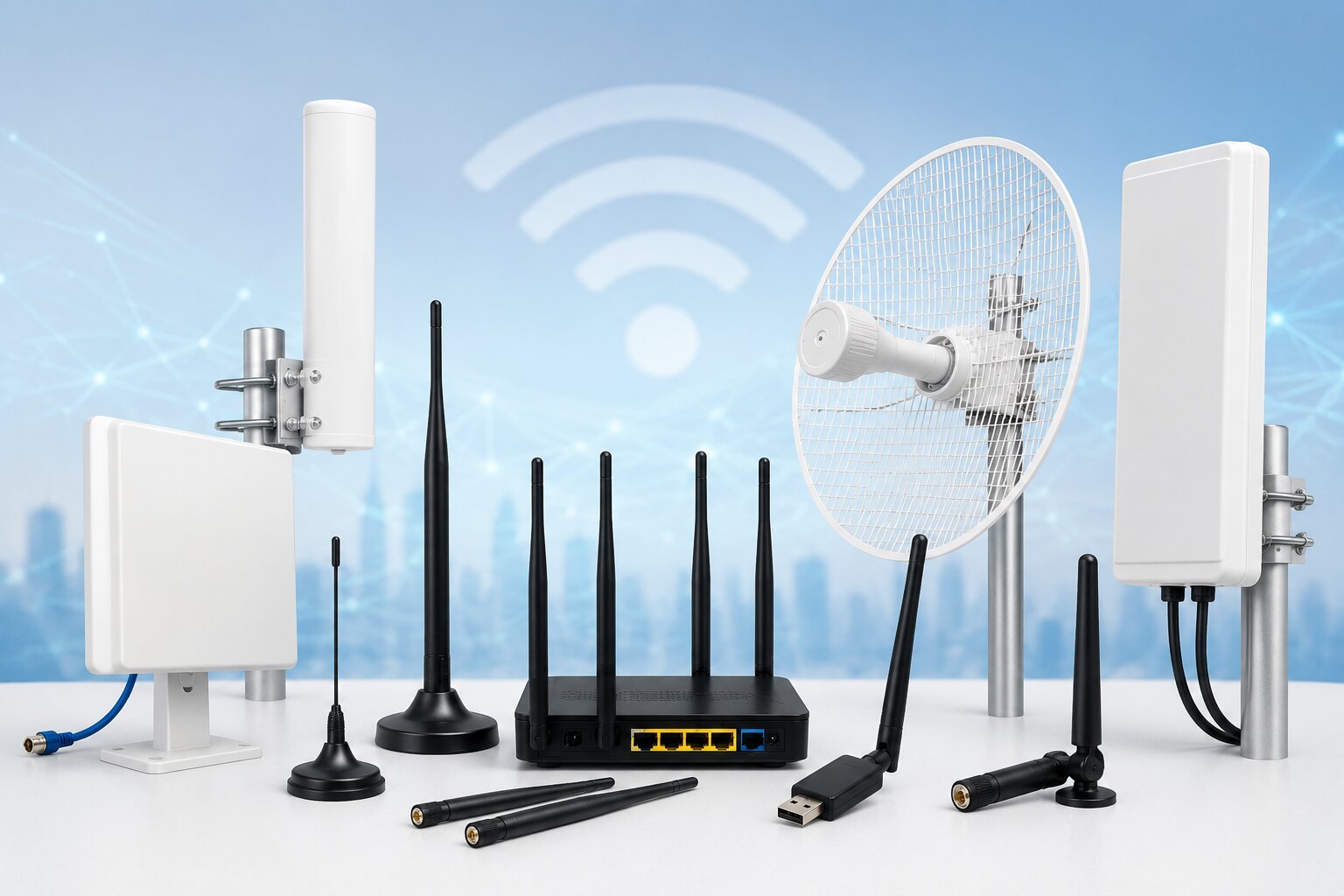
A Wi-Fi antenna is a wireless communication device used to transmit and receive radio frequency signals for Wi-Fi networks. These antennas play a critical role in improving wireless internet connectivity, increasing signal coverage, enhancing network performance, and ensuring stable data communication between wireless devices and routers.
Wi-Fi antennas are widely used in homes, offices, industries, telecom systems, wireless networking infrastructure, IoT devices, and public internet systems. They help wireless devices communicate over specific frequency bands such as 2.4 GHz, 5 GHz, and modern dual-band or tri-band frequencies.
As wireless networking has become essential in daily life and business operations, Wi-Fi antennas have become important components in routers, access points, wireless bridges, surveillance systems, smart devices, and industrial communication systems.
Modern Wi-Fi antennas are available in various types including omni directional antennas, directional antennas, panel antennas, Yagi antennas, and outdoor high-gain antennas. Each type is designed to support specific wireless coverage and communication requirements.
What is a Wi-Fi Antenna?
A Wi-Fi antenna is an RF antenna designed to transmit and receive wireless internet signals within Wi-Fi frequency bands. It converts electrical signals into radio waves and receives incoming wireless signals from routers or wireless access points.
Wi-Fi antennas are commonly used in:
- Wireless routers
- Access points
- Wireless adapters
- IoT devices
- CCTV systems
- Industrial wireless systems
- Wireless bridges
These antennas support wireless communication standards such as:
- IEEE 802.11b
- IEEE 802.11g
- IEEE 802.11n
- IEEE 802.11ac
- IEEE 802.11ax
Wi-Fi antennas help improve internet speed, signal strength, and wireless coverage in networking systems.
Importance of Wi-Fi Antennas
Wireless communication systems rely heavily on antenna performance for stable connectivity and signal quality. A high-quality Wi-Fi antenna improves network efficiency and wireless communication reliability.
Wi-Fi antennas are important because they:
- Increase wireless coverage
- Improve signal strength
- Reduce dead zones
- Enhance internet speed
- Support stable wireless communication
- Improve device connectivity
Without proper antennas, wireless networks may experience weak signals and unstable internet performance.
How Does a Wi-Fi Antenna Work?
A Wi-Fi antenna works by transmitting and receiving radio frequency signals between wireless devices and network equipment.
The antenna converts electrical signals from a router or wireless device into electromagnetic waves. These RF signals travel through the air and are received by another Wi-Fi-enabled device.
The working process includes:
- RF signal transmission
- Wireless signal propagation
- Signal reception
- Data communication
High-quality Wi-Fi antennas improve signal efficiency and minimize communication interference.
Components of a Wi-Fi Antenna
A Wi-Fi antenna contains several important components that support wireless signal transmission.
Radiating Element
The radiating element transmits and receives Wi-Fi signals.
Connector Interface
The connector links the antenna with routers or wireless devices.
Protective Housing
The outer body protects internal antenna components from damage.
Cable Assembly
Some antennas include RF cable assemblies for flexible installation.
Mounting System
The mounting section helps install antennas on walls, poles, routers, or communication equipment.
Types of Wi-Fi Antennas
Wi-Fi antennas are available in multiple configurations depending on wireless coverage requirements.
Omni Directional Wi-Fi Antenna
Omni directional antennas transmit and receive signals in all directions.
Applications
- Home Wi-Fi routers
- Office networking
- Indoor wireless systems
These antennas provide 360-degree wireless coverage.
Directional Wi-Fi Antenna
Directional antennas focus wireless signals in a specific direction.
Uses
- Long-distance communication
- Wireless bridges
- Point-to-point networking
Panel Wi-Fi Antenna
Panel antennas provide focused wireless coverage with compact designs.
Applications
- Wireless networking systems
- Industrial communication
- Outdoor wireless installations
Yagi Wi-Fi Antenna
Yagi antennas are high-gain directional antennas used for long-range Wi-Fi communication.
Parabolic Wi-Fi Antenna
Parabolic antennas provide very high directional gain for extended wireless communication distances.
Outdoor Wi-Fi Antenna
Outdoor antennas are designed for harsh environmental conditions and large coverage areas.
Wi-Fi Frequency Bands
Wi-Fi antennas operate within specific wireless frequency bands.
2.4 GHz Wi-Fi Antenna
2.4 GHz antennas provide wider coverage and better wall penetration.
Benefits
- Long-range communication
- Better obstacle penetration
- Broad compatibility
5 GHz Wi-Fi Antenna
5 GHz antennas support faster data transmission speeds.
Advantages
- Higher internet speed
- Reduced interference
- Better bandwidth performance
Dual-Band Wi-Fi Antenna
Dual-band antennas support both 2.4 GHz and 5 GHz frequencies.
Tri-Band Wi-Fi Antenna
Tri-band antennas support advanced wireless networking systems with multiple communication bands.
Applications of Wi-Fi Antennas
Wi-Fi antennas are used across multiple industries and wireless communication systems.
Home and Office Networking
Wi-Fi antennas are commonly used in routers and access points for internet connectivity.
Industrial Wireless Communication
Industrial systems use Wi-Fi antennas for automation and machine communication.
Wireless Internet Service Providers
WISPs use high-gain antennas for long-distance internet distribution.
CCTV and Surveillance Systems
Wireless surveillance cameras use Wi-Fi antennas for remote communication.
Smart Home Systems
Smart devices use Wi-Fi antennas for wireless connectivity.
IoT Devices
IoT systems use compact Wi-Fi antennas for wireless communication.
Public Wi-Fi Networks
Hotels, airports, malls, and public areas use Wi-Fi antennas for internet access systems.
Advantages of Wi-Fi Antennas
Wi-Fi antennas offer several important wireless communication benefits.
Improved Wireless Coverage
High-quality antennas increase network range and coverage area.
Better Signal Strength
Wi-Fi antennas improve communication reliability and internet stability.
Faster Data Communication
Advanced antennas support high-speed wireless networking.
Reduced Dead Zones
Proper antenna placement improves signal availability in weak coverage areas.
Easy Installation
Most Wi-Fi antennas are lightweight and easy to install.
Flexible Communication
Wireless connectivity reduces the need for physical networking cables.
Technical Specifications of Wi-Fi Antennas
Wi-Fi antenna specifications vary depending on application and communication requirements.
Frequency Range
Common frequency bands include:
- 2.4 GHz
- 5 GHz
- Dual-band frequencies
Gain
Antenna gain determines signal transmission strength.
Gain is usually measured in:
- dBi
Higher gain antennas provide longer communication range.
Polarization
Wi-Fi antennas may support:
- Vertical polarization
- Horizontal polarization
Impedance
Most Wi-Fi antennas use:
- 50 ohm impedance
Connector Types
Common Wi-Fi antenna connectors include:
- SMA
- RP-SMA
- N Type
- TNC
Cable Length
Some antennas include cable extensions for flexible installation.
Installation Methods of Wi-Fi Antennas
Proper installation improves wireless communication performance.
Router Mount Installation
Small antennas are directly connected to Wi-Fi routers.
Pole Mount Installation
Outdoor antennas are mounted on poles or towers.
Wall Mount Installation
Wall-mounted antennas improve indoor signal coverage.
Ceiling Mount Installation
Ceiling-mounted antennas provide wide indoor wireless distribution.
Common Problems with Wi-Fi Antennas
Improper installation or poor antenna quality may affect wireless performance.
Weak Signal Strength
Incorrect antenna placement may reduce wireless coverage.
Interference Issues
Electronic devices and walls may interfere with Wi-Fi signals.
Connector Damage
Damaged connectors may interrupt communication.
Cable Loss
Low-quality RF cables can increase signal attenuation.
Tips for Choosing the Right Wi-Fi Antenna
Selecting the correct Wi-Fi antenna improves wireless communication performance.
Check Frequency Compatibility
Ensure the antenna supports the required Wi-Fi frequency bands.
Evaluate Coverage Requirements
Choose omni directional or directional antennas based on networking needs.
Consider Installation Environment
Outdoor systems require weather-resistant antennas.
Verify Connector Compatibility
Ensure the antenna connector matches the router or access point.
Select Proper Gain
Higher gain antennas support larger communication areas.
Difference Between Wi-Fi Antenna and GSM Antenna
Although both support wireless communication, they are designed for different technologies.
Wi-Fi Antenna
Used for wireless internet communication within Wi-Fi networks.
GSM Antenna
Used for cellular communication through GSM mobile networks.
Wi-Fi antennas connect to routers and wireless access points, while GSM antennas communicate with cellular towers.
Future of Wi-Fi Antennas
Wireless networking technologies continue to evolve rapidly.
Modern advancements include:
- Wi-Fi 6 antennas
- High-gain wireless antennas
- Smart beamforming antennas
- MIMO antenna systems
- Compact IoT antennas
- Outdoor long-range Wi-Fi systems
As wireless communication and smart networking continue to expand, Wi-Fi antennas will remain essential components in modern internet infrastructure and communication systems.
Conclusion
A Wi-Fi antenna is an important wireless communication component used for transmitting and receiving Wi-Fi signals in networking systems. These antennas help improve internet connectivity, increase wireless coverage, enhance signal strength, and support stable communication between wireless devices.
From home routers and industrial communication systems to IoT devices and long-range wireless networking, Wi-Fi antennas provide reliable and efficient wireless connectivity across multiple applications.
Understanding Wi-Fi antenna types, frequency bands, specifications, applications, and installation methods helps users select the right antenna for high-performance wireless communication and networking systems.