
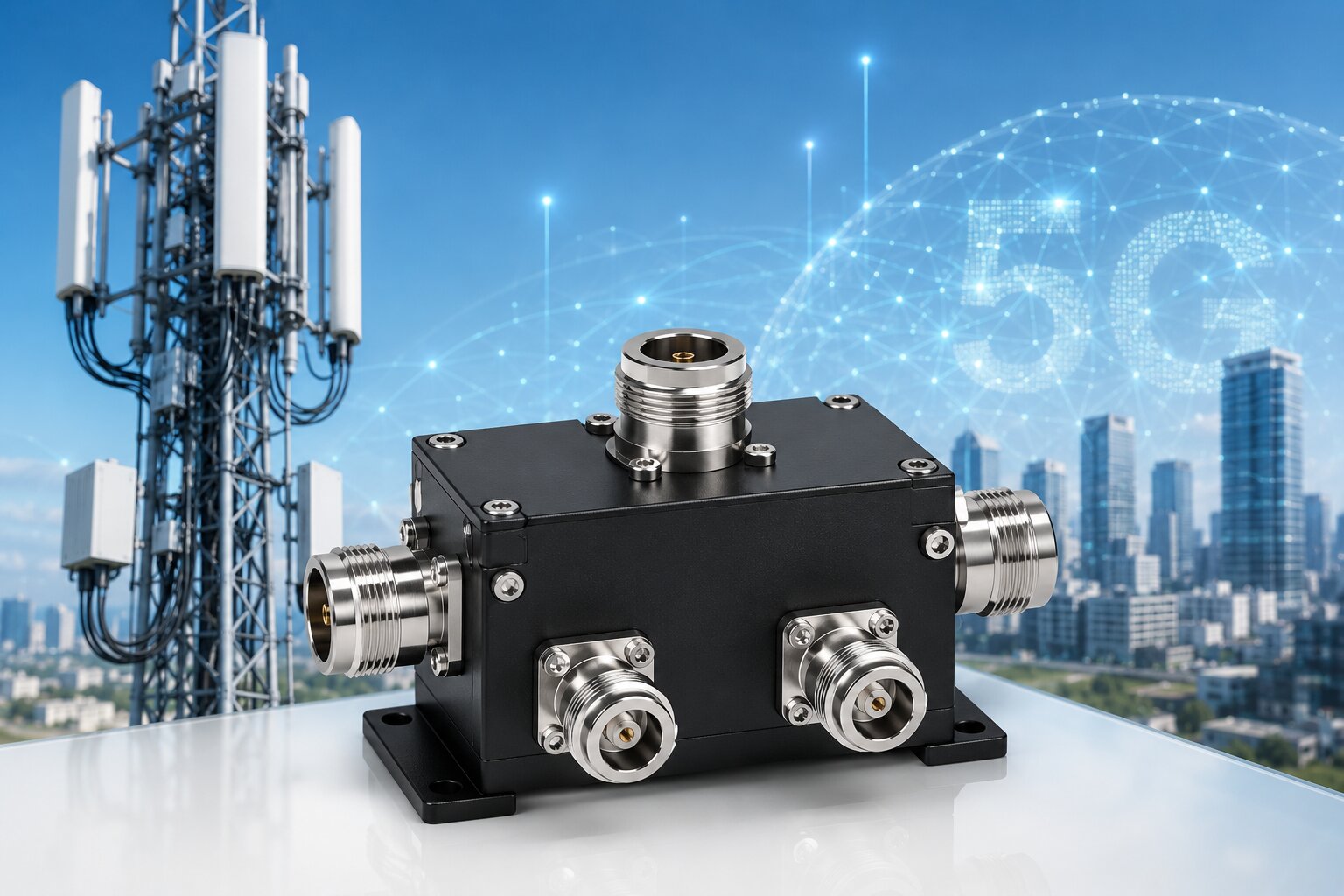
A Hybrid Combiner is an important RF component used in wireless communication systems to combine or split radio frequency signals efficiently while maintaining signal balance and minimizing interference. In modern telecom infrastructure, hybrid combiners are widely used in 5G communication systems, distributed antenna systems, base stations, wireless networking, and RF transmission applications.
The Hybrid Combiner – 5G – 698-4000 MHz is specially designed to support a wide frequency range covering multiple communication bands used in modern 4G and 5G networks. These combiners help telecom operators improve signal distribution, optimize antenna performance, reduce infrastructure complexity, and support multi-band communication systems.
As 5G technology continues to expand globally, hybrid combiners have become essential components in telecom infrastructure because they allow multiple RF signals to share common transmission paths while maintaining high isolation and low insertion loss.
Today, Hybrid Combiner 5G systems are widely used in mobile towers, in-building coverage systems, DAS networks, repeater systems, and advanced wireless communication infrastructure.
What is a Hybrid Combiner?
A Hybrid Combiner is a passive RF device used to combine multiple input signals into a single output or split one RF signal into multiple outputs while maintaining signal balance and impedance matching.
The Hybrid Combiner – 5G – 698-4000 MHz is specifically designed to support wideband communication frequencies ranging from 698 MHz to 4000 MHz, making it suitable for modern cellular communication systems including:
- 4G LTE
- 5G NR
- GSM
- DCS
- PCS
- UMTS
These combiners are engineered to handle high-frequency RF signals with low insertion loss, high isolation, and stable communication performance.
Hybrid combiners are commonly used in:
- Telecom base stations
- Distributed antenna systems
- Wireless communication networks
- RF repeater systems
- In-building coverage systems
Importance of Hybrid Combiners in 5G Networks
Modern 5G networks require efficient signal distribution and multi-band RF management. Hybrid combiners are important because they help simplify RF infrastructure while maintaining signal quality and network performance.
Hybrid combiners help:
- Combine multiple RF signals
- Reduce antenna requirements
- Improve network efficiency
- Maintain signal isolation
- Minimize signal interference
- Support wide frequency bands
Because of these advantages, hybrid combiners are widely used in advanced telecom and wireless communication systems.
How Does a Hybrid Combiner Work?
A Hybrid Combiner works by combining multiple RF input signals into a single transmission path while maintaining proper impedance and signal isolation.
The device uses internal RF circuits and transmission line structures to distribute signal power evenly between ports. It also prevents signal reflection and interference between connected RF systems.
The working process includes:
- RF signal input
- Signal combining
- Power balancing
- Signal isolation
- RF signal output
High-quality hybrid combiners ensure stable communication performance with minimal insertion loss and excellent isolation.
Frequency Range of Hybrid Combiner – 5G – 698-4000 MHz
The Hybrid Combiner – 5G – 698-4000 MHz supports a wide operating frequency range used in modern wireless communication systems.
698 MHz to 960 MHz
Supports:
- GSM
- LTE low-band communication
- Public safety communication systems
1710 MHz to 2700 MHz
Supports:
- DCS
- PCS
- UMTS
- LTE communication
3300 MHz to 4000 MHz
Supports:
- 5G NR communication
- High-speed wireless networking
- Advanced telecom infrastructure
This wide frequency compatibility makes hybrid combiners highly suitable for multi-band telecom systems.
Components of a Hybrid Combiner
A Hybrid Combiner contains several important RF components for signal management and communication stability.
Input Ports
Input ports receive RF signals from communication equipment.
Output Port
The output port transmits the combined RF signal to antennas or RF systems.
Internal RF Circuit
The RF circuit manages signal combining and power distribution.
Shielded Housing
The metal housing protects against EMI and RF interference.
RF Connectors
Common connector types include:
- N Type connectors
- 4.3-10 connectors
- DIN connectors
Types of Hybrid Combiners
Hybrid combiners are available in different configurations depending on RF system requirements.
2-Way Hybrid Combiner
Combines two RF signals into one output.
Applications
- Telecom systems
- DAS networks
- Wireless communication
4-Way Hybrid Combiner
Supports combining or splitting four RF signals.
Broadband Hybrid Combiner
Designed for wideband communication systems including 5G networks.
High Power Hybrid Combiner
Supports high RF power communication systems.
Uses
- Telecom towers
- Base stations
- Broadcasting systems
Specifications of Hybrid Combiner – 5G – 698-4000 MHz
The technical specifications determine RF performance and communication compatibility.
Frequency Range
- 698 MHz to 4000 MHz
Supports multi-band telecom communication systems.
Impedance
Most hybrid combiners use:
- 50 ohm impedance
Insertion Loss
Low insertion loss improves signal efficiency and network performance.
Isolation
High isolation minimizes interference between RF channels.
VSWR
Low VSWR ensures proper impedance matching and reduced signal reflection.
Power Handling Capacity
Designed to support medium to high RF power communication systems.
Connector Type
Common RF connector options include:
- N Female
- 4.3-10 Female
- DIN Female
Operating Temperature
Industrial-grade hybrid combiners support outdoor telecom environments.
Applications of Hybrid Combiner – 5G – 698-4000 MHz
Hybrid combiners are widely used across telecom and wireless communication industries.
5G Telecom Networks
5G infrastructure uses hybrid combiners for signal management and antenna sharing.
Applications
- 5G base stations
- Small cells
- Massive MIMO systems
Distributed Antenna Systems
DAS systems use hybrid combiners for indoor signal distribution.
Telecom Towers
Mobile communication towers use hybrid combiners for multi-band RF transmission.
RF Repeater Systems
Repeaters use hybrid combiners to improve signal coverage and communication stability.
Wireless Communication Infrastructure
Wireless communication systems use hybrid combiners for efficient RF signal distribution.
In-Building Coverage Systems
Commercial buildings use hybrid combiners for indoor cellular signal enhancement.
Advantages of Hybrid Combiner – 5G – 698-4000 MHz
Hybrid combiners offer several important communication and infrastructure benefits.
Wide Frequency Support
Supports multiple telecom frequency bands including 5G communication.
Improved Signal Distribution
Efficiently combines and distributes RF signals.
Reduced Infrastructure Complexity
Allows multiple systems to share antennas and RF paths.
High Isolation
Prevents signal interference between communication channels.
Low Insertion Loss
Maintains signal strength and communication quality.
Compact Design
Helps reduce equipment space requirements in telecom systems.
Technical Benefits in 5G Networks
Hybrid combiners provide important performance advantages for modern 5G infrastructure.
Multi-Band Communication Support
Supports simultaneous operation of multiple wireless technologies.
Better Network Efficiency
Improves utilization of antennas and RF systems.
Simplified Installation
Reduces cabling and antenna deployment requirements.
Enhanced Signal Stability
Maintains reliable RF communication performance.
Difference Between Hybrid Combiner and Power Divider
Although both RF devices manage signal distribution, they perform different functions.
Hybrid Combiner
- Combines multiple RF signals
- Provides signal isolation
- Supports balanced signal distribution
Power Divider
- Splits one signal into multiple outputs
- Distributes RF power equally
- Used mainly for signal sharing
Hybrid combiners provide better isolation and signal balancing for advanced telecom systems.
Common Problems with Hybrid Combiners
Improper installation or poor-quality devices may affect communication performance.
Signal Loss
Excessive insertion loss may reduce communication efficiency.
Impedance Mismatch
Improper impedance can create signal reflection.
Connector Damage
Poor connector installation may interrupt RF transmission.
Overheating
High-power systems may generate excess heat.
Tips for Choosing the Right Hybrid Combiner
Selecting the correct hybrid combiner improves network performance and communication reliability.
Check Frequency Compatibility
Ensure support for required telecom frequency bands.
Verify Power Requirements
Choose devices suitable for RF power levels.
Consider Connector Compatibility
Ensure compatibility with antennas and telecom equipment.
Evaluate Isolation Performance
Higher isolation improves communication quality.
Select Low VSWR Devices
Low VSWR improves RF efficiency and reduces reflection.
Future of Hybrid Combiners in 5G Networks
Modern telecom systems continue to demand advanced RF signal management solutions.
Recent developments include:
- Wideband 5G hybrid combiners
- Multi-operator communication systems
- Massive MIMO infrastructure
- Compact RF combining systems
- Smart telecom networking solutions
As 5G deployment and wireless communication technologies continue to grow, hybrid combiners will remain essential components in telecom infrastructure and RF networking systems.
Conclusion
A Hybrid Combiner – 5G – 698-4000 MHz is a critical RF component used for combining and managing RF signals in modern telecom and wireless communication systems. These devices support multi-band communication, improve signal distribution, reduce infrastructure complexity, and maintain stable RF performance across advanced 5G networks.
From telecom towers and DAS systems to repeater networks and indoor wireless communication systems, hybrid combiners provide reliable and efficient RF signal management for modern communication infrastructure.
Understanding their specifications, applications, advantages, and working principles helps telecom professionals and engineers select the right hybrid combiner for high-performance 5G and RF communication systems.