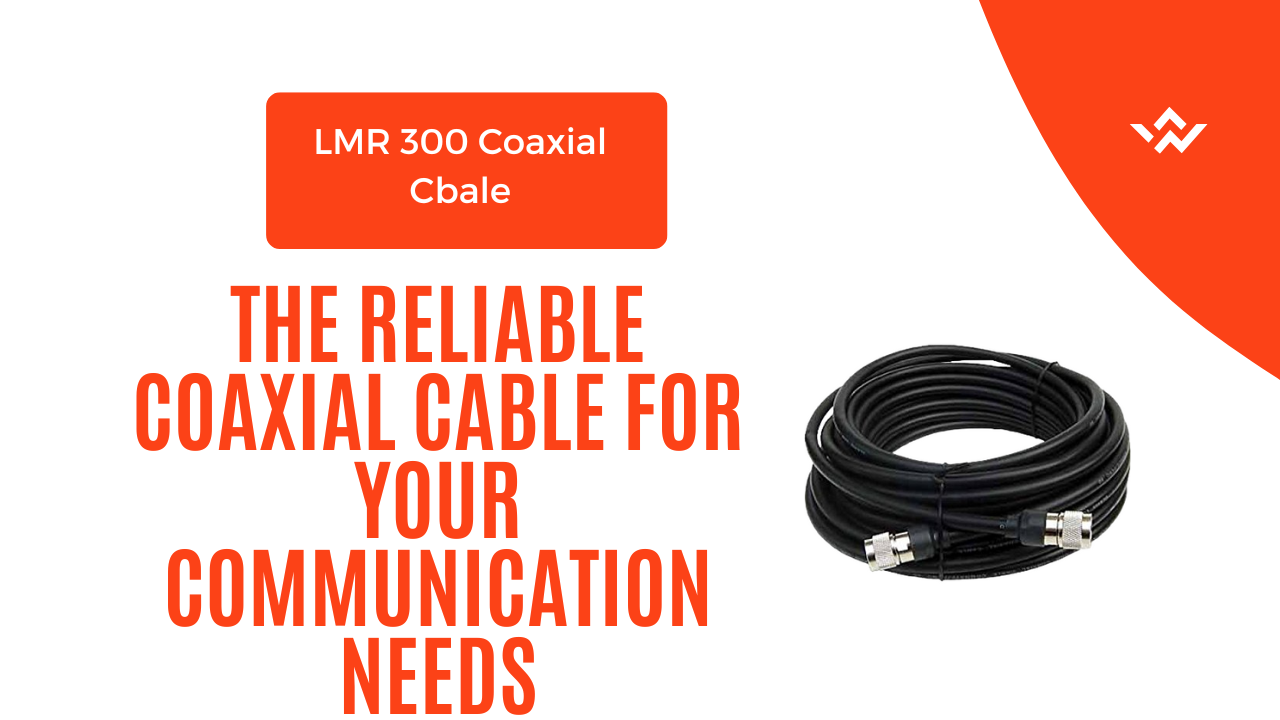
Reliable signal transmission is the foundation of every modern communication system. Whether it is a cellular network, wireless internet, satellite communication, or industrial automation, choosing the right coaxial cable directly impacts network performance. Among the most trusted medium-sized RF cables, LMR 300 Cable offers an excellent balance of flexibility, low signal loss, durability, and cost-effectiveness.
Designed for high-frequency RF applications, LMR 300 Cable is widely used by telecom operators, system integrators, network installers, defense organizations, and wireless communication professionals. It provides superior shielding, weather resistance, and stable electrical performance, making it suitable for both indoor and outdoor installations.
If you need a dependable coaxial cable that delivers consistent performance without the higher cost of larger cables, LMR 300 Cable is one of the best choices available.
What is an LMR 300 Cable?
LMR 300 Cable is a low-loss 50-ohm coaxial cable designed for RF signal transmission across a wide frequency range. It belongs to the family of low-loss RF cables developed for applications requiring minimal attenuation and excellent shielding.
Compared to traditional RG cables, LMR 300 Cable offers:
- Lower insertion loss
- Better shielding effectiveness
- Improved flexibility
- Longer service life
- Superior weather resistance
- Enhanced signal quality
These characteristics make it suitable for professional communication systems where signal integrity is critical.

Construction of LMR 300 Cable
The performance of an LMR 300 Cable comes from its high-quality construction.
Center Conductor
The cable features a solid or stranded copper conductor that ensures efficient electrical conductivity and low resistance.
Foam Polyethylene Dielectric
A low-density foam dielectric minimizes signal attenuation while maintaining consistent impedance throughout the cable.
Bonded Aluminum Shield
The bonded foil shield provides excellent protection against electromagnetic interference (EMI).
Tinned Copper Braided Shield
A dense tinned copper braid enhances shielding performance and improves mechanical durability.
UV Resistant Outer Jacket
The polyethylene outer jacket protects the cable from moisture, UV radiation, chemicals, and harsh weather conditions.
Key Features of LMR 300 Cable
Low Signal Loss
The cable is engineered to reduce RF attenuation, allowing stronger signals over longer distances.
Excellent Shielding
Multiple shielding layers effectively block electromagnetic interference and radio frequency interference.
Flexible Design
LMR 300 Cable is easier to install than larger coaxial cables while maintaining excellent performance.
Weather Resistant
The outer jacket withstands sunlight, rain, humidity, and temperature fluctuations, making it ideal for outdoor installations.
Wide Frequency Support
The cable supports applications ranging from low-frequency communication systems to microwave frequencies.
50 Ohm Impedance
It maintains consistent impedance for maximum signal transfer efficiency.
Long Service Life
High-quality materials ensure reliable operation for years with minimal maintenance.
Technical Specifications of LMR 300 Cable
| Specification | Details |
|---|---|
| Impedance | 50 Ohm |
| Cable Type | Low Loss RF Coaxial Cable |
| Center Conductor | Copper |
| Dielectric | Foam Polyethylene |
| Shielding | Aluminum Foil + Tinned Copper Braid |
| Outer Jacket | Polyethylene |
| Installation | Indoor & Outdoor |
| Applications | RF, Wireless, Telecom, Industrial |
| Flexibility | High |
| Weather Resistance | Excellent |
Advantages of Using LMR 300 Cable
Better RF Performance
The cable minimizes power loss, allowing stronger signal transmission.
Improved Communication Quality
Lower attenuation results in improved voice, video, and data communication.
Reduced Network Downtime
Reliable construction minimizes cable failures.
Easy Installation
The cable bends easily around equipment and cable trays.
Cost Effective
LMR 300 Cable delivers excellent performance without the higher cost of premium large-diameter cables.
Excellent Mechanical Strength
The durable outer jacket protects against physical damage.
Suitable for Long-Term Projects
The cable maintains electrical performance over many years.
Applications of LMR 300 Cable
Cellular Communication Systems
LMR 300 Cable connects antennas, repeaters, amplifiers, and base station equipment.
Wi-Fi Networks
Used for connecting outdoor access points and wireless antennas.
RF Communication Equipment
Ideal for transmitters, receivers, and RF measurement systems.
Industrial Automation
Supports wireless monitoring and machine communication networks.
Satellite Communication
Used between antennas and satellite communication equipment.
Defense Communication
Reliable signal transmission is essential for military communication systems.
Broadcast Systems
Suitable for radio and television broadcasting equipment.
IoT Networks
Supports industrial IoT devices requiring stable RF communication.
Smart Buildings
Used in distributed antenna systems and wireless infrastructure.
Transportation
Installed in railway, metro, airport, and highway communication networks.